Standard Size T Shirt Manufacturer
Standard Size T Shirt Manufacturer With Taped Seams and a True-to-Body Fit
As a standard size t shirt manufacturer based in Sialkot, Pakistan, we grade to a true-to-body block, tape every shoulder seam so the neckline holds its shape wash after wash, and double-needle every hem so it lies flat instead of curling. MOQ starts at 50 pieces per style with sizes split however you need, your sample takes 6–10 days and its full cost is credited against the bulk order, and production runs 12–15 days once you approve it.
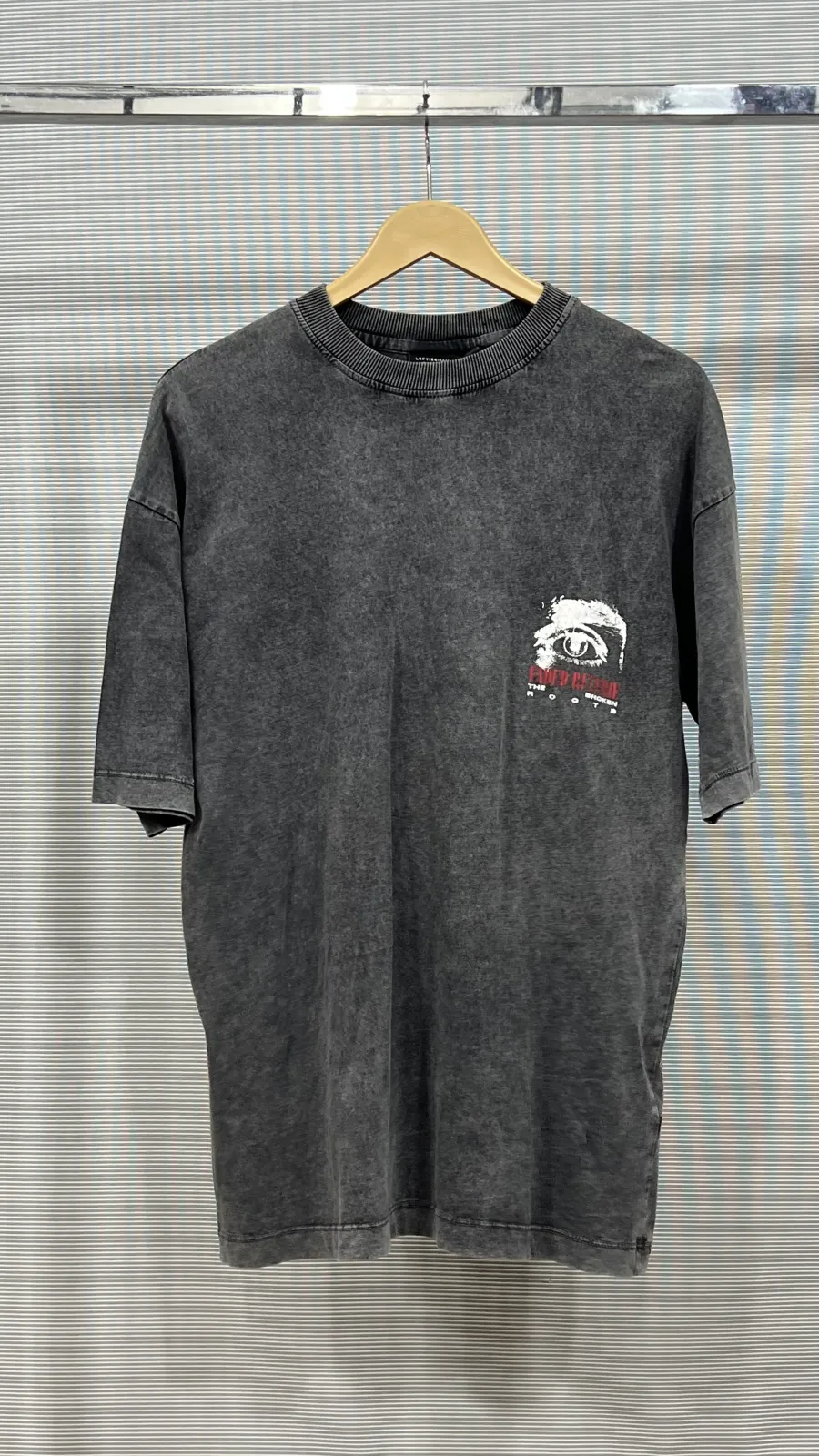
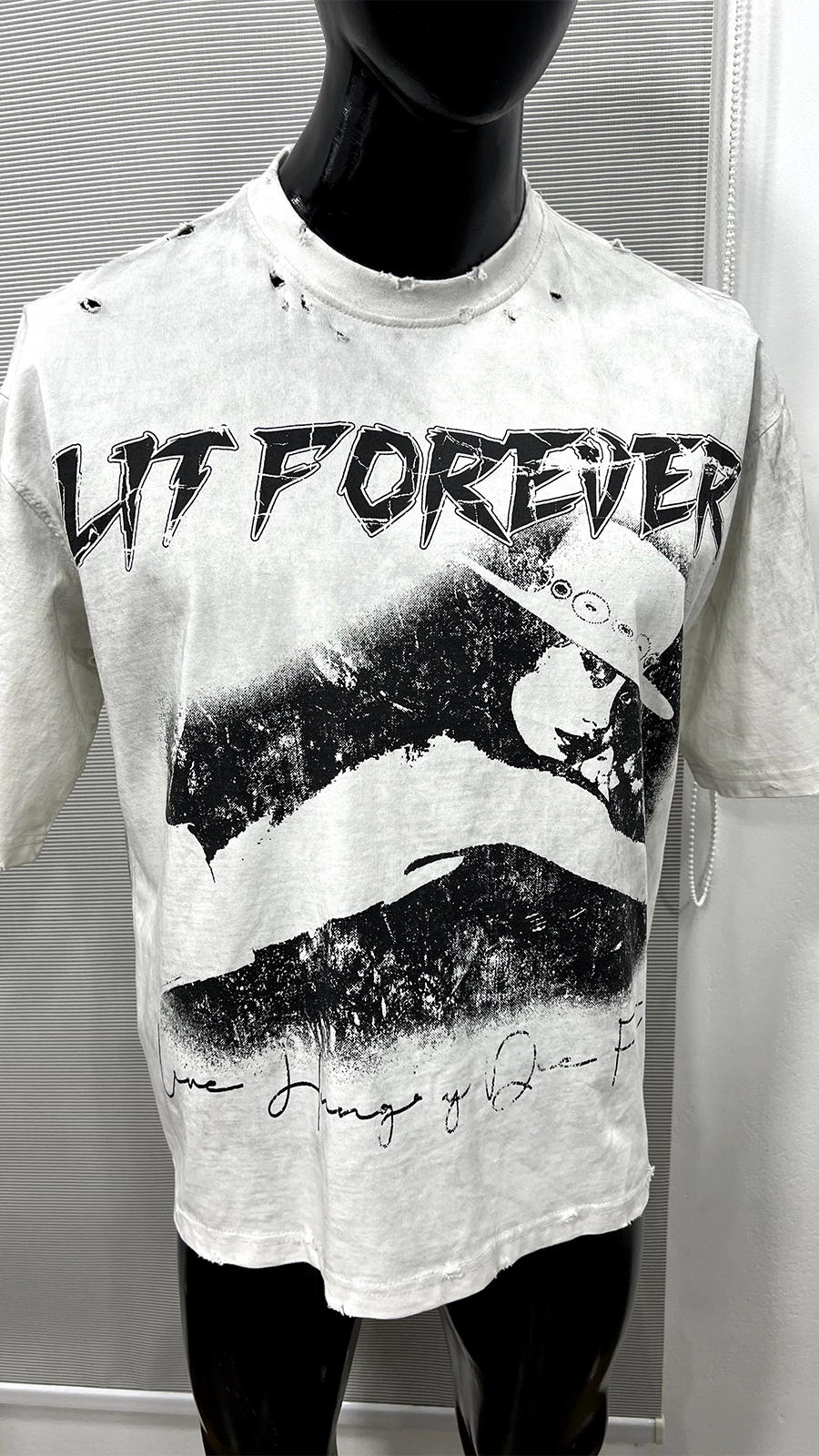
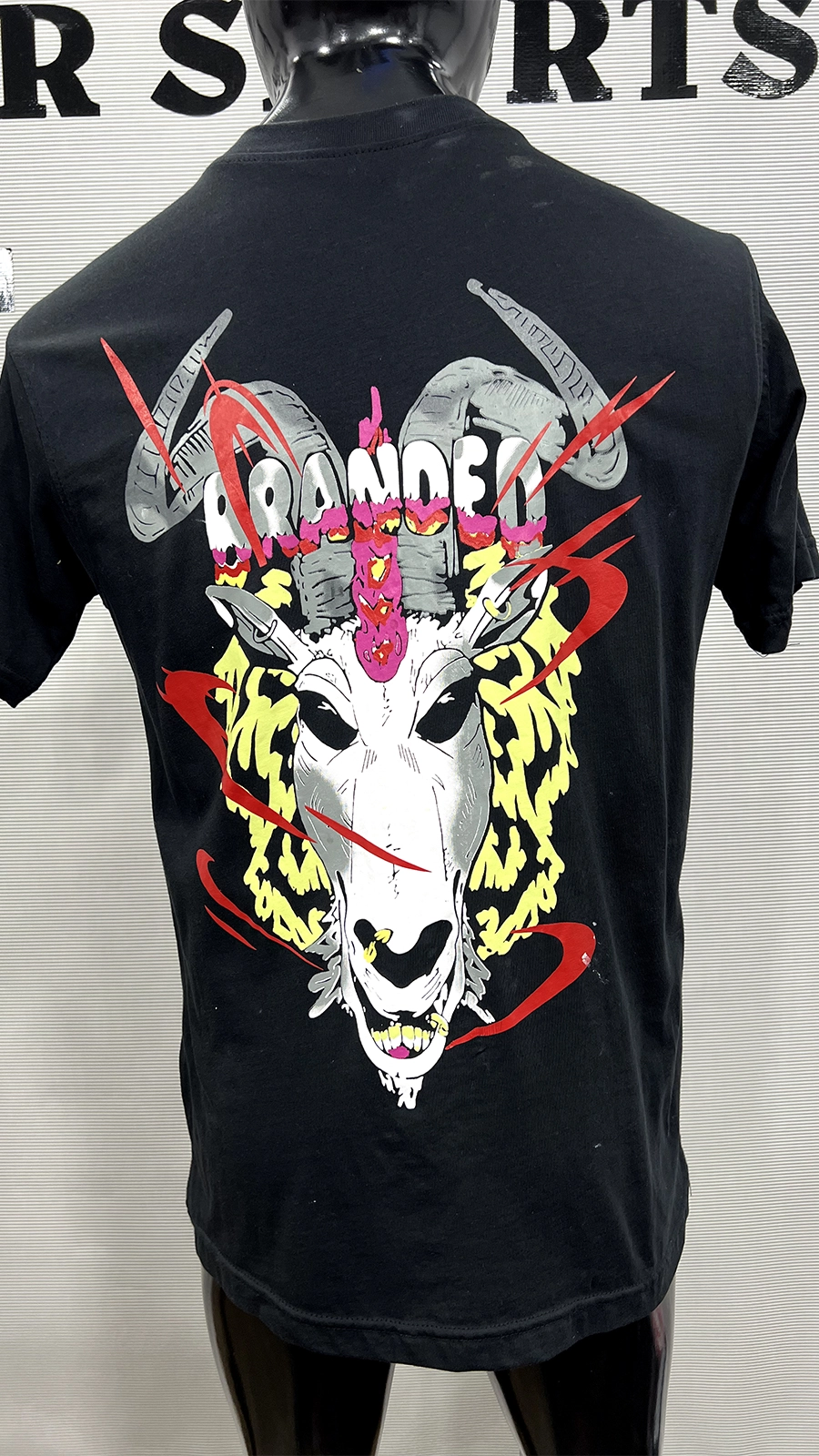
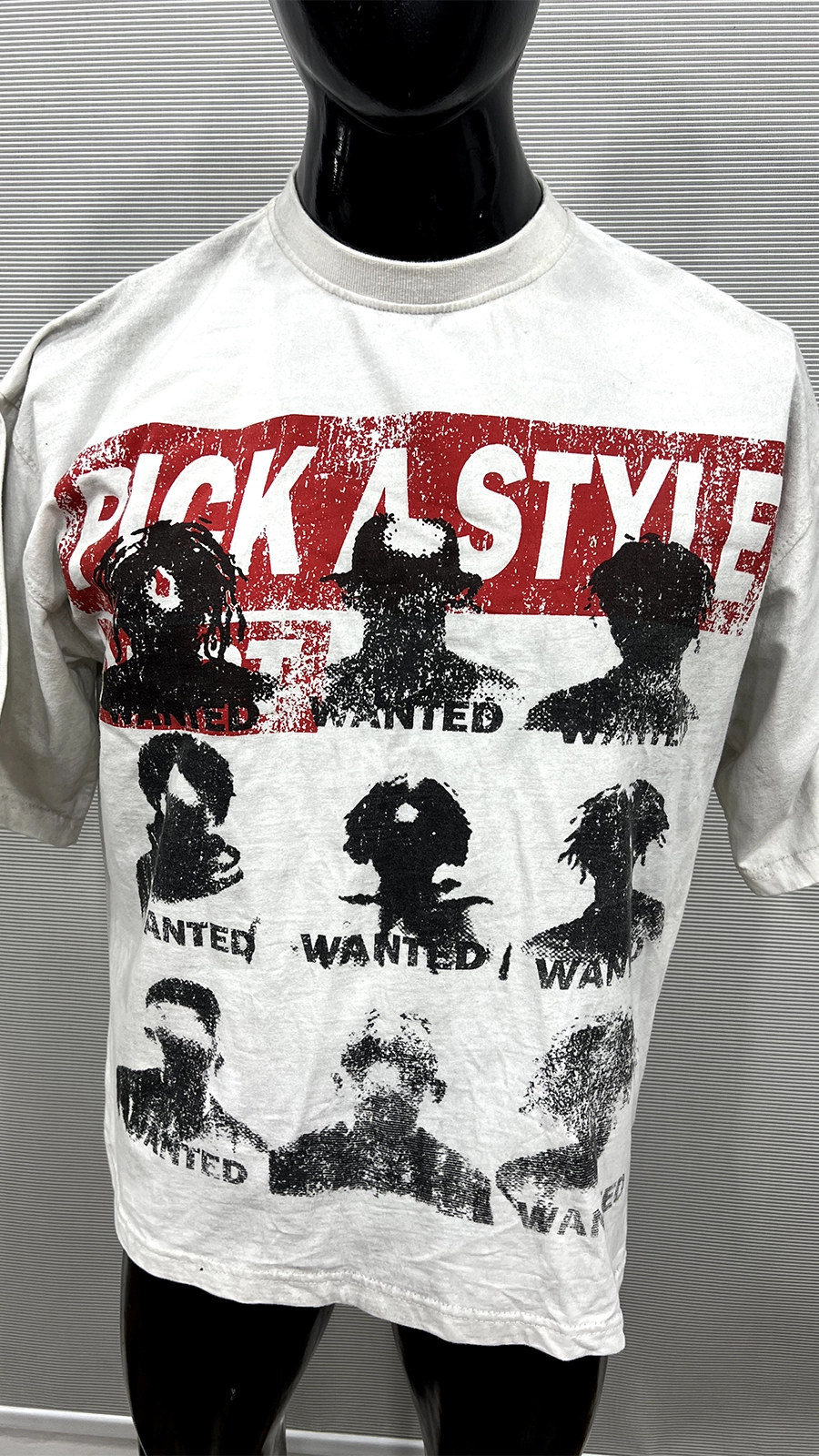
The pieces below are our own production samples, shot on the factory floor — not stock photos. Every order we run is fully custom to your spec, sizes, and branding.
01 — What a Standard Fit T Shirt Actually Grades For
What a Standard Size T Shirt Manufacturer Actually Grades For
The grading logic is the same true-to-body principle as any standard-fit garment — shoulder seam at the natural shoulder point, proportional growth in chest and sleeve length across S–XXL. But a t-shirt gives that logic less room to hide behind than a hoodie does. There’s no fleece bulk to soften a grading inconsistency; a tee sits close to the body in a lightweight jersey knit, so any half-centimeter error between sizes shows up immediately in how the garment drapes.
Construction starts with a choice most buyers never think to ask about: tubular versus open-width fabric. Tubular knit fabric comes off the circular knitting machine already tube-shaped, so a basic tee can be built with no side seams at all — less bulk, no twisting at the sides over time. Open-width fabric gets cut flat and sewn up the sides, which is standard for fitted or tapered cuts where a side seam actually helps control the shape. We’ll recommend which fits your specific design once we know how fitted you want the silhouette, since the two approaches genuinely produce a different look and feel even from the same base fabric.
02 — Fabric and Construction: Jersey Weight, Combed vs. Carded Cotton
Fabric and Construction: Jersey Weight, Combed vs. Carded Cotton
Jersey knit is a completely different fabric family from a hoodie’s brushed fleece — single-layer, no interior napping, which is what gives a tee its lighter drape and breathability. Within that, combed cotton uses a finer, more uniform yarn that’s been processed to remove short fibers, giving a smoother hand-feel at a modest cost premium; carded cotton skips that step and feels slightly rougher but costs less. Neither is "better" outright — it’s a real trade-off between hand-feel and unit cost worth deciding on upfront.
| Weight | GSM | Best For |
|---|---|---|
| Lightweight jersey | 160–180 GSM | Soft drape, warm climates, fashion basics |
| Midweight jersey | 180–200 GSM | The most versatile choice for an everyday retail tee |
| Heavier jersey | 200–220+ GSM | More structure for prints and embroidery, a premium feel |
03 — Neckline, Hem, and Seam Construction Details
Neckline, Hem, and Seam Construction Details
A ribbed crew neckband — usually self-fabric, sometimes a contrast rib — gives the neckline its shape, but the neckband alone isn’t what keeps it from stretching out over months of wear. That’s the job of shoulder taping: a strip of reinforcement tape sewn along the inside of each shoulder seam that stops the fabric from gradually stretching under the neckline’s own tension. Skip this step and even a well-graded tee will start sagging around the collar after enough washes.
Hem finishing matters just as much. Double-needle stitching — two parallel lines of stitching at the hem and sleeve openings — is the retail-quality standard because it lies flatter and resists curling far better than a single-needle hem, which tends to roll after a few wash cycles no matter how well it was pressed originally.
04 — What Separates a Good Standard Tee From a Sloppy One
What Separates a Good Standard Tee From a Sloppy One
Check the neckline first — it should sit round and hold its shape when you stretch it gently and let go, not stay stretched out. That’s the taping doing its job, or failing to. Look at the hem next: it should lie completely flat against a table, not curl at the edges, which points straight back to single-needle versus double-needle construction.
If the tee is built with side seams rather than tubular construction, check that they run straight without twisting toward the front or back — a twisted side seam is one of the most common defects in budget tee production and it’s immediately visible once the garment is worn. And run the same grading check as any standard-fit garment: lay two non-adjacent sizes flat and confirm the growth looks proportional across chest, shoulder, and sleeve.
05 — MOQ and Sampling: What to Expect
MOQ and Sampling With Your Standard Size T Shirt Manufacturer
MOQ is 50 pieces per style, split across whatever size run you need. Sampling takes 6–10 days, and the full cost is credited against your bulk order once you move forward.
T-shirts are often the first product a new brand samples with us, since the fabric cost and MOQ economics make it the lowest-barrier entry point into private label compared to a heavier garment like a hoodie or sweatsuit. Take advantage of that lower stakes to get the construction details right on the sample — check the taping, hem, and seam construction specifically, not just the fit and print.
06 — What Actually Moves Your Price
What Actually Moves Your Price
Price on a standard tee moves on fabric weight and cotton quality (combed costs more than carded), construction choices like tubular versus open-width and whether shoulder taping is included, any decoration technique and its coverage, and your total order volume.
We don’t publish flat pricing because those variables interact too much to be useful as a single number. Run your spec through our Instant Quote tool instead — it gives you a price estimate in 5 seconds, a downloadable PDF quote, and a direct line to WhatsApp with your quote pre-filled. Final pricing is confirmed by our team within 24 hours.
07 — Shipping to the UK and EU Duty-Free
Shipping to the UK and EU Duty-Free
Manufacturing in Pakistan carries a trade advantage worth factoring into your landed cost. Apparel made here enters the UK at 0% duty under the Developing Countries Trading Scheme, and the EU at 0% duty under GSP+, versus roughly 12% on equivalent goods sourced from China.
Details on eligibility and the current tariff schedule are on the UK government’s own guidance page: Developing Countries Trading Scheme (DCTS) — GOV.UK.
08 — When Standard Fit Isn't the Right Call
When Standard Fit Isn’t the Right Call
Standard fit isn’t the right call if your brand’s whole identity is built around an oversized, drop-shoulder silhouette — cutting that look to a true-to-body block just makes it read as a smaller, generic tee instead of the intentional oversized shape your customer expects. If that’s your brand, our Over Size T Shirt page is the better starting point.
Table of Contents
Simple Process
From Spec to Shipped, in Four Steps
01
Quote & Spec
Run your GSM, cotton type, and construction choices through the Instant Quote tool; get a price estimate and a downloadable PDF in 5 seconds.
02
Sample
We cut and sew your standard fit sample in 6–10 days; you get photos and can join a live video call from the floor before it ships.
03
Approve & Bulk
Approve the sample (its cost is credited to your order) and we cut your full size run — production takes 12–15 days.
04
Ship
Finished tees go out via DHL/FedEx air (3–7 days) or sea freight for larger volumes, landing duty-free in the UK and EU.
Our Advantage
Why Brands Choose Malinor
Floor Video Call Before You Pay Anything
See your actual tee run in production, not a stock photo, before you commit to bulk.
Sample Cost Credited in Full
Nothing you spend on sampling is wasted once you move to bulk.
In-House Cutting, Sewing, and Finishing
No subcontracting a construction step to a third shop, so your timeline doesn’t depend on someone else’s queue.
Fast, Direct Replies
Most quote and spec questions get answered within 2 hours during business hours.
Common Questions
Frequently Asked Questions
What’s the difference between tubular and side-seam t-shirt construction?+
Tubular fabric comes off the knitting machine already tube-shaped, so a basic tee can be sewn with no side seams at all — less bulk, no risk of the seam twisting over time. Open-width fabric is cut flat and sewn up the sides, which suits a more fitted or tapered silhouette where the side seam actually helps shape the garment.
Why does the neckline stretch out on some t-shirts but not others?+
Usually missing shoulder taping. A strip of reinforcement tape sewn along the inside of each shoulder seam is what stops the fabric from gradually stretching under the neckline’s tension over repeated wear and washing. Skip that step to save cost, and even a well-graded tee will start sagging around the collar within a few months.
What GSM should I choose for a standard fit t-shirt?+
Most brands land between 180–200 GSM for an everyday retail tee — enough weight to feel substantial and hold a print well without losing breathability. Go lighter, 160–180 GSM, for a softer drape in warmer climates, or heavier, 200 GSM and up, if you want extra structure for embroidery or a premium hand-feel.
What’s the difference between combed and carded cotton?+
Combed cotton goes through an extra processing step that removes short fibers, leaving a finer, more uniform yarn with a smoother hand-feel — at a modest cost premium. Carded cotton skips that step; it’s slightly rougher but more budget-friendly. Neither is objectively better, it’s a real trade-off between feel and unit cost.
What’s the minimum order quantity?+
50 pieces per style, with sizes split however your size run needs — you’re not locked into 50 of one size. A standard fit tee and an oversized tee in the same order each need their own 50-piece minimum, since they’re different styles.
How long does shipping take?+
DHL or FedEx air freight takes 3–7 days worldwide once your order is finished. For larger volumes, sea freight is available at a lower cost per unit but a longer transit time — we’ll walk you through both options once your bulk order is confirmed.
Run Your Spec Through the Instant Quote Tool
Get a price estimate in 5 seconds, a downloadable PDF, and a straight line to WhatsApp with your quote pre-filled. Before you pay anything, we’ll get you on a live video call from the production floor.