Standard Size Hoodie Manufacturer
Standard Size Hoodie Manufacturer With a True-to-Body Fit Block
As a standard size hoodie manufacturer based in Sialkot, Pakistan, we cut to a true-to-body block — shoulder seams sit where the shoulder actually is, no drop-shoulder guesswork your customers have to size around. MOQ starts at 50 pieces per style with sizes split however you need, your sample takes 6–10 days and its full cost is credited against the bulk order, and production runs 12–15 days once you approve it.
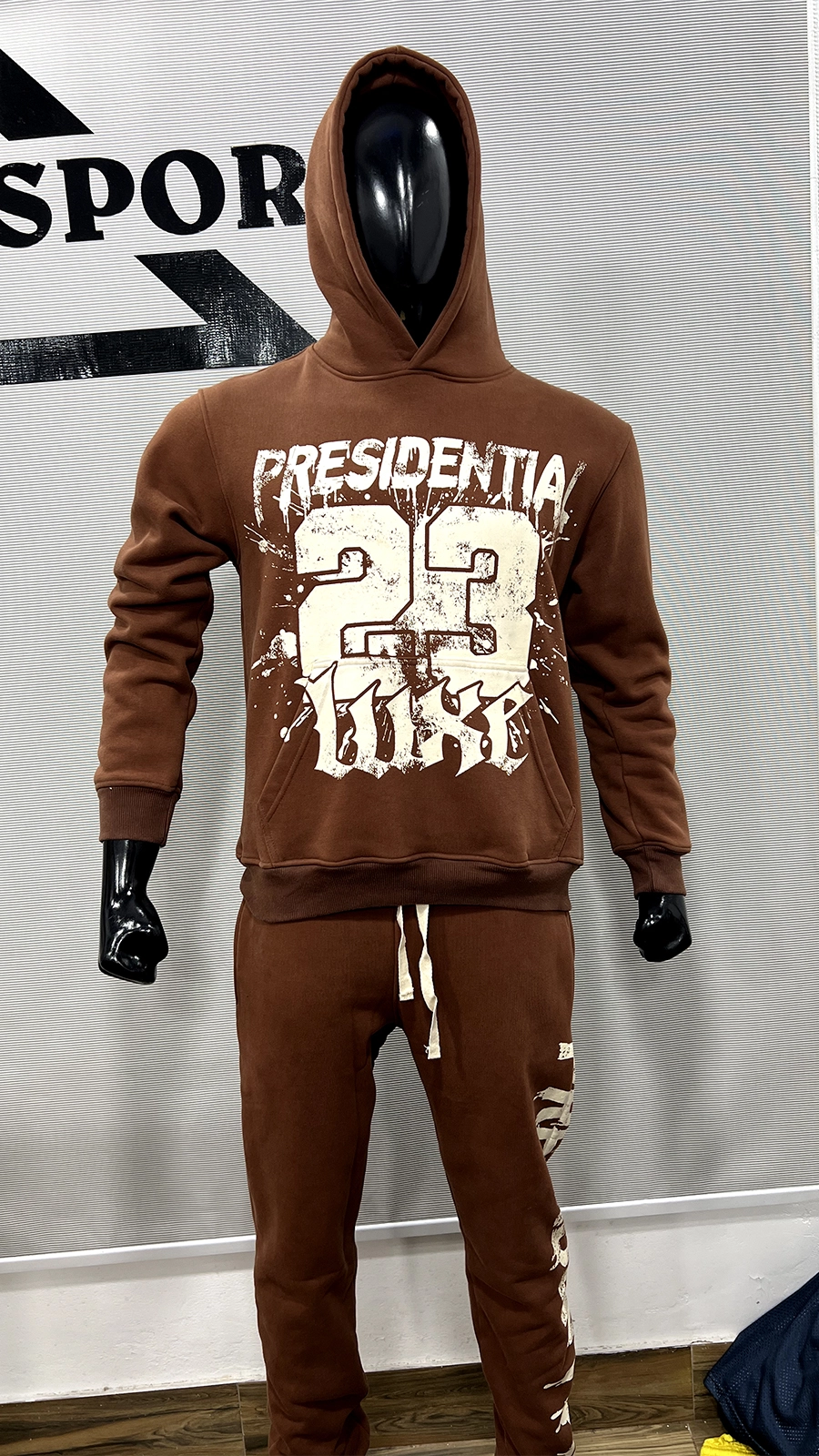
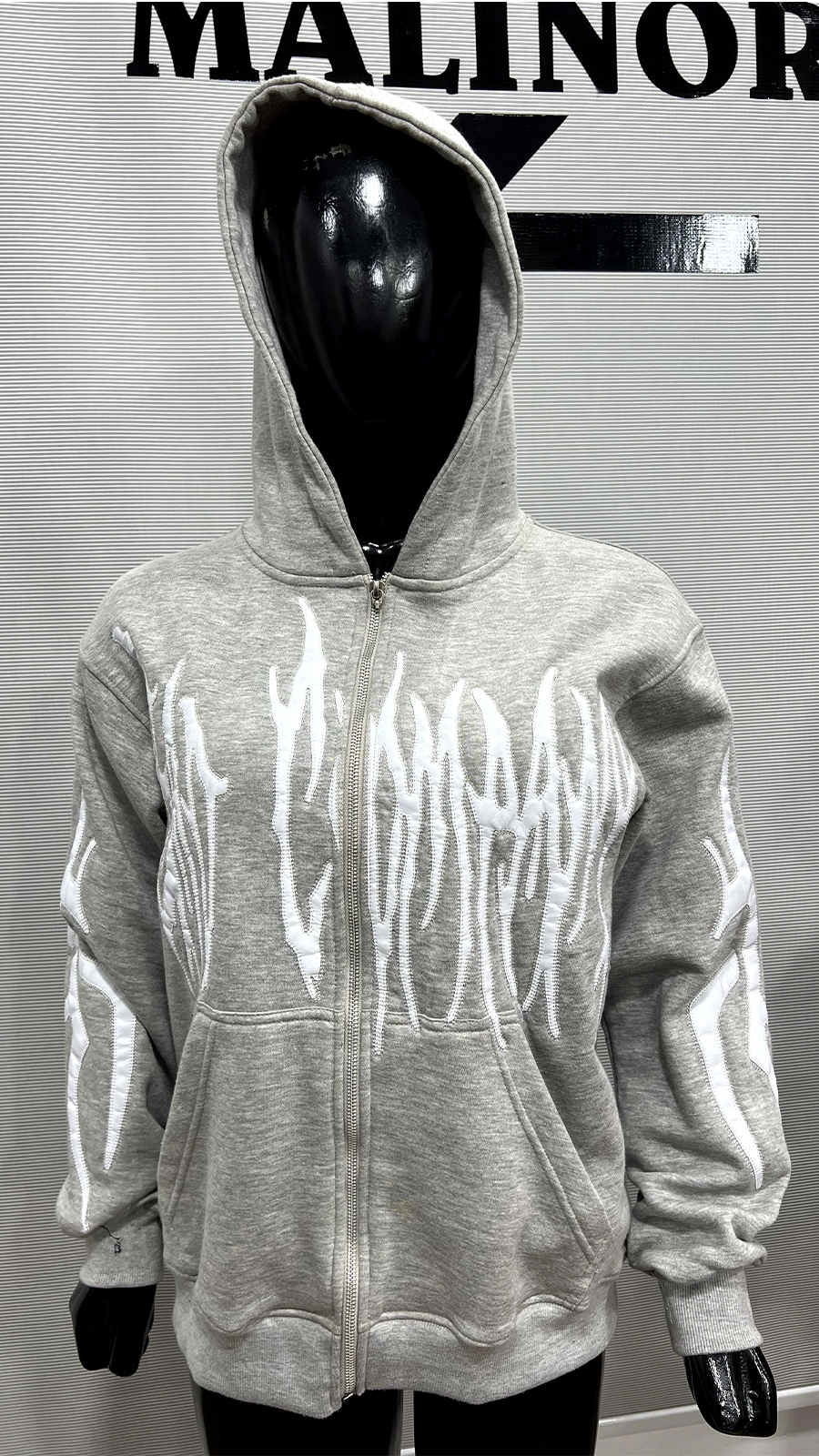
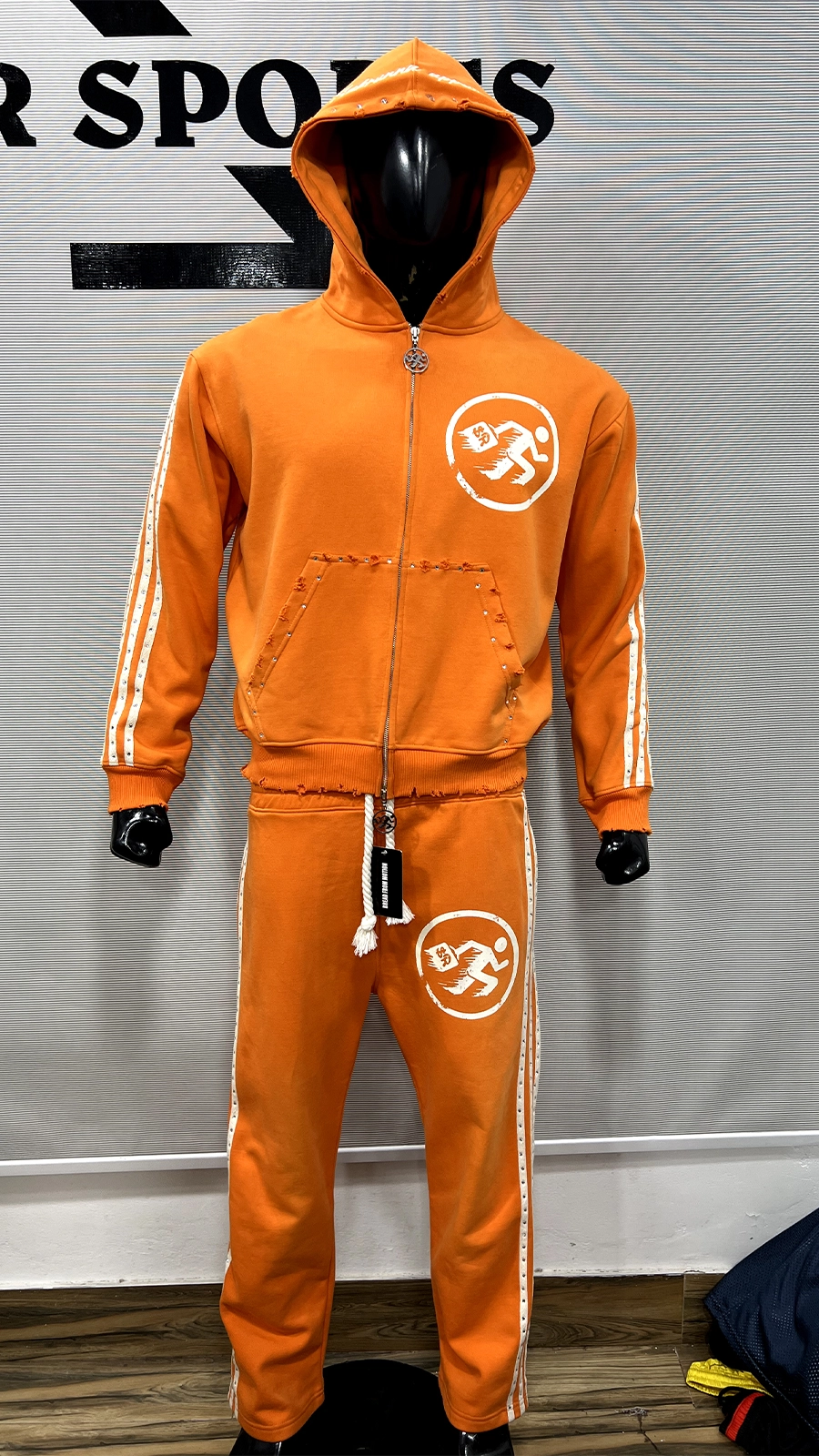
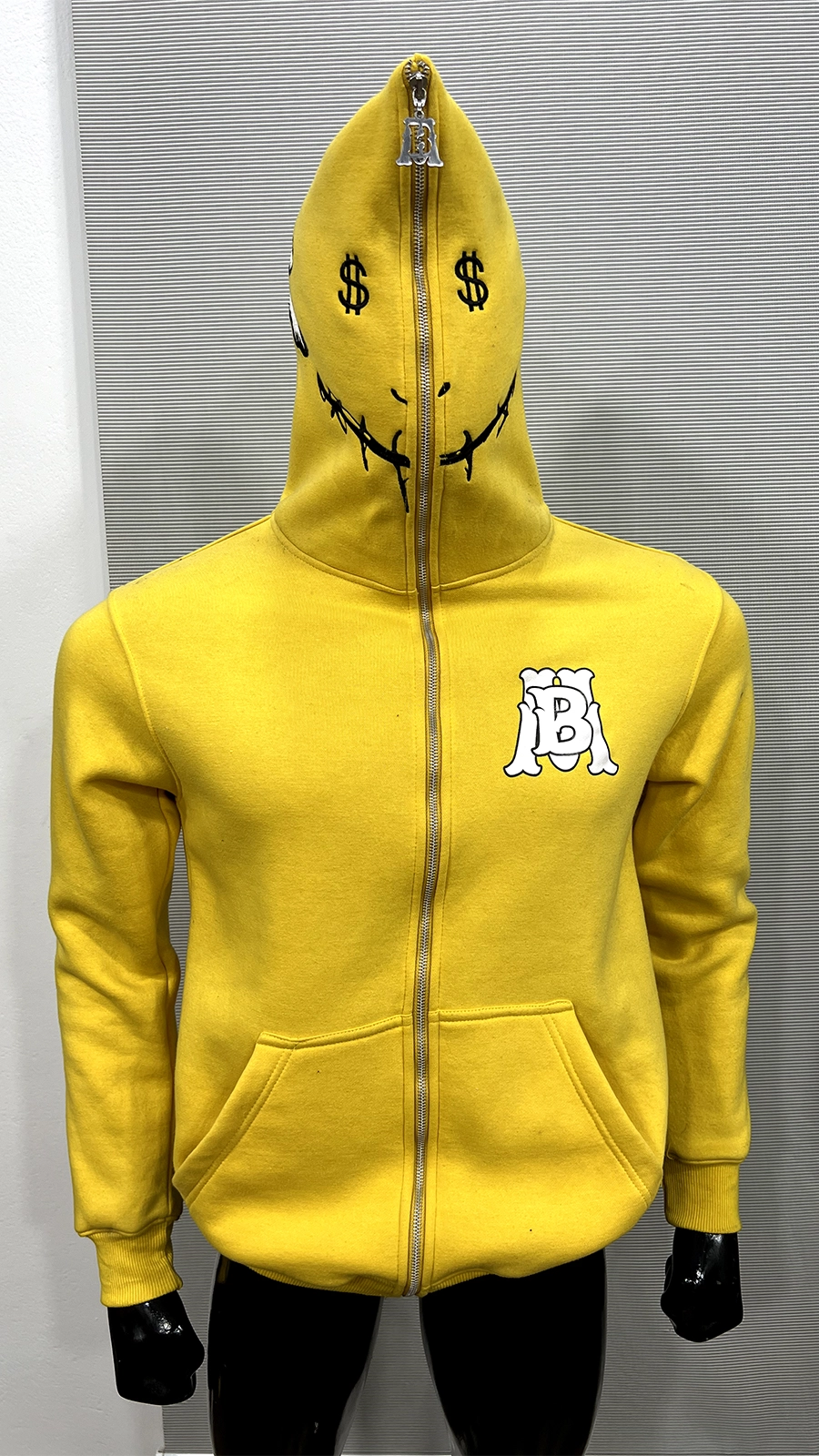
The pieces below are our own production samples, shot on the factory floor — not stock photos. Every order we run is fully custom to your spec, sizes, and branding.
01 — What "Standard Size" Actually Grades For
What a Standard Size Hoodie Manufacturer Actually Grades For
"Standard size" isn’t a marketing label — it’s a specific pattern block. On our cutting table, that means the shoulder seam sits directly on the natural shoulder point, not dropped an inch or two past it the way an oversized block is drafted. The sleeve is set at an angle that follows how an arm actually hangs, not straight down like a boxy street cut.
Grading across S–XXL follows a consistent step: chest width grows roughly 5cm per size, shoulder width around 1.3cm, sleeve length about 1.5cm. That consistency matters more here than on an oversized block, because there’s less loose fabric to hide a grading mistake — if the jump from M to L is off by even half a centimeter, it shows up as a hoodie that fits wrong in a way customers can point to and return.
Most first-time apparel brands start here, and there’s a business reason for it beyond aesthetics: standard fit is the size a shopper already knows from every other brand they own. There’s no "runs oversized, size down" note needed in your product description, and fit-related returns tend to run lower than on oversized or cropped cuts, where buyers have to guess how much ease they’re actually getting.
02 — Fabric and Construction: Matching Weight to a True-to-Body Block
Fabric and Construction: Matching Weight to a True-to-Body Block
Standard fit hoodies work best in midweight fleece — heavy enough to hold shape at the shoulder and hood, light enough that it doesn’t add bulk on a cut that already sits closer to the body than an oversized silhouette does.
| Weight | GSM | Best For |
|---|---|---|
| Midweight fleece | 300–340 GSM | Everyday basics, year-round retail |
| Heavier midweight | 340–380 GSM | Chest logos that need a stable surface, better shape recovery after wash |
| Heavyweight fleece | 380–450 GSM | Colder markets, premium hand-feel |
| French terry | Lighter hand, less loft | Warm-climate drops, transitional seasons |
Go too light — under 300 GSM — on a standard block and the hoodie loses structure at the shoulder and hood; you’ll see it sag within a few washes. Go heavy without adjusting the pattern for it, and a true-to-body cut can feel stiff instead of substantial. We work in cotton, cotton/poly blends, and French terry depending on the hand-feel and budget you’re after.
03 — Design Placement That Works on a Standard Block
Design Placement That Works on a Standard Block
The chest panel on a standard block is narrower than on an oversized cut, so a logo sized for a boxy street hoodie will often crowd this placement. Left-chest artwork typically runs 8–10cm wide — send it to us at that scale, not scaled down from a full-back design, or the digitizing (for embroidery) or print separations (for screen print and DTG) won’t read cleanly at size.
File requirements: vector files (AI, EPS, or high-res PDF) for embroidery and screen print; PNG at 300dpi minimum for DTG. The most common mistake we see from new brands is designing on a template sized for an oversized hoodie, then dropping it onto a standard block without checking hood lining color or drawcord contrast against it — artwork that reads fine on a wide oversized chest can look off-center once it lands on the narrower standard panel.
04 — What Separates a Good Standard Fit Hoodie From a Sloppy One
What Separates a Good Standard Fit Hoodie From a Sloppy One
A few checks anyone can run without a lab: the ribbed cuffs and waistband should snap back to shape after a stretch test, not stay stretched out. Shoulder seams should sit flat with no puckering — on a true-to-body cut there’s no loose fabric to hide a bad seam the way there is on an oversized drape, so puckering here is more visible, not less.
Grading consistency is the other tell. Lay a size M and a size L flat and the growth should look proportional across chest, shoulder, and sleeve, not longer in just one dimension. Check bar tacks at stress points — pocket corners, drawcord grommets — and make sure the drawcord doesn’t fray at the aglet after a few pulls. These are the same checks we run before a bulk order ships, and they’re worth running on any sample you get, from us or anyone else.
05 — MOQ and Sampling: What to Expect
MOQ and Sampling With Your Standard Size Hoodie Manufacturer
MOQ on standard size hoodies starts at 50 pieces per style, and that count splits across whatever size run you need — you’re not required to order 50 of a single size. Your sample takes 6–10 days to produce, and the full cost of that sample gets credited against your bulk order once you move forward, so sampling doesn’t add to your total spend.
Standard fit is usually the safest style to sample first, precisely because there’s nowhere for a bad fit to hide — an oversized hoodie can mask a slightly-off shoulder under extra fabric; a true-to-body cut can’t. If you can, get two sizes sampled (say, a S and an L) rather than just one, so you can check the grading is holding across the run before committing to bulk.
06 — What Actually Moves Your Price
What Actually Moves Your Price
Price on a standard size hoodie moves on four things: fabric weight and blend (heavier GSM and French terry cost more than a basic cotton/poly midweight), the decoration technique and how much surface area it covers, your total order volume, and how complex the size run is — a tight S–XL run costs less to grade and cut than a full S–3XL spread.
Because those variables interact, we don’t publish flat pricing. Run your spec through our Instant Quote tool instead: it walks you through GSM, technique, and quantity, gives you a price estimate in 5 seconds, and generates a downloadable PDF quote you can forward internally. From there you can continue straight to WhatsApp with your quote pre-filled, and our team confirms the final number within 24 hours.
07 — Shipping to the UK and EU Duty-Free
Shipping to the UK and EU Duty-Free
Manufacturing in Pakistan carries a trade advantage most buyers don’t factor in until they compare landed cost. Apparel made here enters the UK at 0% duty under the Developing Countries Trading Scheme, and the EU at 0% duty under GSP+ — versus roughly 12% on the same goods sourced from China. On a bulk hoodie order, that gap alone can outweigh a few cents per piece of difference in factory pricing.
Details on eligibility and the current tariff schedule are on the UK government’s own guidance page: Developing Countries Trading Scheme (DCTS) — GOV.UK.
08 — When Standard Fit Isn't the Right Call
When Standard Fit Isn’t the Right Call
Standard fit isn’t the right call if your brand’s whole identity is built around an oversized, drop-shoulder silhouette — boxy street cuts, exaggerated proportions, that kind of look. Cutting those to a true-to-body block just makes them read as a smaller, generic hoodie instead of the intentional oversized shape your customer is expecting. If that’s your brand, go straight to our Over Size Hoodie page instead — different pattern block, different grading logic, built for exactly that silhouette.
Table of Contents
Simple Process
From Spec to Shipped, in Four Steps
01
Quote & Spec
Run your GSM, size run, and decoration through the Instant Quote tool; get a price estimate and a downloadable PDF in 5 seconds.
02
Sample
We cut and sew your standard fit sample in 6–10 days; you get photos and can join a live video call from the floor before it ships.
03
Approve & Bulk
Approve the sample (its cost is credited to your order) and we cut your full size run — production takes 12–15 days.
04
Ship
Finished hoodies go out via DHL/FedEx air (3–7 days) or sea freight for larger volumes, landing duty-free in the UK and EU.
Our Advantage
Why Brands Choose Malinor
Floor Video Call Before You Pay Anything
See your actual hoodie run in production, not a stock photo, before you commit to bulk.
Sample Cost Credited in Full
Nothing you spend on sampling is wasted once you move to bulk.
In-House Embroidery, Printing, and Washing
No subcontracting a decoration step to a third shop, so your timeline doesn’t depend on someone else’s queue.
Fast, Direct Replies
Most quote and spec questions get answered within 2 hours during business hours.
Common Questions
Frequently Asked Questions
How is a standard size hoodie graded across S–XXL?+
Our base pattern grades in consistent steps — roughly 5cm per size in chest width, 1.3cm in shoulder width, and 1.5cm in sleeve length. That keeps the fit proportional from S through XXL instead of stretching in just one dimension. We check this on every sample by laying two non-adjacent sizes flat and measuring growth against spec before bulk cutting starts.
What GSM should I choose for a standard fit hoodie?+
Most brands land between 300–340 GSM midweight fleece — heavy enough to hold structure at the shoulder and hood without adding bulk to a body-skimming cut. Go heavier, up to 450 GSM, for colder markets or a premium hand-feel; go lighter with French terry for warm-climate or transitional-season drops. We can send fabric swatches before you commit to a spec.
Will a true-to-body block show seam puckering more than an oversized hoodie?+
Yes, and that’s actually useful. An oversized cut has extra fabric that can mask a slightly uneven shoulder seam; a standard block sits closer to the body, so any puckering shows immediately. We treat that as a built-in quality check — if a standard fit sample lies flat with clean seams, the construction underneath it is solid.
Can I mix standard and oversized fits in the same order?+
Yes, but they run as separate styles against your 50-piece MOQ each, since they use different patterns and grading. Many brands do exactly this — standard fit for the everyday basic, oversized for a hero drop. Run both through the Instant Quote tool separately and we’ll align production so they ship together if you need that.
What’s the minimum order quantity?+
50 pieces per style, with sizes split however your size run needs — you’re not locked into 50 of one size. That MOQ applies per style, so a standard fit hoodie and an oversized hoodie in the same order each need their own 50-piece minimum.
How long does shipping take?+
DHL or FedEx air freight takes 3–7 days worldwide once your order is finished. For larger volumes, sea freight is available at a lower cost per unit but a longer transit time — we’ll walk you through both options once your bulk order is confirmed.
Run Your Spec Through the Instant Quote Tool
Get a price estimate in 5 seconds, a downloadable PDF, and a straight line to WhatsApp with your quote pre-filled. Before you pay anything, we’ll get you on a live video call from the production floor.