Distress Sweat Pants Manufacturer
Distress Sweat Pants Manufacturer Where the Knee Is the Riskiest Spot
As a distress sweat pants manufacturer based in Sialkot, Pakistan, we treat knee distressing as the highest-stakes placement on this entire garment — reinforced the same careful way regardless of how casual the finished look is meant to appear. MOQ starts at 50 pieces per style with sizes split however you need, your sample takes 6–10 days and its full cost is credited against the bulk order, and production runs 12–15 days once you approve it.
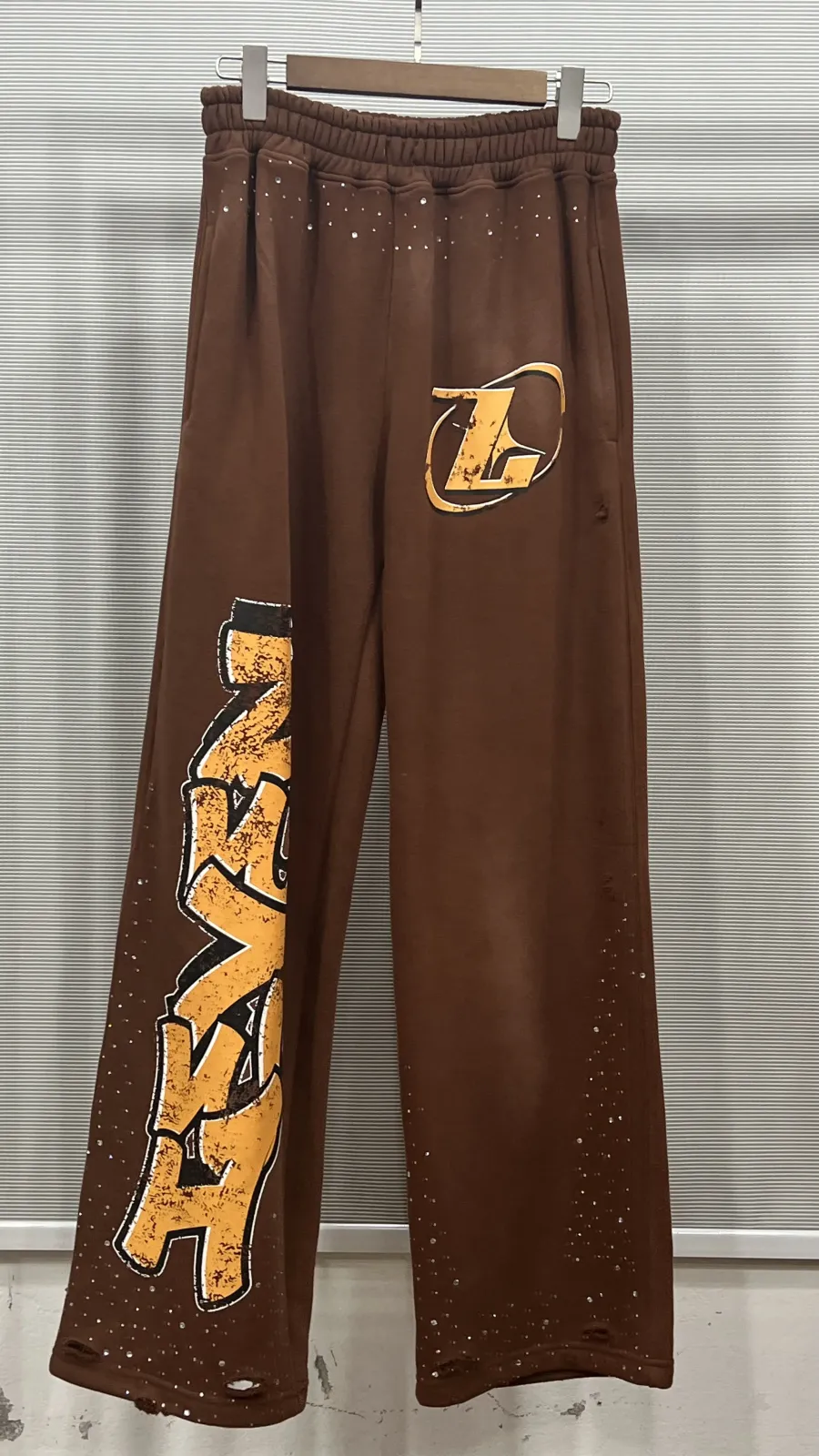
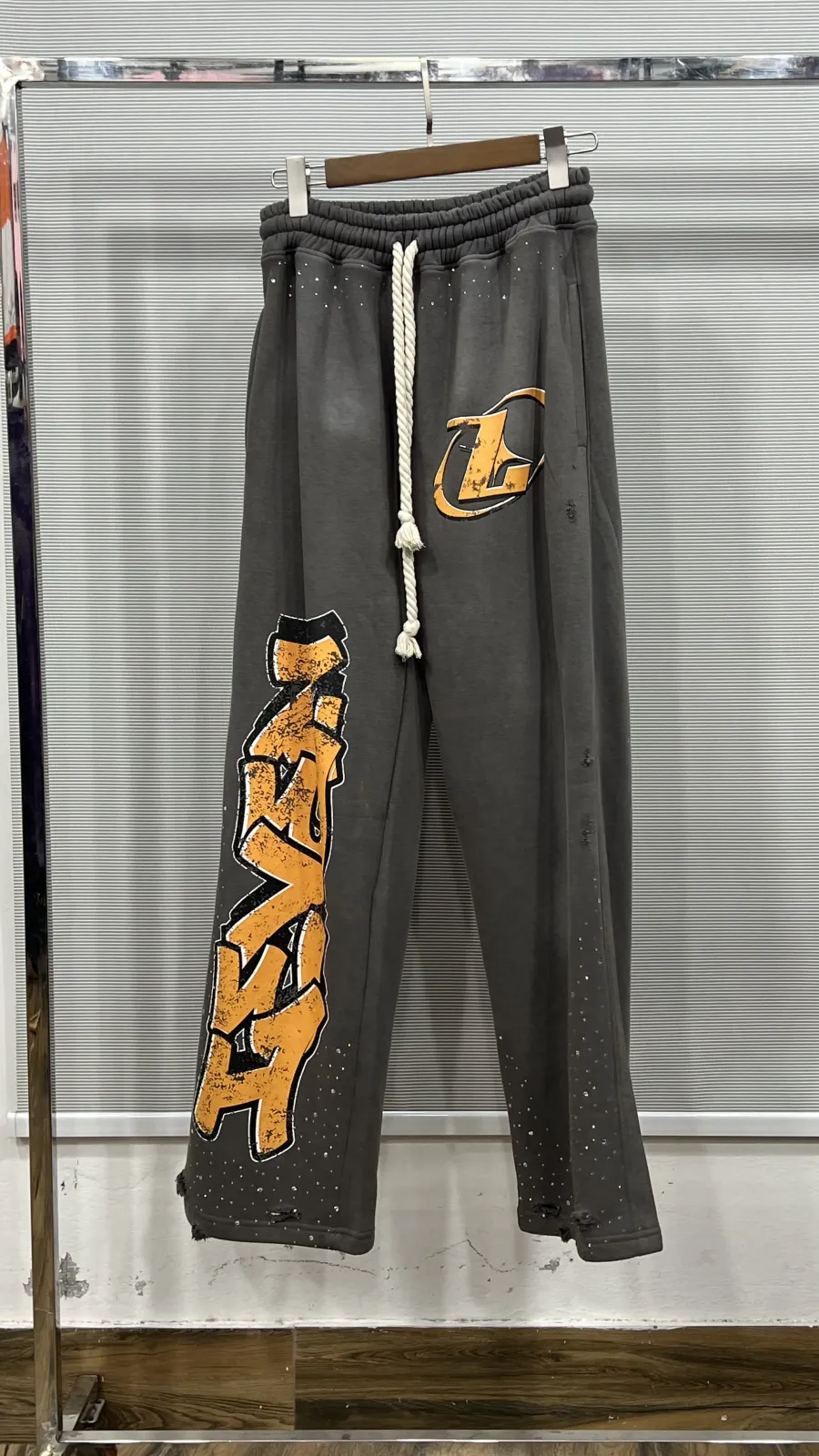
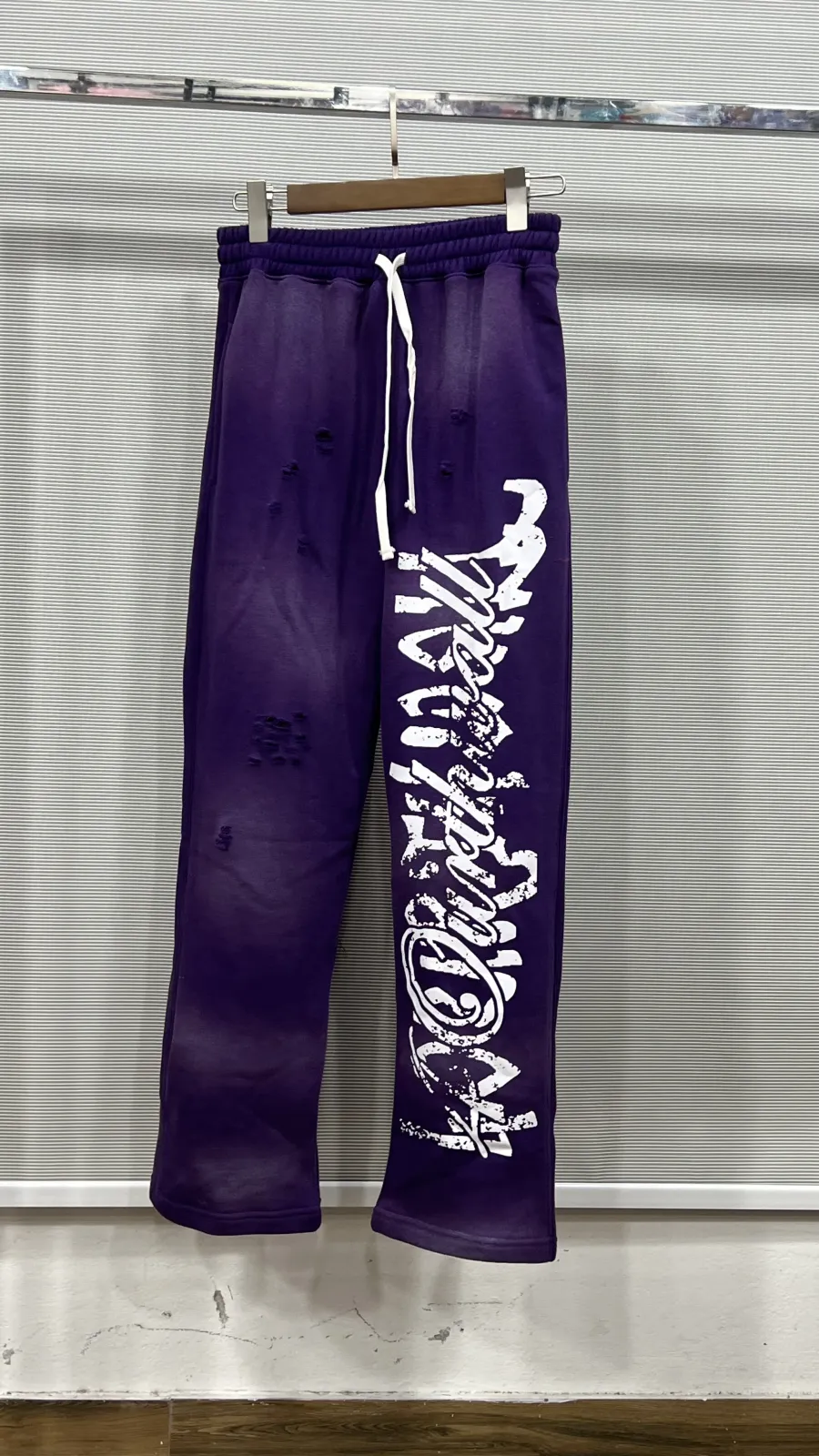
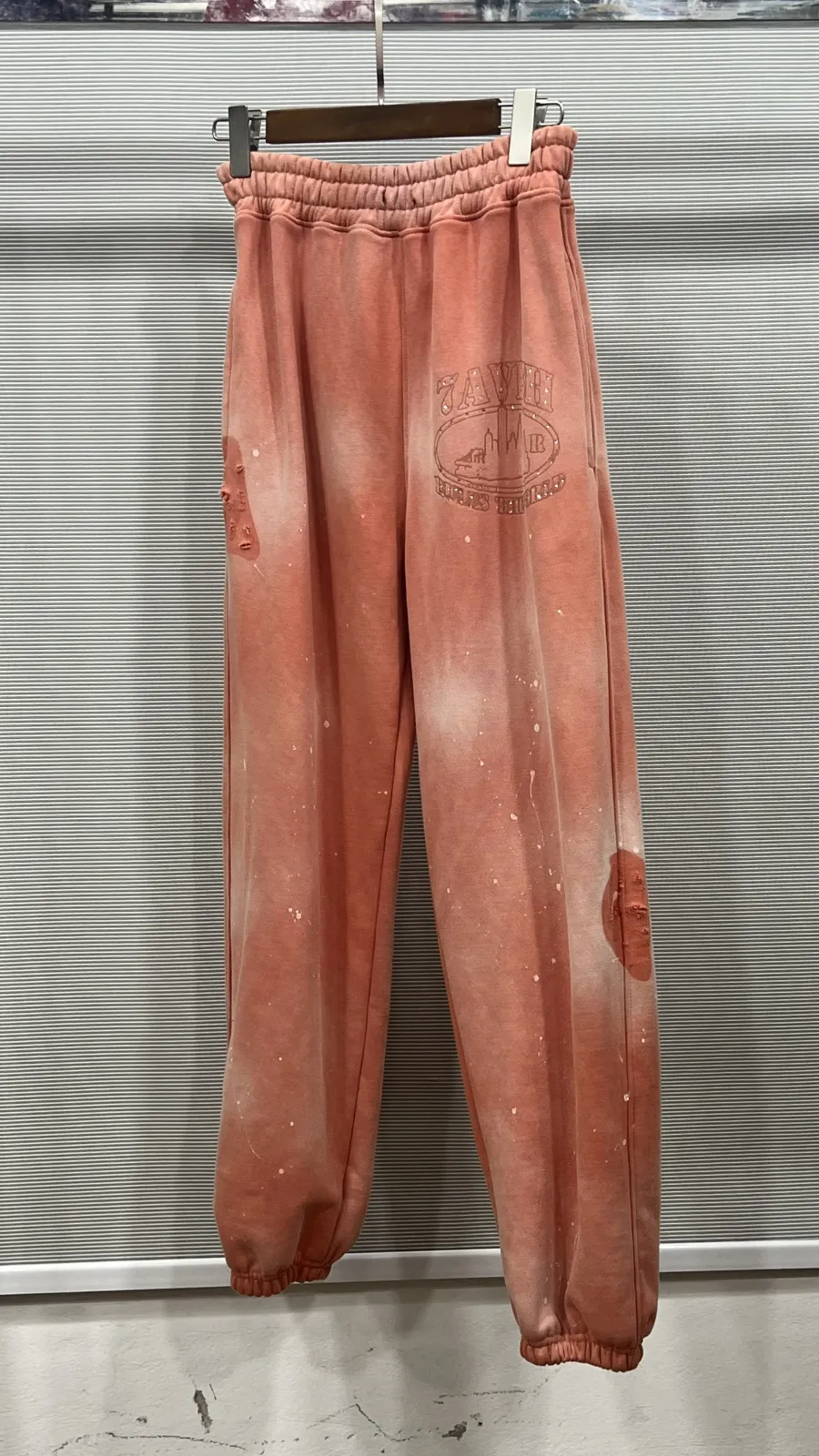
The pieces below are our own production samples, shot on the factory floor — not stock photos. Every order we run is fully custom to your spec, sizes, and branding.
01 — Why the Knee Is the Riskiest Distress Placement on Sweatpants
What a Distress Sweat Pants Manufacturer Treats as the Real Risk
Distressed knees are the classic blown-out look borrowed straight from denim, and they’ve become just as common a request on sweatpants. What’s worth knowing before you spec a design this way: the knee sees more repeated flexing and kneeling stress than any other placement we distress on any garment in our lineup — more than an elbow on a hoodie, more than a cuff or hem on a tee.
That makes knee reinforcement the single most important construction detail on distressed sweatpants, full stop. A rip that’s meant to look casually blown-out still needs the same careful bar-tacking at its ends that any deliberate tear needs elsewhere, but here the stakes are higher — a knee that fails structurally doesn’t just look bad, it can genuinely compromise the garment’s usability. We treat this placement with more scrutiny than any other distress zone specifically because of how much repeated stress it has to withstand.
None of that should discourage you from the look if it’s what your brand wants — distressed-knee sweatpants have a strong, established following precisely because they read as authentically worn rather than manufactured. The point is just that "authentic-looking" and "actually durable" both need to be true at the same time, and getting there takes more careful construction than it might look like from the outside.
02 — Fabric and Construction: Why Sweatpants Fleece Distresses More Predictably Than Jersey
Fabric and Construction: Why Sweatpants Fleece Distresses More Predictably Than Jersey
| Weight | GSM | Distress Result on Sweatpants |
|---|---|---|
| Midweight fleece | 320–360 GSM | Light distressing, subtle wear |
| Heavyweight fleece | 380–450+ GSM | Reinforced rips, knee distressing, heavier distress |
Our distress t-shirt page covers a real risk specific to lightweight jersey: a knit’s loop structure can run or ladder past where a tear was meant to stop, the same phenomenon that ruins a stocking. Sweatpants fleece is a heavier, brushed-back knit construction, and while it’s technically still a knit, its weight and structure make it considerably more resistant to that running tendency than thin tee jersey — closer in behavior to hoodie fleece than to a lightweight tee. That’s a genuine advantage worth knowing if you’ve read our other distress pages and are wondering whether the same laddering caution applies here; it’s a real but smaller risk on this heavier fabric.
That heavier weight also gives sanding more margin to work with safely, the same positive pattern we’ve found across sweatpants decoration generally. It doesn’t remove the need for careful reinforcement at high-stress points like the knee, but it does mean the fabric itself is a better starting point than a lightweight jersey would be for this technique.
There’s still a real limit, though — heavier fabric gives more margin, not unlimited margin. Over-sand even a heavy fleece and you’ll still thin it past the point of safe recovery, especially at a spot like the knee that’s already under repeated mechanical stress from bending. We calibrate sanding intensity to both the fabric weight and the specific placement, treating a knee sanding pass more conservatively than the same intensity applied to a less-stressed area of the leg.
03 — Wear Zones, the Gusset, and Spec Requirements
Wear Zones, the Gusset, and Spec Requirements
Sweatpants have their own distinct wear-zone map, different from anything on a top. The knee is the highest-stakes zone, as covered above. The hip and outer thigh see wear from general movement and friction. The hem and ankle area picks up contact wear from shoes. And the waistband edge sees repeated bending every time the pants go on and off.
One placement to actively avoid: distressing too close to the gusseted crotch seam. That insert is already a structurally important reinforcement point built to handle repeated stress from movement, and deliberately weakening the fabric near it works against the very reinforcement the gusset is there to provide. Keep distress placements a reasonable distance from that seam rather than layering two different stress considerations on top of each other. As with any distress order, decide upfront whether you want tight consistency across the run or natural variation piece to piece, and let us know if you’re planning to pair the distressing with an acid wash or spray wash treatment — sequencing both together on the same production run gives a more cohesive result than treating them separately.
Since there’s no artwork file for a distress spec, reference photos are your best tool for communicating exactly what you want — mark the specific wear zones, tear length and direction, and sanding intensity per zone rather than describing it in general terms. A photo of a specific pair of jeans or sweatpants you like the distressing on, even from another brand, tells us more in five seconds than a paragraph of description would.
04 — What Separates Controlled Wear From a Knee That's Actually Failing
What Separates Controlled Wear From a Knee That’s Actually Failing
Give any knee reinforcement a real test — not just a gentle tug, but something closer to the flexing motion an actual knee goes through when someone sits down or kneels. That’s a higher bar than the standard tug test we run on other distress placements, and it’s specifically warranted given how much more stress this zone sees in real wear.
Check that distressing hasn’t crept too close to the gusset seam, and run the standard checks on any other distress points — sanded areas thin but not torn through unless a hole was requested, frayed edges secured rather than actively unraveling. If you’ve asked for matched legs, confirm the wear pattern corresponds on both; if you’ve asked for natural variation, confirm it still reads as authentically worn rather than randomly damaged.
05 — MOQ and Sampling: What to Expect
MOQ and Sampling With Your Distress Sweat Pants Manufacturer
MOQ is 50 pieces per style, split across whatever size run you need. Sampling takes 6–10 days, and the full cost is credited against your bulk order once you move forward. That same credit policy applies here as it does across every technique and category we offer.
If your design includes knee distressing, stress-test that specific area on the sample more thoroughly than you would any other placement — actually bend the knee area repeatedly the way normal wear would, not just a static pull. That’s the single most valuable check you can run before committing a knee-distressed design to a 50-piece bulk order.
If you’re new to ordering distressed sweatpants, it’s worth asking us directly what level of testing we’d recommend for your specific design rather than guessing. A design with only light sanding away from any high-stress zone needs less scrutiny than one built around reinforced knee tears, and we’re happy to tell you honestly where your particular spec falls on that spectrum.
06 — What Actually Moves Your Price
What Actually Moves Your Price
Distressing scales with the number of distress points and how technically demanding each one is, the same principle as any distress garment — knee reinforcement specifically takes more careful, time-intensive work than a simpler sanded spot elsewhere on the leg, given how much stress it needs to withstand. Fabric GSM, whether the distressing is combined with a wash treatment, and total order volume round out the rest.
A design with two or three simple sanded zones and no knee work costs meaningfully less than one built around reinforced knee tears on both legs, even at the same overall visual "amount" of distressing. If budget is a real constraint, it’s worth discussing which distress zones matter most to your design and prioritizing those rather than distributing a fixed budget evenly across every possible placement.
We don’t publish flat pricing because those variables interact too much to be useful as a single number. Run your spec through our Instant Quote tool instead — it gives you a price estimate in 5 seconds, a downloadable PDF quote, and a direct line to WhatsApp with your quote pre-filled. Final pricing is confirmed by our team within 24 hours.
07 — Shipping to the UK and EU Duty-Free
Shipping to the UK and EU Duty-Free
Manufacturing in Pakistan carries a trade advantage worth factoring into your landed cost. Apparel made here enters the UK at 0% duty under the Developing Countries Trading Scheme, and the EU at 0% duty under GSP+, versus roughly 12% on equivalent goods sourced from China.
Details on eligibility and the current tariff schedule are on the UK government’s own guidance page: Developing Countries Trading Scheme (DCTS) — GOV.UK. It’s worth checking directly if landed cost is a factor in your sourcing decision.
08 — When Distress Isn't the Right Call
When Distress Isn’t the Right Call
Distress isn’t the right call for activewear or performance sweatpants, where deliberate thin spots and holes — especially at a high-movement zone like the knee — work directly against durability expectations. It’s also the wrong fit for budget-conscious high-volume basics, since the reinforcement work involved adds real cost per unit. If you want a worn-in look without the structural considerations, our Acid Washed Sweat Pants page delivers that faded vintage color without any tear-and-reinforcement tradeoffs.
Table of Contents
Simple Process
From Spec to Shipped, in Four Steps
01
Quote & Spec
Run your GSM, distress zones, and intensity through the Instant Quote tool; get a price estimate and a downloadable PDF in 5 seconds.
02
Sample
We sand, tear, and reinforce a physical sample in 6–10 days; you can join a live video call from the floor before it ships.
03
Approve & Bulk
Approve the sample (its cost is credited to your order) and we run your full size and quantity — production takes 12–15 days.
04
Ship
Finished sweatpants go out via DHL/FedEx air (3–7 days) or sea freight for larger volumes, landing duty-free in the UK and EU.
Our Advantage
Why Brands Choose Malinor
Floor Video Call Before You Pay Anything
See your actual distress run in production, not a stock photo, before you commit to bulk.
Sample Cost Credited in Full
Nothing you spend on sampling is wasted once you move to bulk.
In-House Sanding, Distressing, and Reinforcement
No subcontracting any decoration step to a third shop, so your timeline doesn’t depend on someone else’s queue.
Fast, Direct Replies
Most quote and spec questions get answered within 2 hours during business hours.
Common Questions
Frequently Asked Questions
Why does knee distressing need more reinforcement than other distress placements?+
The knee sees more repeated flexing and kneeling stress than any other spot we distress on any garment we make — more than an elbow, a cuff, or a hem. A rip there needs the same careful bar-tacking as any deliberate tear, but the consequences of getting it wrong are higher, since a knee that fails structurally genuinely compromises how usable the garment is.
Does sweatpants fleece ladder or run the way tee jersey can?+
Less so. Fleece is a heavier, brushed-back knit that behaves more like hoodie fleece than lightweight tee jersey for resisting a run past a tear point. The risk isn’t zero, since it’s still a knit construction, but sweatpants fabric gives distressing considerably more margin to work with safely than thin jersey does.
Can distressing be placed near the gusseted crotch seam?+
We’d actively recommend against it. The gusset is already a structurally important reinforcement built to handle repeated movement stress, and deliberately weakening fabric near it works against what that reinforcement is there to do. We keep distress placements a reasonable distance from that seam rather than compounding two different stress considerations in the same spot.
Can distressing be combined with an acid wash or spray wash finish?+
Yes, and it’s a common combination for a full vintage look. Sequencing the wash and the distressing together on the same production run gives a more cohesive result than layering one onto a garment already finished with the other — tell us upfront if you’re planning this pairing so we can plan the order of operations.
What’s the minimum order quantity?+
50 pieces per style, with sizes split however your size run needs — you’re not locked into 50 of one size. A distressed sweatpant and an acid-washed sweatpant in the same order each need their own 50-piece minimum, since they’re different styles.
How long does shipping take?+
DHL or FedEx air freight takes 3–7 days worldwide once your order is finished. For larger volumes, sea freight is available at a lower cost per unit but a longer transit time — we’ll walk you through both options once your bulk order is confirmed and ready to move.
Run Your Spec Through the Instant Quote Tool
Get a price estimate in 5 seconds, a downloadable PDF, and a straight line to WhatsApp with your quote pre-filled. Before you pay anything, we’ll get you on a live video call from the production floor.