Double Sleeve T Shirt Manufacturer
Double Sleeve T Shirt Manufacturer Built for the Layered Look Without the Bulk
As a double sleeve t shirt manufacturer based in Sialkot, Pakistan, we build the short-outer, long-inner sleeve look as one clean garment — no bunched shoulder seam, no visible construction seam giving away that it’s not actually two shirts stacked on top of each other. MOQ starts at 50 pieces per style with sizes split however you need, your sample takes 6–10 days and its full cost is credited against the bulk order, and production runs 12–15 days once you approve it.
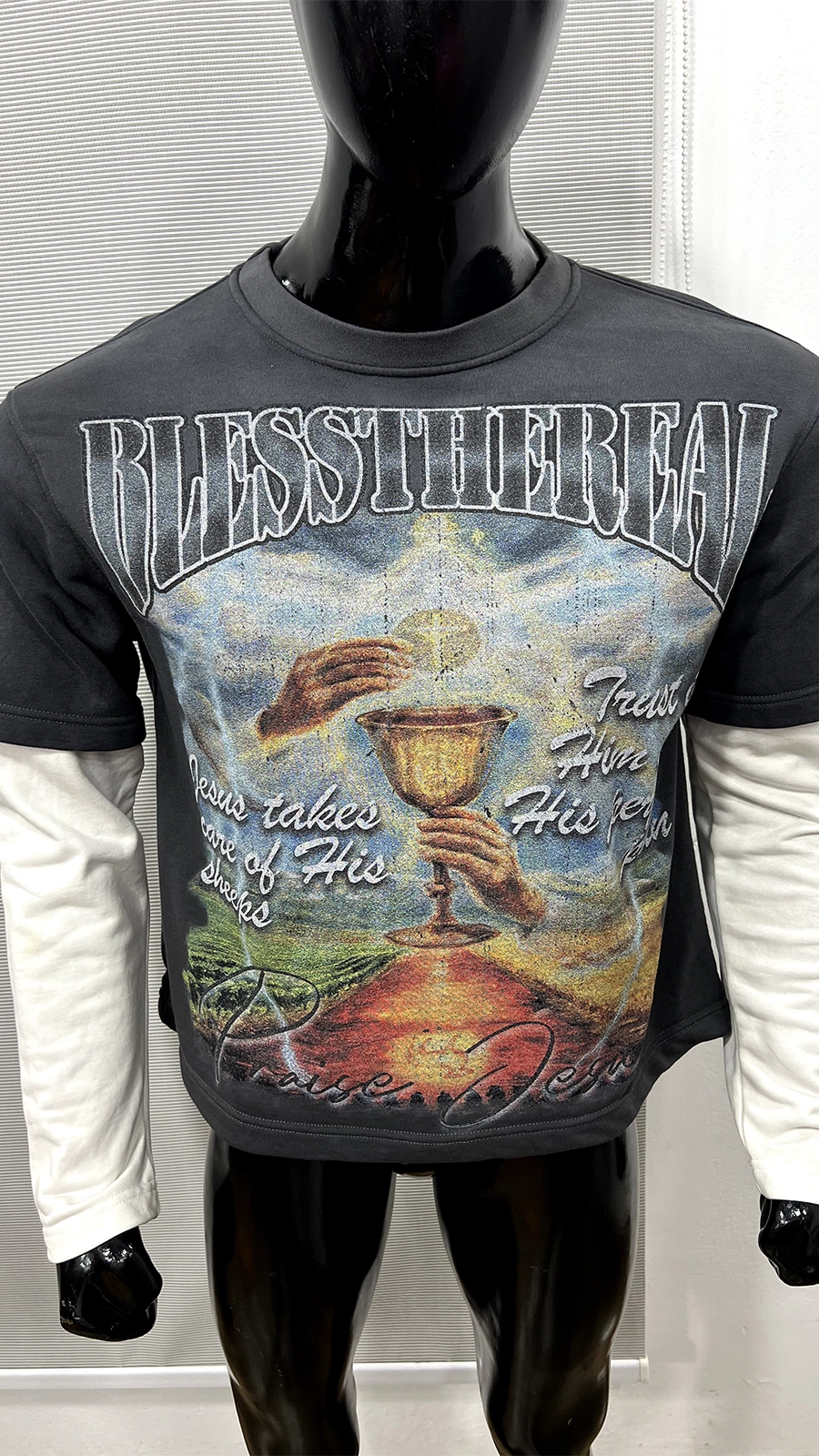
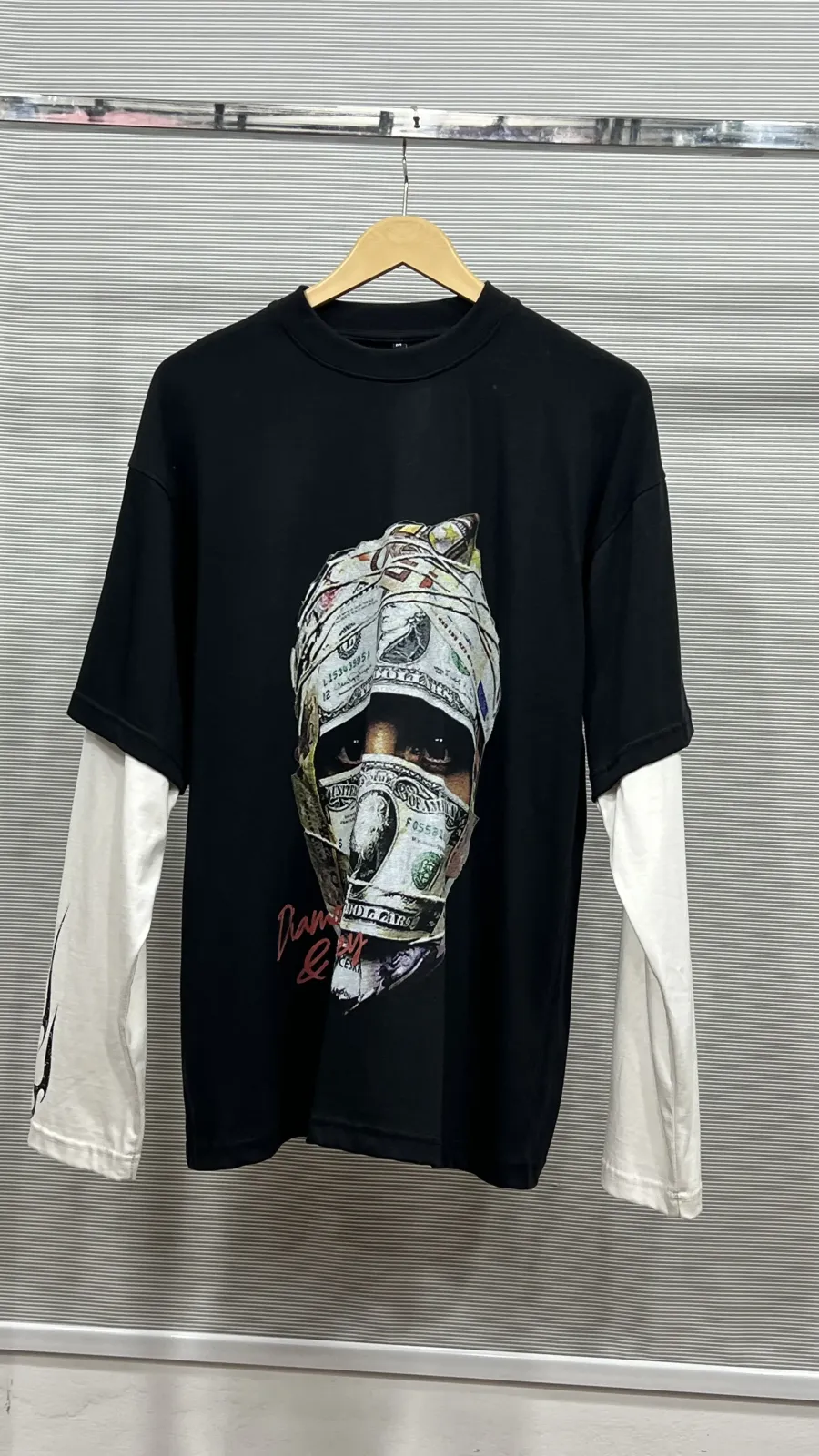
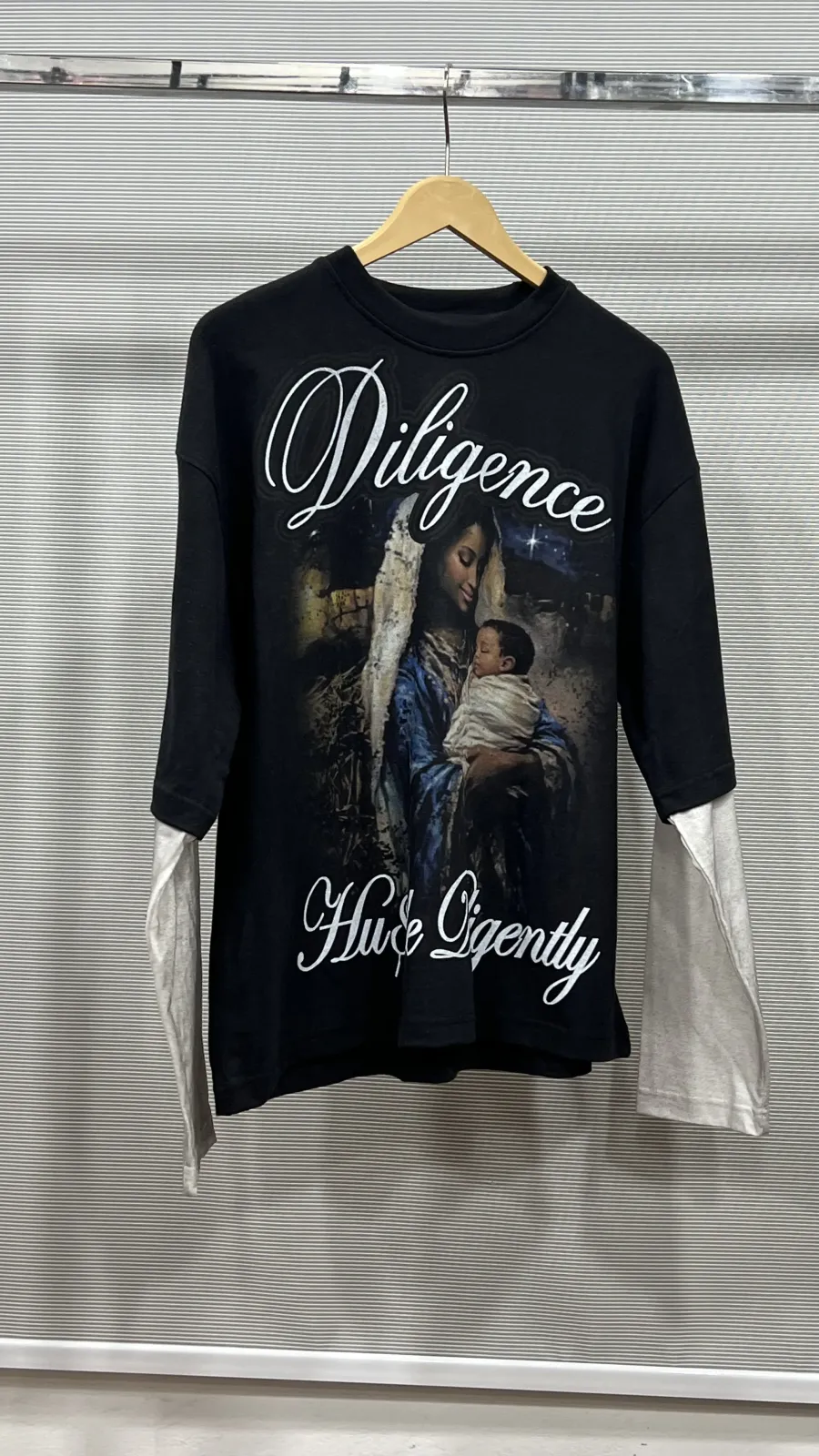
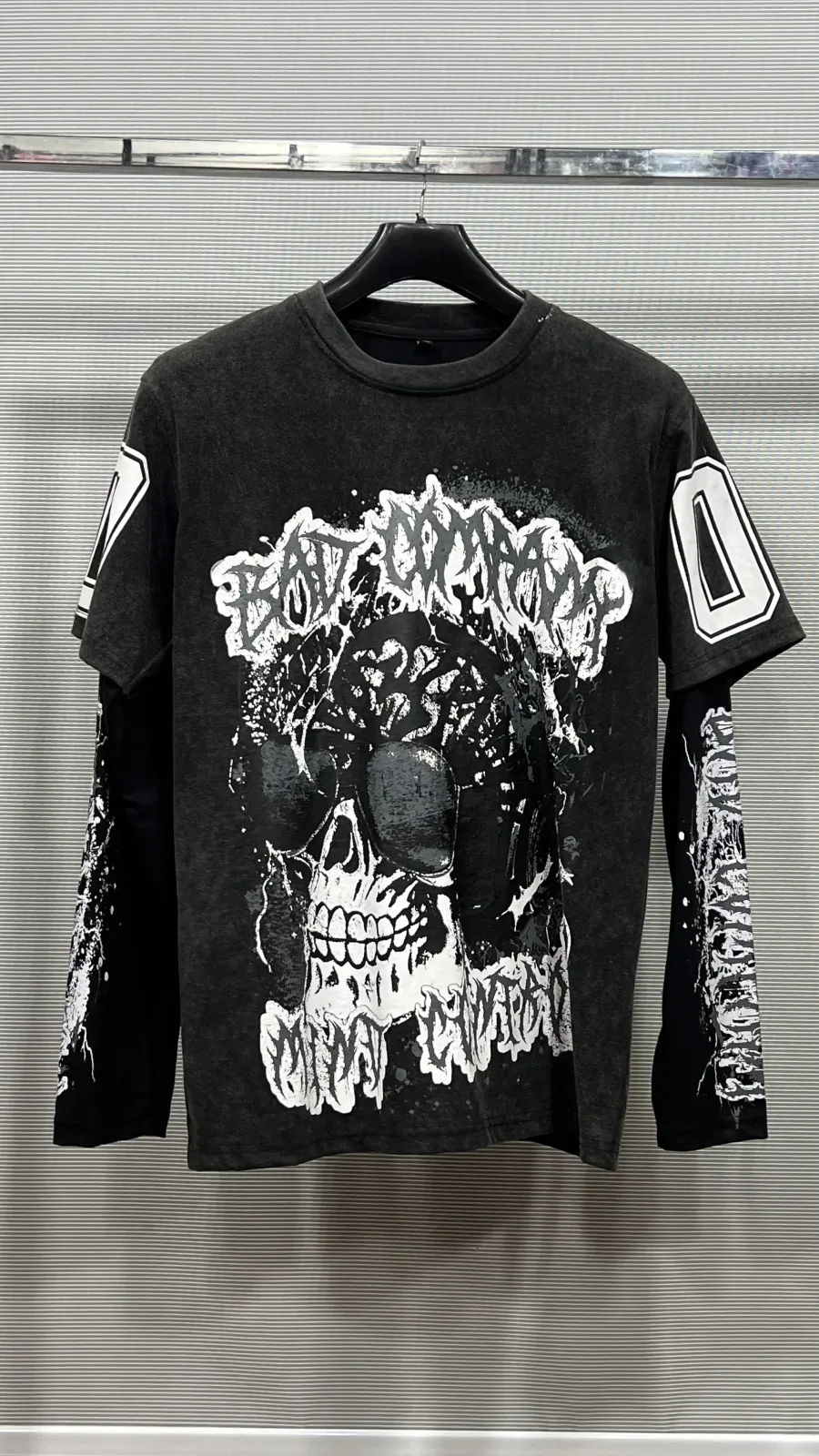
The pieces below are our own production samples, shot on the factory floor — not stock photos. Every order we run is fully custom to your spec, sizes, and branding.
01 — What "Double Sleeve" Actually Means in Construction
What a Double Sleeve T Shirt Manufacturer Actually Builds
A double sleeve tee is two sleeve layers built into one garment: an outer sleeve cut at standard short-sleeve length, sitting on top of an inner sleeve that runs the full arm down to the wrist. From the outside, it reads exactly like a long-sleeve shirt worn under a tee — but it’s one single piece of clothing, both sleeve layers constructed into the same shoulder, not two garments layered by the wearer.
This is a genuinely customizable category, and it’s worth saying upfront that there’s no single fixed proportion or combination that defines it. The outer sleeve can end anywhere from the top of the shoulder to partway down the bicep. The inner sleeve’s visible portion — how much of it shows below the outer layer — is a design choice, not a fixed measurement. And the two layers can match in color and fabric for a subtle tonal effect, or contrast sharply for a bold color-blocked look. Everything on this page applies across that range of variations, since the underlying construction principles stay the same regardless of exactly how you proportion or color your specific design.
02 — Fabric and Construction: Attachment Methods and Fit Contrast Between Layers
Fabric and Construction: Attachment Methods and Fit Contrast Between Layers
The single-seam method is what most double sleeve tees use — both layers gathered into the armhole in one stitch line. That efficiency comes with a real pattern-grading responsibility: two layers of fabric bunched into one seam carry more bulk than a standard single-sleeve armhole, and if the pattern doesn’t account for that, the shoulder can look visibly overstuffed rather than intentionally layered. Careful grading at this seam is what keeps the construction reading as clean rather than clumsy.
| Attachment Method | Description | Best For |
|---|---|---|
| Single-seam attachment | Both sleeve layers caught in one shoulder seam | The standard, most efficient approach |
| Separate attachment | Inner sleeve set first, outer layered on afterward | More construction steps, but allows more independent fabric or color choice between layers |
Shoulder taping still applies here, the same reinforcement we use on any tee to prevent the neckline and shoulder area from stretching out. On a double sleeve garment, this seam is already carrying more construction weight than a standard tee’s shoulder does, simply from the doubled fabric — skipping proper reinforcement here is a bigger risk than it would be on a lighter, single-layer construction.
Fit contrast between the two layers is part of what sells the illusion. The inner sleeve is typically cut closer and slimmer to the arm than a standalone long sleeve tee would be — closer to a base-layer or compression fit — while the outer sleeve keeps standard tee sleeve proportions. That contrast is deliberate: it’s what makes the inner layer read as a separate garment peeking out rather than just a longer version of the outer sleeve.
03 — Color Combinations, Cuffs, and File Requirements
Color Combinations, Cuffs, and File Requirements
Color and fabric choice across the two layers is one of the biggest design decisions on this style. A sharp contrast — black outer sleeve over a white inner sleeve, for instance — reads as an intentional color-blocked statement. A tonal approach, same color but a different fabric weight or texture between layers, gives a subtler, more technical look. Both are common, and neither is more "correct" than the other; it depends on what your brand is going for.
The inner sleeve’s cuff is the only cuff that’s actually visible on the finished garment, so it gets the same treatment options we cover on our long sleeve tee page — ribbed for a fitted, athletic look, hemmed for something more relaxed, or a reinforced thumbhole if that fits your design. The outer sleeve’s hem is typically just a standard short-sleeve finish, since it ends mid-arm rather than at a wrist that needs a cuff. When you brief us, spell out the outer sleeve length, how much of the inner sleeve should show, and the color or fabric for each layer — these three details define your specific version of the style, and getting them clear upfront avoids a resample.
A simple sketch or reference photo marking where the outer sleeve ends relative to the elbow or bicep, alongside a swatch or Pantone reference for each layer’s color, gets us most of the way to an accurate first sample. If you’re working from an existing product you like the proportions of, sending us photos of that piece — even from a different brand — is a faster way to communicate the look than trying to describe exact measurements from scratch.
04 — What Separates a Clean Layered Sleeve From a Bunched Shoulder
What Separates a Clean Layered Sleeve From a Bunched Shoulder
Check the shoulder seam first — it should lie reasonably flat, without an obvious lump or overstuffed look from the two gathered layers. Some added thickness here is normal and expected given the construction; what you’re checking for is whether the grading handled that thickness cleanly or let it bunch visibly.
Check that the inner sleeve sits smoothly inside the outer one without twisting when the arm moves — a twisted inner layer is uncomfortable and visually obvious once the garment is worn rather than just laid flat. If you’ve gone with contrasting colors, check that the visible boundary between the two layers is clean and consistent, not ragged or uneven from piece to piece. And check the inner sleeve’s cuff the same way you would on a standalone long sleeve tee — flat, properly finished, and with good stretch recovery if it’s a ribbed style.
05 — MOQ and Sampling: What to Expect
MOQ and Sampling With Your Double Sleeve T Shirt Manufacturer
MOQ is 50 pieces per style, split across whatever size run you need. Sampling takes 6–10 days, and the full cost is credited against your bulk order once you move forward.
Grading complexity here compounds two challenges we cover separately elsewhere — sleeve-length grading on the inner layer, the same precision a standalone long sleeve tee needs, plus keeping the outer sleeve’s proportion relative to the inner one consistent across every size. That’s genuinely more to get right than either sleeve style on its own, which is exactly why we’d recommend sampling at least two sizes rather than one, so you can confirm both the inner sleeve length and the outer-to-inner proportion hold correctly across your full size run before committing to bulk.
It’s also worth asking to see the sample worn rather than just laid flat, if that’s practical for you. The layered effect is inherently about how the garment reads on a moving body — an arm bending, a sleeve shifting — and some proportion issues that look fine on a flat table only become obvious once the shirt is actually being worn.
06 — What Actually Moves Your Price
What Actually Moves Your Price
Two sleeve patterns and, in most designs, two fabric colors mean more cutting, more construction steps, and more fabric than a standard single-sleeve tee — this style costs more than a standard or even a long sleeve tee at the same GSM, and that’s worth setting expectations around from the start. Attachment method (single-seam vs. separate) and whether you’re using contrasting fabrics or colors both move the price further, along with the usual factors of GSM and total order volume.
We don’t publish flat pricing because those variables interact too much to be useful as a single number. Run your spec through our Instant Quote tool instead — it gives you a price estimate in 5 seconds, a downloadable PDF quote, and a direct line to WhatsApp with your quote pre-filled. Final pricing is confirmed by our team within 24 hours, so you’re never left guessing on a style with this many moving parts.
07 — Shipping to the UK and EU Duty-Free
Shipping to the UK and EU Duty-Free
Manufacturing in Pakistan carries a trade advantage worth factoring into your landed cost. Apparel made here enters the UK at 0% duty under the Developing Countries Trading Scheme, and the EU at 0% duty under GSP+, versus roughly 12% on equivalent goods sourced from China.
Details on eligibility and the current tariff schedule are on the UK government’s own guidance page: Developing Countries Trading Scheme (DCTS) — GOV.UK.
08 — When Double Sleeve Isn't the Right Call
When Double Sleeve Isn’t the Right Call
Double sleeve isn’t the right call if you want a simple, minimal product line — the two-layer construction is inherently more visually complex than a standard tee, which works against a stripped-back aesthetic. It’s also worth a second look for tightly budgeted basics, since the extra pattern pieces and construction steps cost more than a single-sleeve garment. And if what your customer actually needs is real warmth and coverage rather than the visual effect of a layered look, the inner sleeve here is typically cut light and close-fitting rather than substantial — for genuine full-coverage warmth, our Long Sleeve T Shirt page is the more practical starting point.
Table of Contents
Simple Process
From Spec to Shipped, in Four Steps
01
Quote & Spec
Run your GSM, outer sleeve length, inner sleeve proportion, and color combination through the Instant Quote tool; get a price estimate and a downloadable PDF in 5 seconds.
02
Sample
We construct your layered sleeve sample in 6–10 days, checking both the outer and inner sleeve grading; you can join a live video call from the floor before it ships.
03
Approve & Bulk
Approve the sample (its cost is credited to your order) and we cut your full size run — production takes 12–15 days.
04
Ship
Finished tees go out via DHL/FedEx air (3–7 days) or sea freight for larger volumes, landing duty-free in the UK and EU.
Our Advantage
Why Brands Choose Malinor
Floor Video Call Before You Pay Anything
See your actual double sleeve run in production, not a stock photo, before you commit to bulk.
Sample Cost Credited in Full
Nothing you spend on sampling is wasted once you move to bulk.
In-House Cutting, Sewing, and Finishing
No subcontracting a construction step to a third shop, so your timeline doesn’t depend on someone else’s queue.
Fast, Direct Replies
Most quote and spec questions get answered within 2 hours during business hours.
Common Questions
Frequently Asked Questions
How does a double sleeve t-shirt actually work construction-wise?+
Two separate sleeve pieces get built into the same garment — an outer sleeve at standard short-sleeve length, and an inner sleeve running the full arm to the wrist, both attached at the same shoulder seam in most designs. It’s one piece of clothing engineered to look like a long-sleeve shirt worn underneath a tee, not two separate garments.
Can the two sleeve layers be different colors?+
Yes, and it’s one of the most common design choices on this style — a sharp contrast between the outer and inner sleeve is often the whole point. You can also go tonal, using the same color but a different fabric weight or texture between the two layers for a subtler effect. Tell us your preferred combination when you brief the design.
Does grading get more complicated with two sleeve layers?+
Yes, genuinely more than either a standard or long sleeve tee on its own. The inner sleeve needs the same length precision a standalone long sleeve requires, and on top of that, the outer sleeve’s proportion relative to the inner one has to stay consistent across every size — two grading challenges compounding rather than one.
Is the inner sleeve as warm as a real long sleeve shirt?+
Not usually, by design. The inner sleeve on most double sleeve tees is cut in a lighter, closer-fitting fabric to preserve the layered visual effect rather than to maximize warmth — it’s built for the look more than for cold-weather function. If genuine warmth and coverage is the priority, a standalone long sleeve tee is the more practical choice.
What’s the minimum order quantity?+
50 pieces per style, with sizes split however your size run needs — you’re not locked into 50 of one size. A double sleeve tee and a standard tee in the same order each need their own 50-piece minimum, since they’re different styles.
How long does shipping take?+
DHL or FedEx air freight takes 3–7 days worldwide once your order is finished. For larger volumes, sea freight is available at a lower cost per unit but a longer transit time — we’ll walk you through both options once your bulk order is confirmed and ready to go.
Run Your Spec Through the Instant Quote Tool
Get a price estimate in 5 seconds, a downloadable PDF, and a straight line to WhatsApp with your quote pre-filled. Before you pay anything, we’ll get you on a live video call from the production floor.