Screen Printing T Shirt Manufacturer
Screen Printing T Shirt Manufacturer With Ink Chosen for Hand-Feel First
As a screen printing t shirt manufacturer based in Sialkot, Pakistan, we pick ink type and deposit thickness based on how the finished tee is supposed to feel against skin, not just how the design looks on paper. MOQ starts at 50 pieces per style with sizes split however you need, your sample takes 6–10 days and its full cost is credited against the bulk order, and production runs 12–15 days once you approve it.
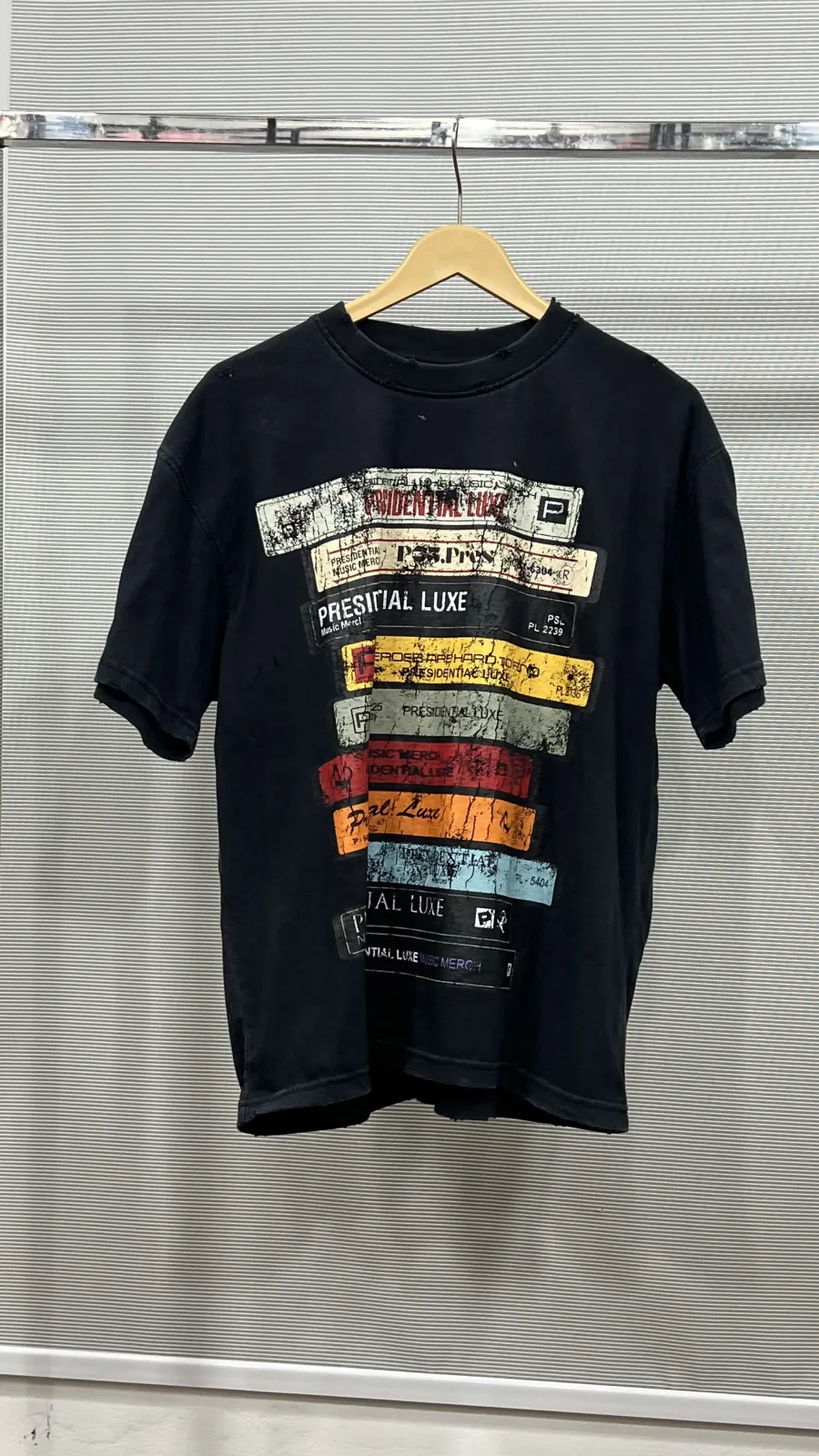
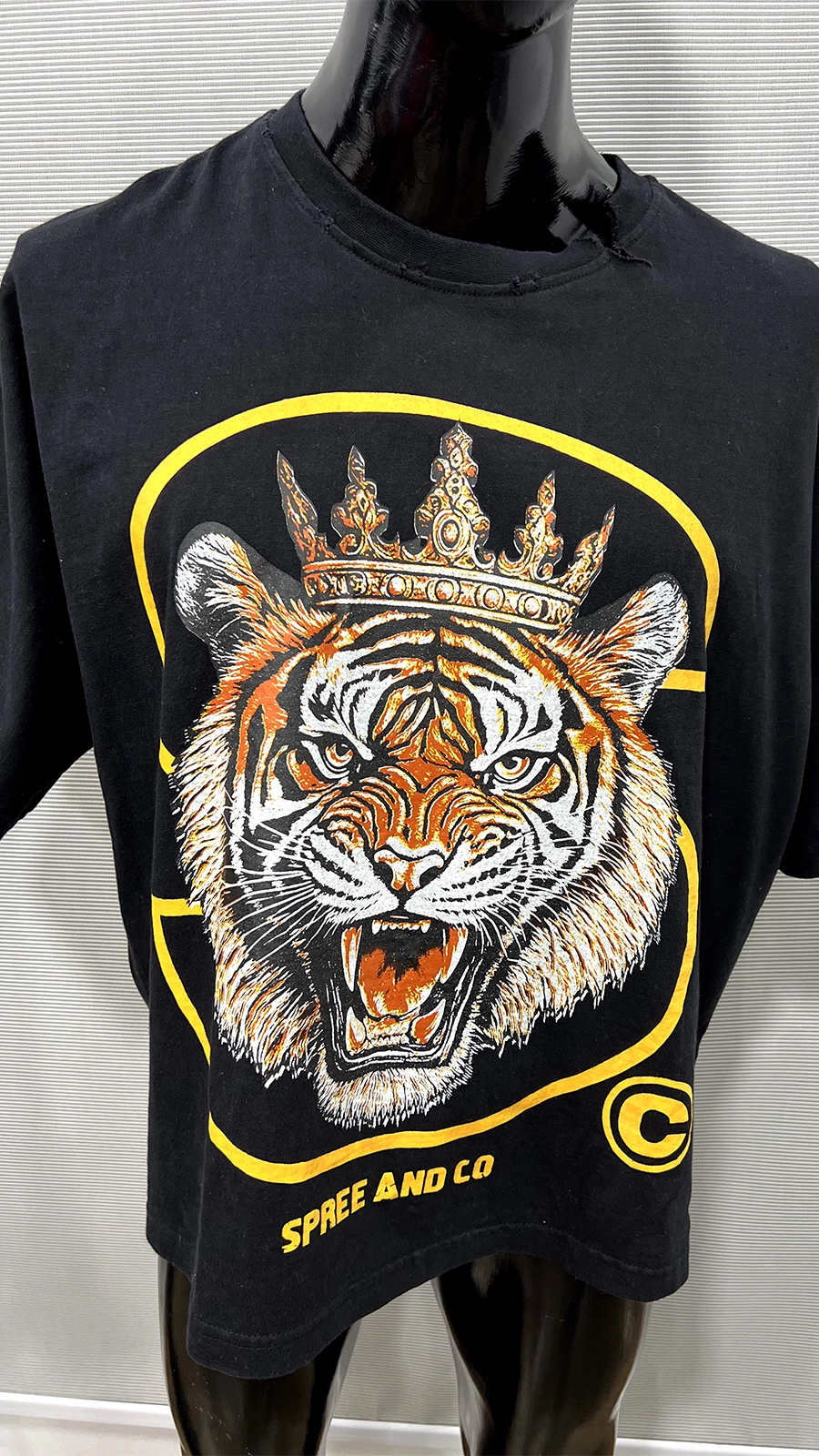
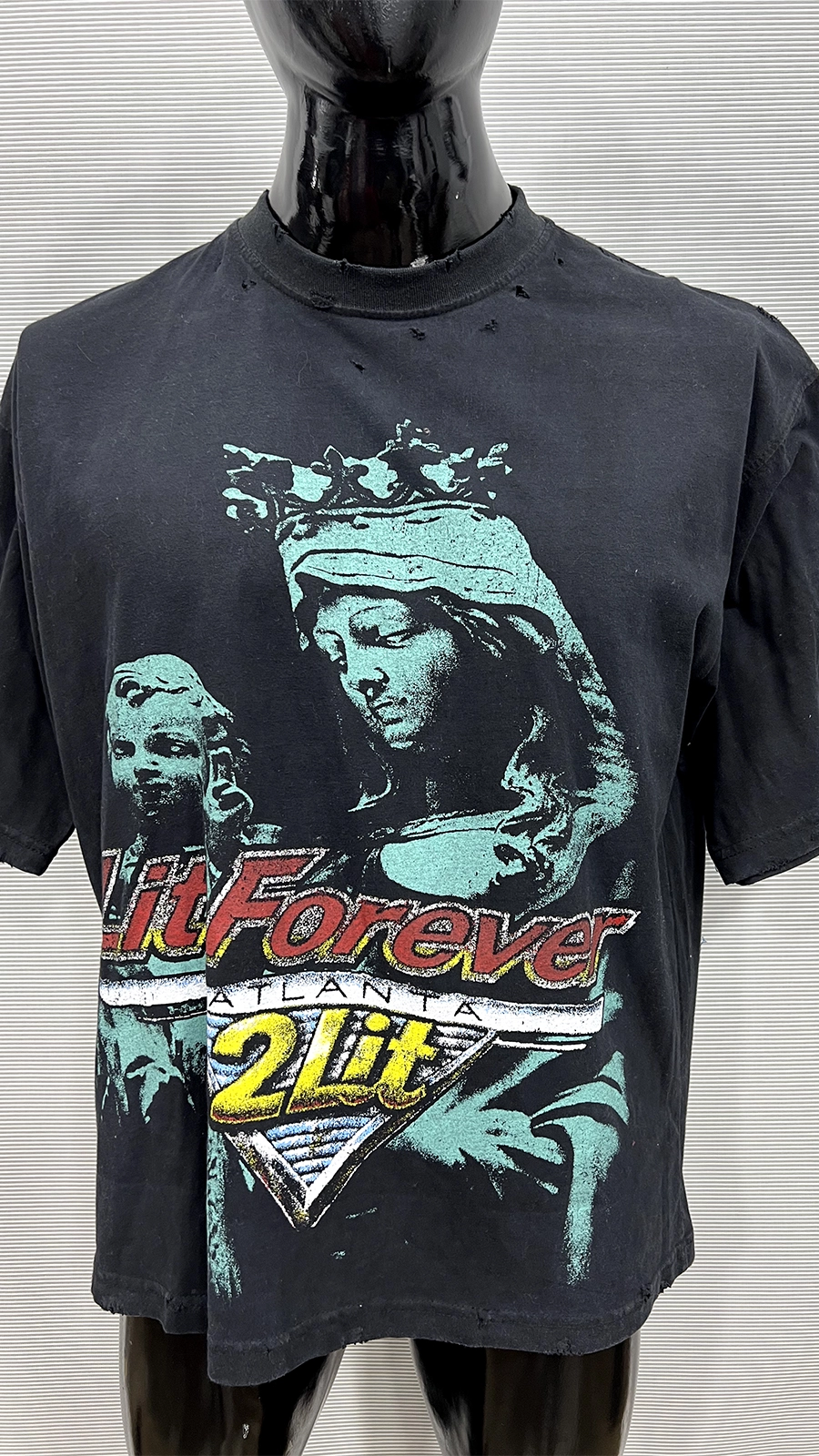
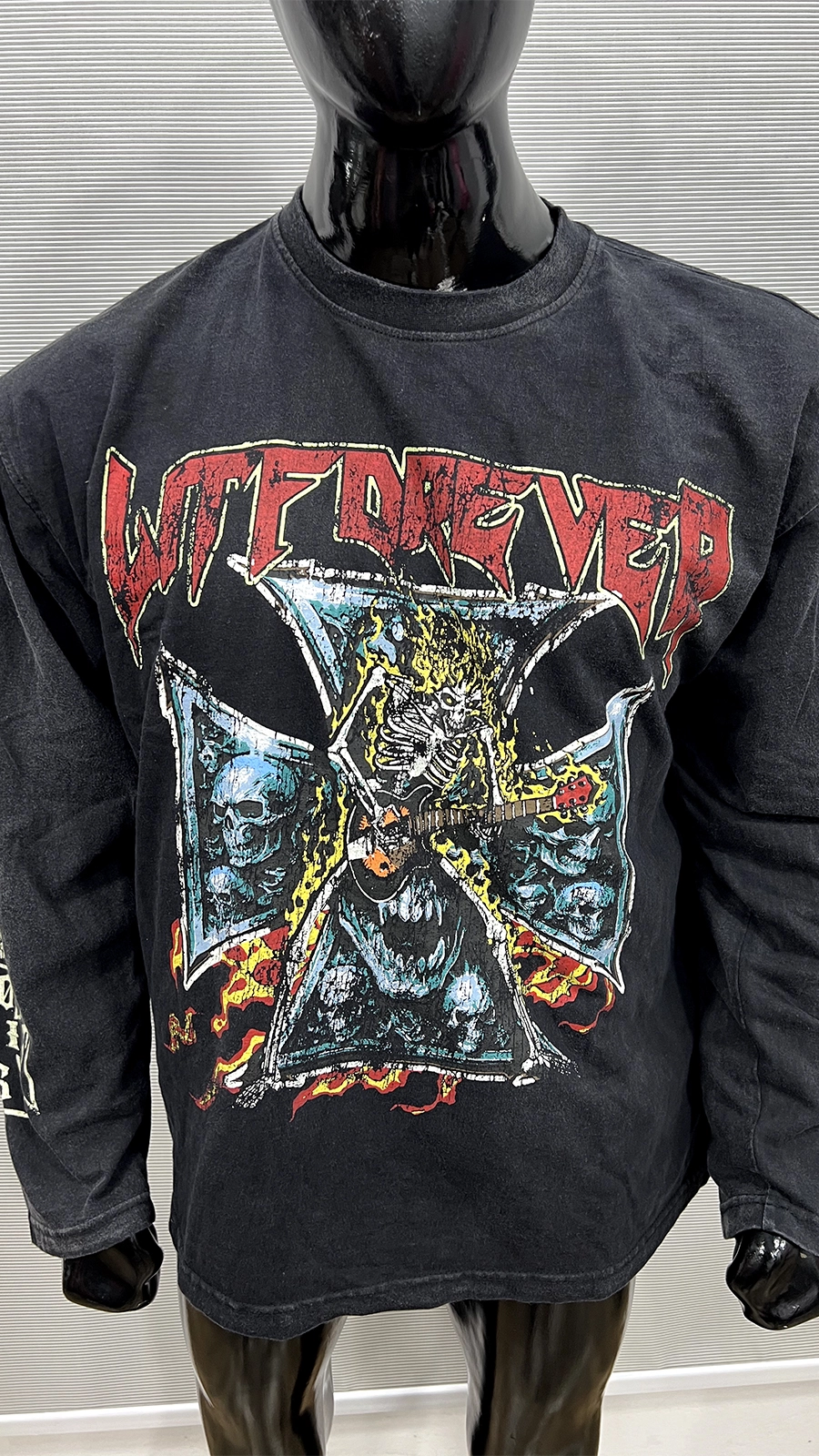
The pieces below are our own production samples, shot on the factory floor — not stock photos. Every order we run is fully custom to your spec, sizes, and branding.
01 — What a Screen Printing T Shirt Manufacturer Does Differently Than on Fleece
What a Screen Printing T Shirt Manufacturer Does Differently Than on Fleece
Screen printing on a tee uses the same core mechanics as printing on a hoodie — ink pushed through a mesh screen with a stencil, one screen per color, cured under heat once every layer is down. What changes is how much that ink weighs relative to the garment underneath it. A hoodie’s 300–500 GSM fleece can carry a heavy plastisol deposit and barely notice it. A tee’s 160–220 GSM jersey notices immediately — the same ink weight that disappears into a substantial hoodie can feel disproportionately stiff and heavy laid onto a lightweight tee, especially once you’re wearing it against skin rather than over another layer.
That’s the lens every decision runs through on a t-shirt print job: not just what looks right, but what feels right once it’s on. Mesh count, ink type, and deposit thickness all get chosen with that in mind, which is why a good screen-printed tee reads as noticeably different in the hand from a screen-printed hoodie, even with an identical design.
Loading a t-shirt onto the press pallet is genuinely easier than loading a hoodie, too. There’s no kangaroo pocket or hood bulk to smooth out before the squeegee pass, which means registration tends to come out more consistently on tees than on bulkier garments — one of the few places where a tee is actually simpler to work with than a hoodie, not harder.
02 — Fabric and Construction: Finer Mesh, Lighter Ink Deposit
Fabric and Construction: Finer Mesh, Lighter Ink Deposit
| Ink Type | Best For | Hand-Feel |
|---|---|---|
| Plastisol | Most designs, opaque on any garment color | Sits on top of the fabric, firmest hand |
| Water-based | Softer look that fades gently with age | Soaks into fibers, medium-soft hand |
| Discharge | The "worn-in" tee look, dark garments | Removes the fabric’s dye, softest hand |
Where fleece needs a coarser mesh to push ink into its textured surface, a tee’s smoother jersey knit takes a finer mesh count well — which is exactly what lets screen printing on tees hold crisper fine detail and smoother color fields than the same technique on fleece. Ink deposit thickness gets watched more closely here too: a heavy underbase for light colors on a dark tee adds noticeably more relative stiffness on lightweight jersey than the same underbase would on heavy fleece, so if a soft hand-feel matters to your brand, we’ll often steer you toward discharge ink on dark garments instead of a thick plastisol underbase.
There’s a real construction risk specific to jersey worth knowing about, too. A stretchy knit — especially anything with elastane content — can stretch slightly on the pallet during the print pass if it isn’t pulled taut correctly, and once the fabric relaxes back off the pallet, the print can look subtly distorted from the file you approved. Fleece’s greater dimensional stability mostly avoids this; jersey doesn’t, which is one more reason pallet setup and tension matter as much as the ink itself.
03 — Placement, Puff Print, and File Requirements
Placement, Puff Print, and File Requirements
Left-chest placement runs the usual 8–10cm, but full front and back graphics are where tees really shine as a canvas — flat, smooth panels make screen printing large-format designs both easy and genuinely cost-effective, which is a big part of why graphic tees are such a popular category for streetwear and statement-piece branding in the first place.
Puff print — a raised, foamed ink texture that puffs up under heat — shows up on tees far more often than on hoodies, since it reads clearly and dramatically against a flat, smooth surface in a way it can get lost in on textured fleece. It’s a genuinely tee-specific style choice worth considering if bold, tactile lettering is part of your brand’s look.
Color separation and file requirements follow the same rules as any screen print job — vector artwork, Pantone references, a practical ceiling around 6–8 colors before DTG starts making more economic sense. Combed cotton’s smoother surface holds fine print detail a shade more cleanly than carded cotton, a difference that shows up more visibly on a tee’s flat surface than it would buried in fleece’s texture.
One placement worth mentioning that’s specific to tees: a small print or tag-style detail just below the back neckline, sometimes called a "neck label print," is a popular alternative to a sewn-in woven label. It’s cheaper to set up at volume than ordering custom woven labels separately, and it skips the extra step of sewing a label in during construction — though it only really works as a small, simple mark rather than anything with fine detail, since the placement area is small and curved around the neckline seam.
04 — What Separates a Comfortable Print From a Stiff, Cracked One
What Separates a Comfortable Print From a Stiff, Cracked One
Cure is still the first thing to check — stretch the printed area gently and a properly cured print flexes with the fabric instead of cracking. Undercure shows up faster on a tee than a hoodie, since the thinner fabric transfers heat through the curing process differently, and it’s easier to leave a print slightly undercured without realizing it if the oven settings were calibrated for a heavier garment.
Beyond cure, feel the print. A well-executed tee print shouldn’t feel like a separate stiff layer sitting on top of soft fabric — it should move with the shirt. If a design feels noticeably heavier or stiffer than the rest of the garment, that usually points to more ink deposit than the fabric weight really called for. Check registration at any multi-color edge the same way you would on a hoodie, and check opacity on dark garments to confirm the underbase did its job without over-thickening the print.
A wash test tells you more than a visual check ever will. Run the sample through a few home-style wash cycles before final approval — a properly cured, correctly deposited print holds its color and edge sharpness through repeated washing, while an undercured or overly thick print tends to show cracking or edge lifting within just a handful of cycles. It’s a five-minute check that catches problems no amount of looking at a fresh sample will reveal.
05 — MOQ and Sampling: What to Expect
MOQ and Sampling With Your Screen Printing T Shirt Manufacturer
MOQ is 50 pieces per style, split across whatever size run you need. Sampling takes 6–10 days, and the full cost is credited against your bulk order once you move forward.
Since hand-feel is such a central part of getting a t-shirt print right, don’t just look at your sample — actually wear it, or at least handle it the way a customer would. A print that reads fine visually can still feel wrong once it’s on, and that’s something a photo of the sample won’t tell you. If ink weight or stiffness feels off, tell us before bulk — adjusting deposit thickness or switching ink type is a much smaller conversation at the sample stage than after 50 pieces are printed.
06 — What Actually Moves Your Price
What Actually Moves Your Price
Number of colors, placement size and coverage, ink type (discharge and specialty finishes like puff print typically cost more than standard plastisol), fabric GSM, and total order volume all move the price. Screen printing still gets more cost-effective per unit at higher volumes since the screen setup cost is fixed regardless of how many pieces you print from it.
We don’t publish flat pricing because those variables interact too much to be useful as a single number. Run your spec through our Instant Quote tool instead — it gives you a price estimate in 5 seconds, a downloadable PDF quote, and a direct line to WhatsApp with your quote pre-filled. Final pricing is confirmed by our team within 24 hours.
07 — Shipping to the UK and EU Duty-Free
Shipping to the UK and EU Duty-Free
Manufacturing in Pakistan carries a trade advantage worth factoring into your landed cost. Apparel made here enters the UK at 0% duty under the Developing Countries Trading Scheme, and the EU at 0% duty under GSP+, versus roughly 12% on equivalent goods sourced from China. On a large graphic-tee order, that duty gap adds up quickly compared to sourcing the same design from a country without preferential access.
Details on eligibility and the current tariff schedule are on the UK government’s own guidance page: Developing Countries Trading Scheme (DCTS) — GOV.UK.
08 — When Screen Printing Isn't the Right Call
When Screen Printing Isn’t the Right Call
Screen printing isn’t the right call for photorealistic images or color gradients — reproducing those through spot-color screens gets expensive fast and rarely matches a true photographic print. It’s also not economical for very small runs outside your bulk order, since screen setup cost applies regardless of quantity. For photographic detail or small-batch flexibility, our DTG Printing T Shirt page is the better starting point.
Table of Contents
Simple Process
From Spec to Shipped, in Four Steps
01
Quote & Spec
Run your GSM, ink type, and color count through the Instant Quote tool; get a price estimate and a downloadable PDF in 5 seconds.
02
Sample
We burn your screens, mix ink to your Pantones, and print a physical sample in 6–10 days; you can join a live video call from the floor before it ships.
03
Approve & Bulk
Approve the sample (its cost is credited to your order) and we run your full size and quantity — production takes 12–15 days.
04
Ship
Finished tees go out via DHL/FedEx air (3–7 days) or sea freight for larger volumes, landing duty-free in the UK and EU.
Our Advantage
Why Brands Choose Malinor
Floor Video Call Before You Pay Anything
See your actual print run in production, not a stock photo, before you commit to bulk.
Sample Cost Credited in Full
Nothing you spend on sampling is wasted once you move to bulk.
In-House Ink Mixing and Curing
No subcontracting a decoration step to a third shop, so your timeline doesn’t depend on someone else’s queue.
Fast, Direct Replies
Most quote and spec questions get answered within 2 hours during business hours.
Common Questions
Frequently Asked Questions
Why does the same print feel different on a tee than on a hoodie?+
Ink weight that a heavy fleece hoodie barely registers can feel noticeably stiffer on a lightweight tee, simply because there’s so much less fabric mass underneath it. That’s why ink type and deposit thickness get chosen differently for tees — we’re weighing hand-feel against the garment’s own weight, not just matching the design to any fabric.
What’s the difference between discharge and plastisol ink on a t-shirt?+
Plastisol sits on top of the fabric and stays opaque on any garment color, with the firmest hand-feel of the three main ink types. Discharge ink actually removes the fabric’s original dye and replaces it with color, soaking into the fibers for the softest, most "worn-in" feel — especially popular for a vintage tee look on dark garments.
What is puff print and why is it more common on tees than hoodies?+
Puff print uses a special additive that foams and raises under heat, giving lettering or graphics a raised, tactile texture. It reads clearly and dramatically on a flat, smooth tee surface, where the same effect can get visually lost in a hoodie’s already-textured fleece — which is why it shows up on tees far more often.
Can a stretchy t-shirt fabric distort a screen print during production?+
Yes, if it isn’t handled correctly. A stretchy jersey knit, especially with any elastane content, can stretch slightly on the press pallet during printing if it isn’t pulled taut properly, and the print can look subtly off once the fabric relaxes afterward. Careful pallet tensioning is what prevents this — it’s a real risk on tees that fleece’s dimensional stability mostly avoids.
What’s the minimum order quantity?+
50 pieces per style, with sizes split however your size run needs — you’re not locked into 50 of one size. A screen-printed tee and an embroidered tee in the same order each need their own 50-piece minimum, since they’re different styles.
How long does shipping take?+
DHL or FedEx air freight takes 3–7 days worldwide once your order is finished. For larger volumes, sea freight is available at a lower cost per unit but a longer transit time — we’ll walk you through both options once your bulk order is confirmed.
Run Your Spec Through the Instant Quote Tool
Get a price estimate in 5 seconds, a downloadable PDF, and a straight line to WhatsApp with your quote pre-filled. Before you pay anything, we’ll get you on a live video call from the production floor.