Distressed Embroidery Hoodie Manufacturer
Distressed Embroidery Hoodie Manufacturer With Controlled, Repeatable Aging
As a distressed embroidery hoodie manufacturer based in Sialkot, Pakistan, we build the worn-in look on purpose — a defined stitch pattern and a controlled sanding process, so piece 1 and piece 50 look like they belong to the same design instead of randomly different. MOQ starts at 50 pieces per style with sizes split however you need, your sample takes 6–10 days and its full cost is credited against the bulk order, and production runs 12–15 days once you approve it.
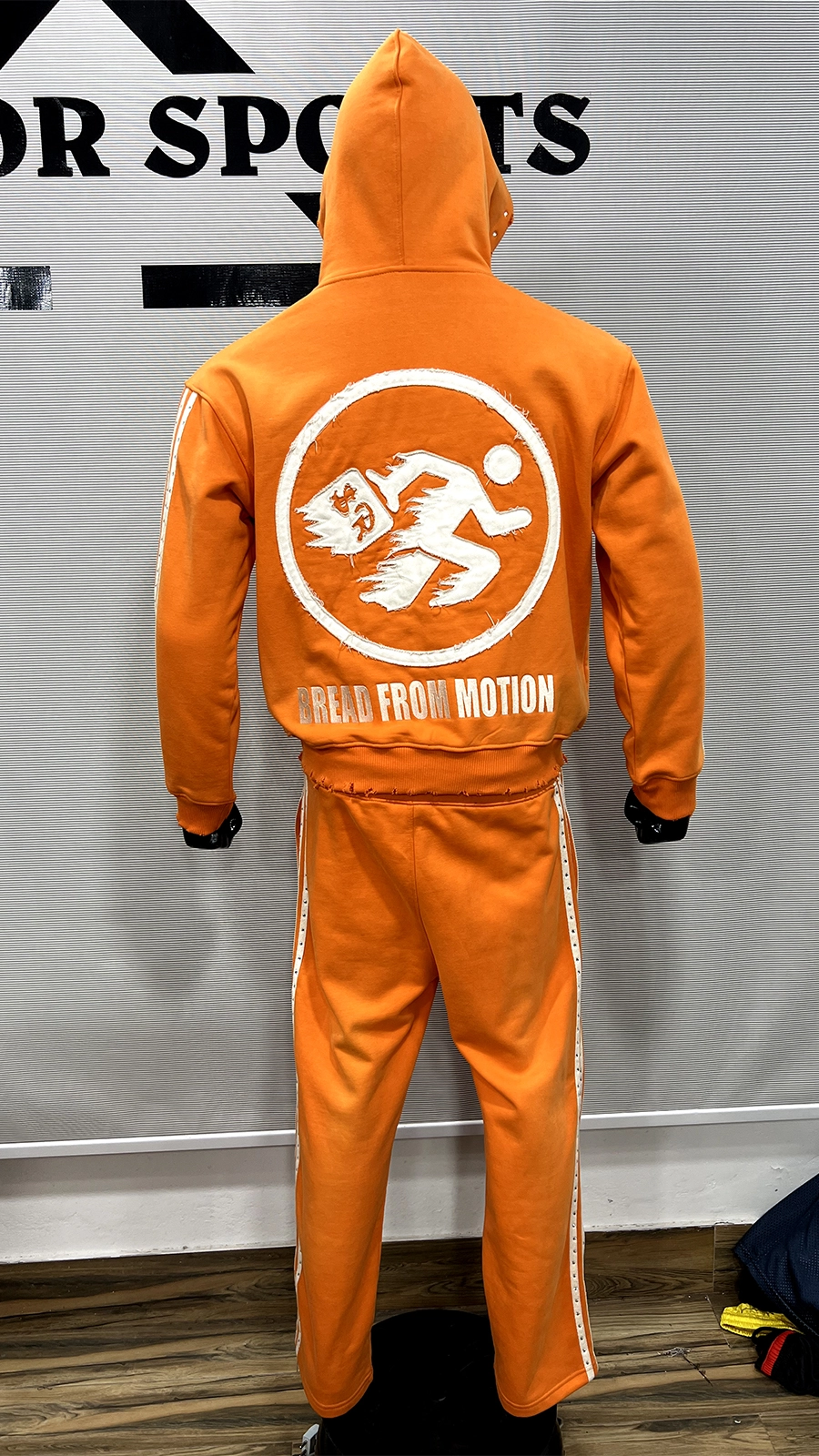
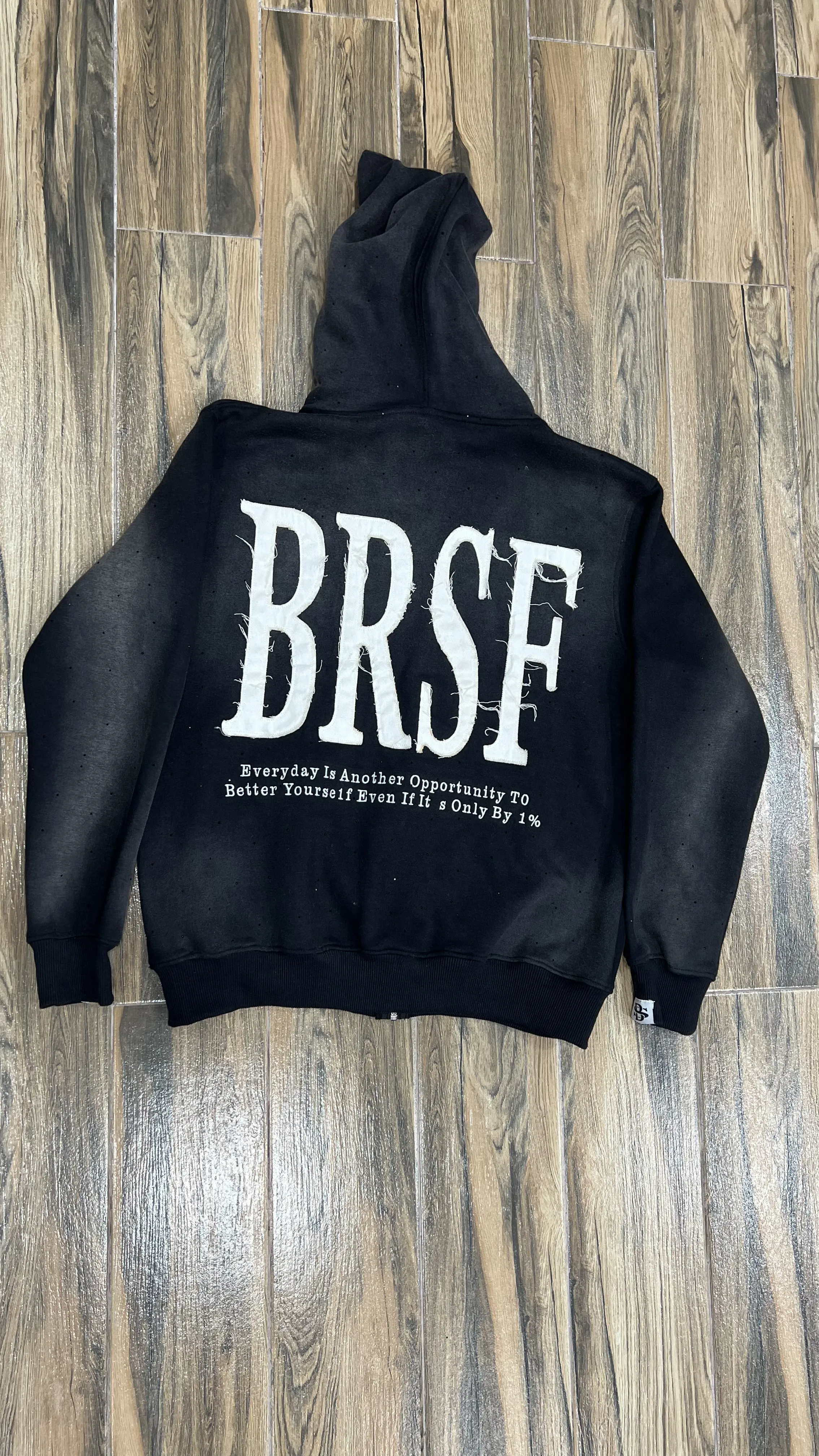
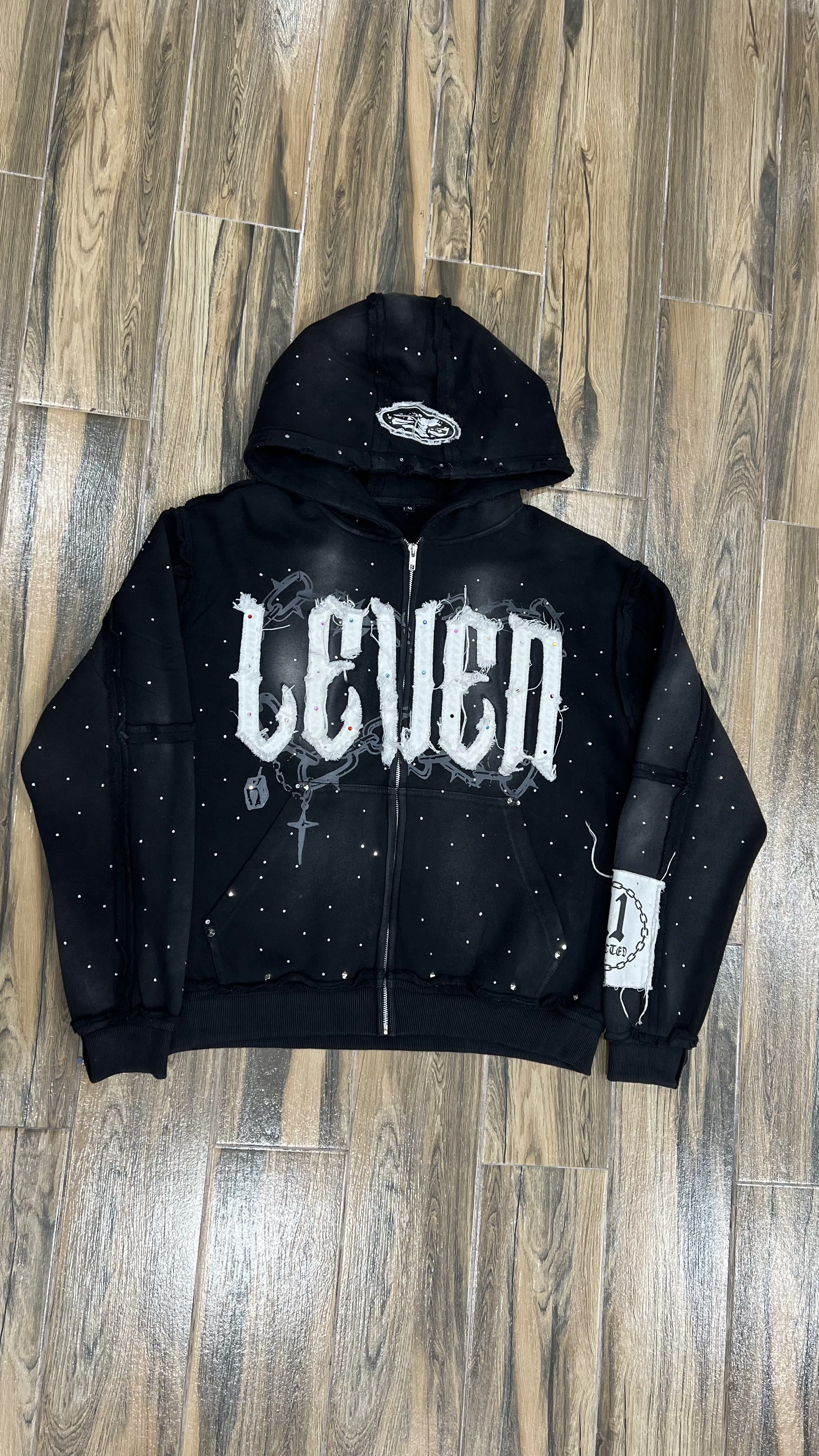
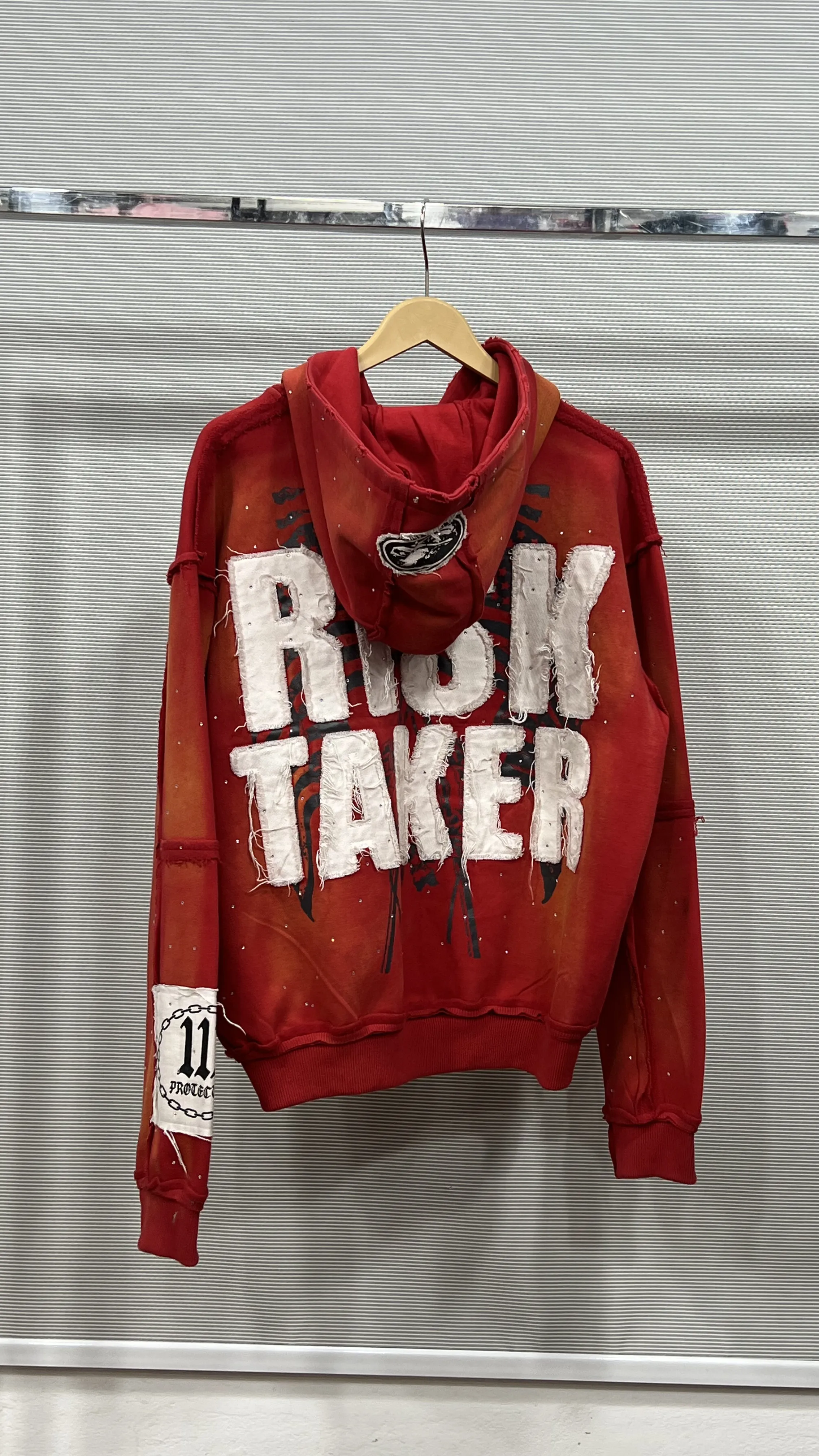
The pieces below are our own production samples, shot on the factory floor — not stock photos. Every order we run is fully custom to your spec, sizes, and branding.
01 — What "Distressed" Actually Means in Embroidery
What a Distressed Embroidery Hoodie Manufacturer Actually Changes
Standard embroidery aims for tight, even stitch coverage and thread ends trimmed clean. Distressed embroidery works against all of that, deliberately — and it takes three things working together to look right rather than accidental.
First, the digitizing file itself is built differently: instead of a tight, uniform fill, the stitch density varies on purpose, with gaps and irregular direction changes built into the pattern from the start. Second, some thread tails get left longer and frayed instead of trimmed close, as a real construction choice rather than a mistake. Third, we run a controlled sanding pass over the stitched area after it’s finished, knocking down some of the stitch loops for a faded, worn-in texture. None of these on their own reads as "distressed" — it’s the combination, done consistently, that sells the look.
02 — Fabric and Construction: Why Distressing Adds a Second Layer of Stress
Fabric and Construction: Why Distressing Adds a Second Layer of Stress
| Weight | GSM | Best For |
|---|---|---|
| Heavier midweight | 320–380 GSM | Standard distressed chest logos |
| Heavyweight fleece | 380–450 GSM | Larger placements, more aggressive distressing |
The GSM logic starts the same as any embroidery job — enough fabric structure to support the stitch tension without puckering. But distressing adds a second layer of stress on top of that: the sanding step is, by design, a light abrasion, and the fabric around the stitching needs to hold up to it without the "worn" look turning into actual fiber damage. We lean toward the heavier end of the embroidery GSM range here for exactly that reason — it gives the sanding process more margin to work within before it crosses from intentional wear into a real weak point.
03 — Design Placement, Digitizing, and File Requirements
Design Placement, Digitizing, and File Requirements
Placement follows standard embroidery convention — 8–10cm at the chest is still the most common spot. Distressed embroidery pairs naturally with washed or faded garment treatments if you want a cohesive vintage feel across the whole piece, not just the logo, though that’s a separate fabric-finishing decision from the embroidery itself.
The most important thing to flag upfront is that you want the distressed style before we digitize anything. A distressed effect needs to be built into the stitch file from the start; taking a clean digitized logo and trying to retrofit a worn look onto it afterward never looks as convincing as designing it distressed from the beginning. Send us your artwork along with reference images of the aged look you’re after — "how worn" is a spectrum, and it helps to show us where on it you want to land.
Thread color plays a bigger role here than it does in clean embroidery, too. Bright, saturated thread tends to fight against a worn aesthetic no matter how the stitching itself is digitized — most distressed designs read better in muted, slightly heathered thread tones that already look a step closer to faded before the sanding pass even touches them.
04 — What Separates Intentional Wear From a Manufacturing Defect
What Separates Intentional Wear From a Manufacturing Defect
The line between "distressed on purpose" and "this looks broken" comes down to consistency and structural integrity. Consistency first: the same areas of the design should show wear on every piece — a randomly distressed patch that looks different from one hoodie to the next reads as inconsistent quality control, not intentional style.
Structural integrity is the other half. Gaps and looser stitching should look worn without actually being weak — pull gently at a frayed thread end and it shouldn’t keep unraveling past where it’s meant to stop. And the sanded fabric around the stitching should show light wear, not torn or thinned fibers; real fabric damage from over-aggressive sanding is a defect no matter how "vintage" it’s supposed to look. These are the checks we run on every sample before it goes to bulk.
05 — MOQ and Sampling: What to Expect
MOQ and Sampling With Your Distressed Embroidery Hoodie Manufacturer
MOQ is 50 pieces per style, split across whatever size run you need. Sampling takes 6–10 days, and the full cost is credited against your bulk order once you move forward.
Sampling matters more here than it does for a clean logo, because "worn" is subjective until you’ve agreed on exactly what it looks like. Ask to see more than one stitched sample, or footage of the distressing process itself, so you can confirm the look is repeatable before we commit that same process to a 50-piece run.
06 — What Actually Moves Your Price
What Actually Moves Your Price
Distressed embroidery costs more than a clean logo of the same size, mainly because of the specialized digitizing and the added sanding step — you’re paying for two extra production stages a standard embroidery order doesn’t need. Beyond that, thread color count, placement size, fabric GSM, and total order volume move the price the same way they would on any embroidery job.
We don’t publish flat pricing because those variables interact too much to be useful as a single number. Run your spec through our Instant Quote tool instead — it gives you a price estimate in 5 seconds, a downloadable PDF quote, and a direct line to WhatsApp with your quote pre-filled. Final pricing is confirmed by our team within 24 hours.
07 — Shipping to the UK and EU Duty-Free
Shipping to the UK and EU Duty-Free
Manufacturing in Pakistan carries a trade advantage worth factoring into your landed cost. Apparel made here enters the UK at 0% duty under the Developing Countries Trading Scheme, and the EU at 0% duty under GSP+, versus roughly 12% on equivalent goods sourced from China.
Details on eligibility and the current tariff schedule are on the UK government’s own guidance page: Developing Countries Trading Scheme (DCTS) — GOV.UK.
08 — When Distressed Embroidery Isn't the Right Call
When Distressed Embroidery Isn’t the Right Call
Distressed embroidery isn’t the right call for a clean, minimalist, or premium-polished brand identity — the whole point of the technique is to look worn and casual, which works against a sharp, upscale aesthetic rather than for it. It’s also a harder sell for tightly budgeted orders, since the extra digitizing and sanding steps cost more than a standard logo of the same size. If a clean, precise finish is what your brand needs, our Embroidery Hoodie page is the better starting point.
Table of Contents
Simple Process
From Spec to Shipped, in Four Steps
01
Quote & Spec
Run your GSM, placement, and distress reference through the Instant Quote tool; get a price estimate and a downloadable PDF in 5 seconds.
02
Sample
We digitize, stitch, and distress a physical sample in 6–10 days; you can join a live video call from the floor before it ships.
03
Approve & Bulk
Approve the sample (its cost is credited to your order) and we run your full size and quantity — production takes 12–15 days.
04
Ship
Finished hoodies go out via DHL/FedEx air (3–7 days) or sea freight for larger volumes, landing duty-free in the UK and EU.
Our Advantage
Why Brands Choose Malinor
Floor Video Call Before You Pay Anything
See your actual distressed run in production, not a stock photo, before you commit to bulk.
Sample Cost Credited in Full
Nothing you spend on sampling is wasted once you move to bulk.
In-House Digitizing, Stitching, and Distressing
No subcontracting a decoration step to a third shop, so your timeline doesn’t depend on someone else’s queue.
Fast, Direct Replies
Most quote and spec questions get answered within 2 hours during business hours.
Common Questions
Frequently Asked Questions
How do you make embroidery look distressed or worn?+
Three things together: a digitizing file built with irregular stitch density instead of a tight uniform fill, some thread tails left frayed rather than trimmed clean, and a controlled sanding pass after stitching that knocks down some of the loops. Each on its own looks like a mistake — combined and applied consistently, they read as an intentional vintage finish.
Will the frayed thread ends unravel further with wear?+
Not if they’re secured correctly. A deliberately frayed thread tail is finished so it stops at the intended point rather than continuing to unravel — if it keeps pulling loose with normal wear, that’s a construction defect, not the distressed style working as intended. We check this on every sample before approving it for bulk.
How do you keep a "distressed" look consistent across 50 pieces?+
By treating "worn" as a defined, repeatable process rather than something improvised piece by piece — the same digitized stitch pattern, the same sanding technique and duration, applied identically across the run. The goal is that piece 1 and piece 50 show wear in the same places, not that every piece looks randomly different from the next.
Does distressed embroidery cost more than regular embroidery?+
Yes, generally. You’re paying for specialized digitizing plus an added sanding step that a standard clean logo doesn’t need, on top of the usual factors like thread color count and placement size. It’s a real cost difference worth factoring in if you’re comparing this against a standard embroidered logo at the same size.
What’s the minimum order quantity?+
50 pieces per style, with sizes split however your size run needs — you’re not locked into 50 of one size. A distressed embroidery hoodie and a standard embroidery hoodie in the same order each need their own 50-piece minimum, since they’re different styles.
How long does shipping take?+
DHL or FedEx air freight takes 3–7 days worldwide once your order is finished. For larger volumes, sea freight is available at a lower cost per unit but a longer transit time — we’ll walk you through both options once your bulk order is confirmed.
Run Your Spec Through the Instant Quote Tool
Get a price estimate in 5 seconds, a downloadable PDF, and a straight line to WhatsApp with your quote pre-filled. Before you pay anything, we’ll get you on a live video call from the production floor.