Spray Washed Sweat Suits Manufacturer
Spray Washed Sweat Suits Manufacturer Where Matching Two Pieces Is Actually the Easy Part
As a spray washed sweat suits manufacturer based in Sialkot, Pakistan, a technician applies your fade with both pieces visible side by side — genuinely the most controllable way to match two garments of anything in our whole lineup. MOQ starts at 50 complete sets with sizes split however you need, your sample takes 6–10 days and its full cost is credited against the bulk order, and production runs 12–15 days once you approve it.
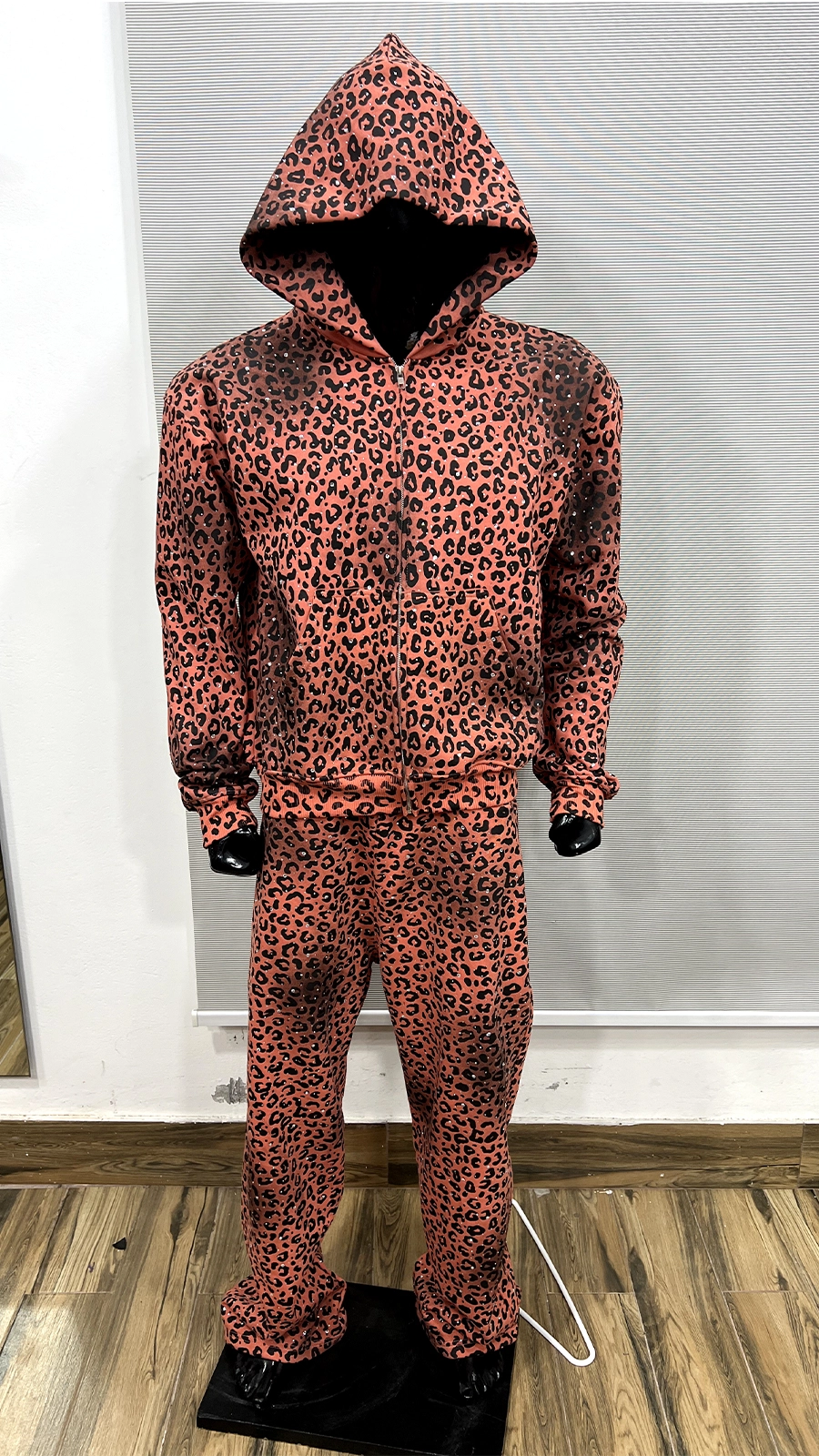
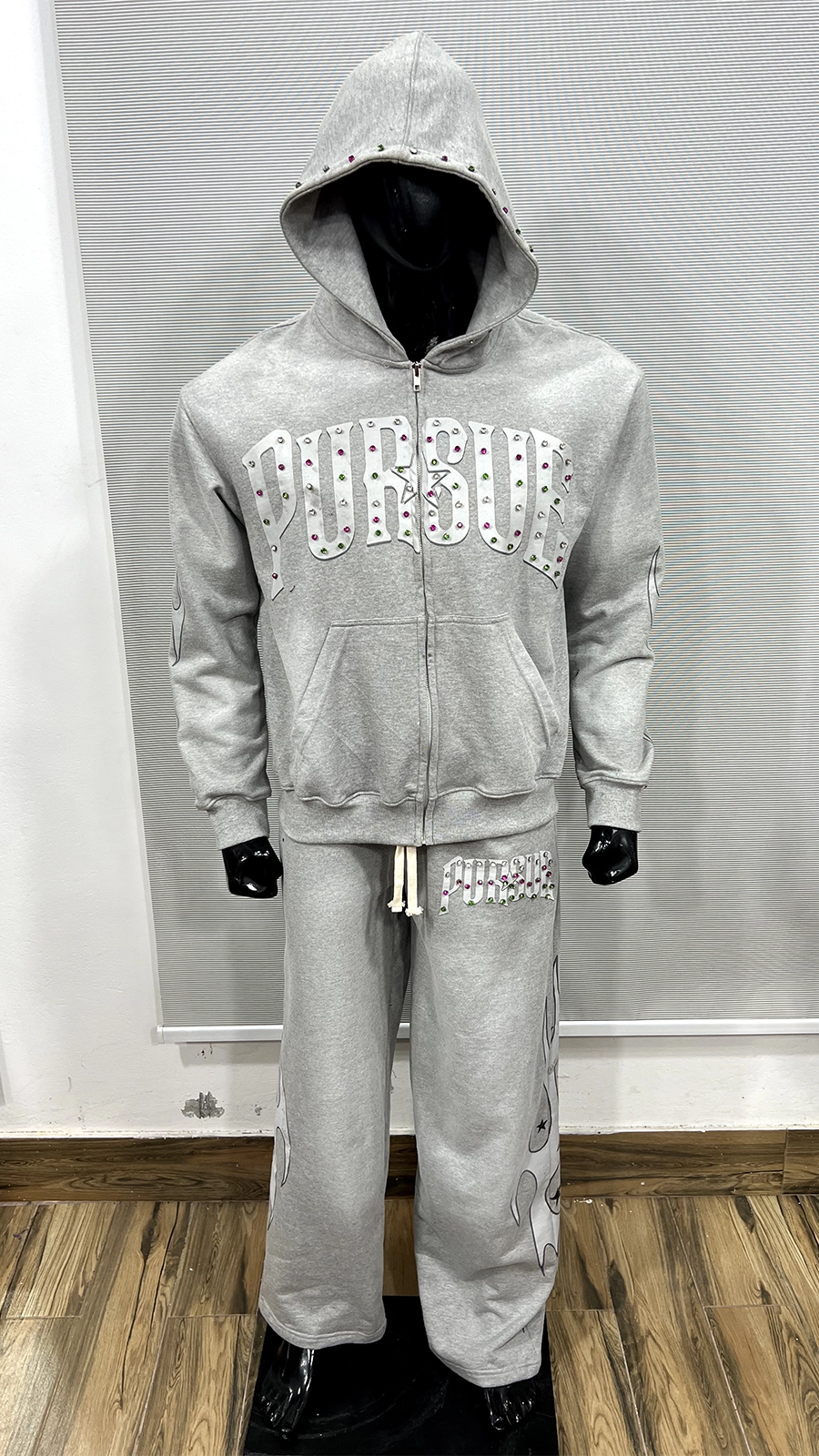
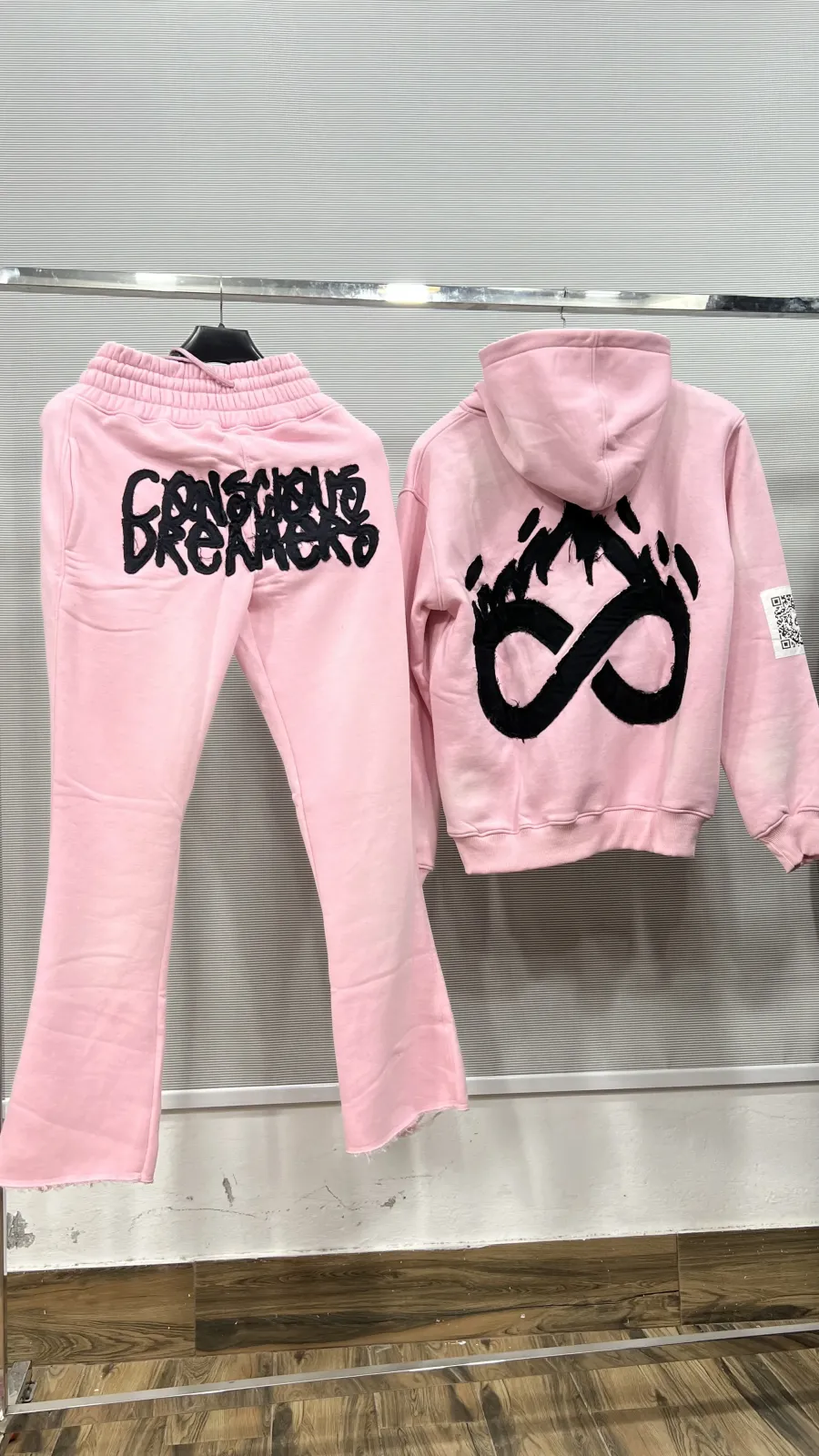
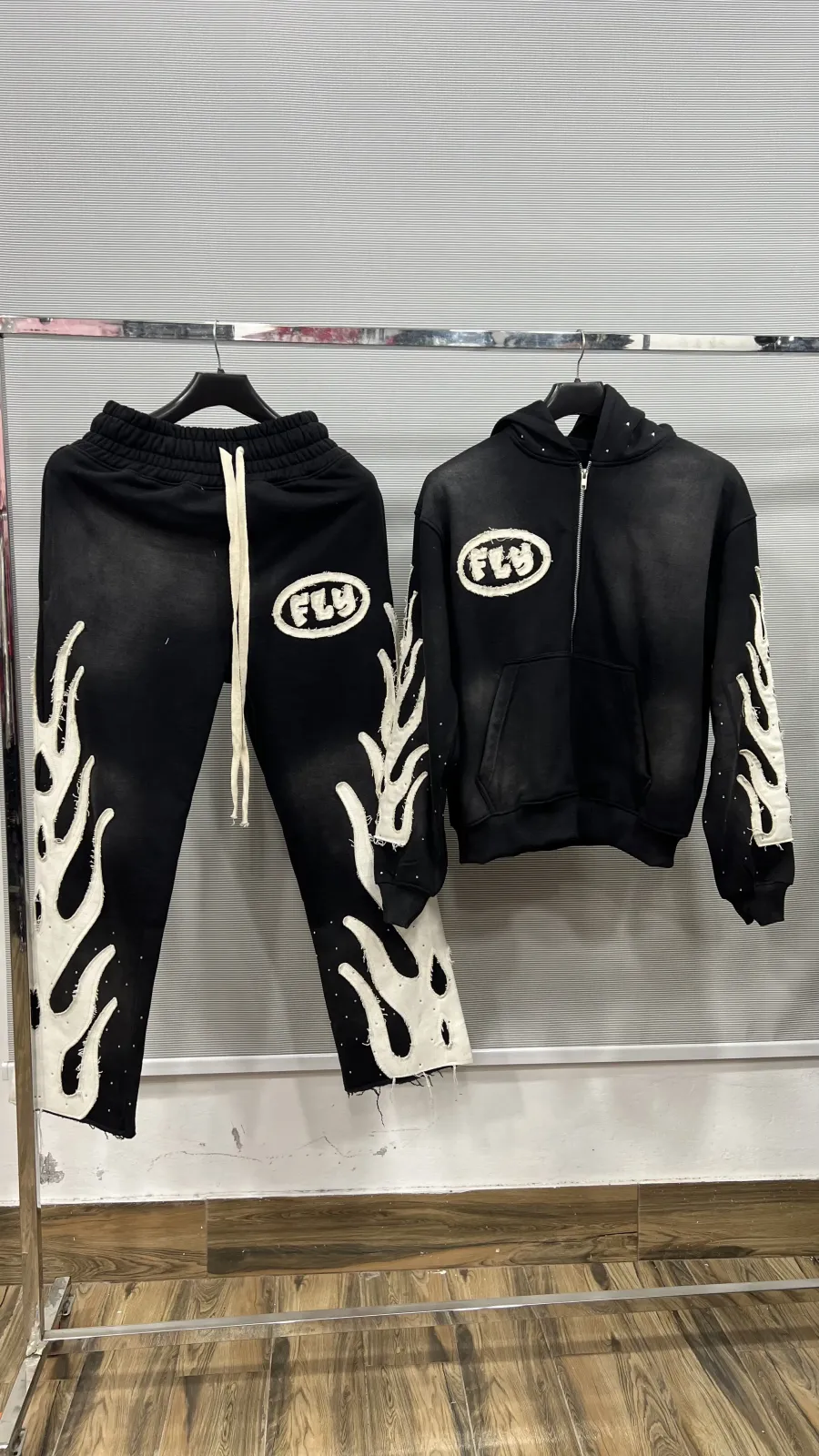
The pieces below are our own production samples, shot on the factory floor — not stock photos. Every order we run is fully custom to your spec, sizes, and branding.
01 — Why Matching Two Pieces Is Actually the Easy Part Here
What a Spray Washed Sweat Suits Manufacturer Never Has to Worry About
Our acid washed sweat suits page covers a genuinely novel coordination problem — matching bleach intensity between two separately-tumbled, randomly-processed batches. Spray wash resolves that problem completely, and it’s worth understanding why: there’s no tumbling drum involved at all. A technician applies the solution directly with a spray gun, which means both pieces can sit side by side during application, compared visually in real time rather than calibrated indirectly across two separate random processes.
That makes spray wash genuinely the most controllable technique for matching two pieces of anything in our entire lineup — more controllable even than the precise decoration techniques we cover on our other sweat suits pages, where thread color or ink is mixed once and then applied to each piece separately without the ability to make live visual adjustments mid-process. If cross-piece consistency is your top priority for a matched set, this is the technique built for exactly that.
Care instructions stay simpler across the set too, in a similar way to what we cover on our spray washed sweat shorts page. Both pieces still benefit from a cold wash and low tumble heat to preserve the fade’s contrast over time, but there’s no structural component concern layered underneath that advice on either garment — it’s a conversation about appearance, not about protecting parts of the set that went through mechanical stress.
02 — Fabric and Construction: No GSM Floor Needed on Either Piece
Fabric and Construction: No GSM Floor Needed on Either Piece
| Fabric | Cotton Content | Spray Wash Result Across the Set |
|---|---|---|
| 100% cotton fleece | High | Clean, even lift wherever it’s sprayed on both pieces |
| Cotton/poly blend | Medium | Slightly muted lift in poly-heavy areas on either piece |
| Heavy poly-blend | Low | Weak, uneven color lift |
Spray wash doesn’t need the heavier GSM floor that acid wash and distressing lean toward across a matched set, since there’s no mechanical stone-tumbling to guard against on either piece. That gives you real flexibility if your set calls for a lighter fabric than the heavier fleece range our other wash-treatment sweat suits pages recommend — spray wash works cleanly across a broader weight range without pushing either garment toward a heavier fabric than your product otherwise needs.
That flexibility carries a real advantage if you’re designing a lighter-weight set for a warmer-climate market, or simply prefer a softer hand-feel across the whole set than heavier fleece delivers — something that’s harder to pull off with acid wash or distressing given their heavier GSM preferences on both pieces.
03 — Placement, Layering With Print, and Fade Coordination Across the Set
Placement, Layering With Print, and Fade Coordination Across the Set
On the top, common fade zones include the hem, cuffs, and hood edge if it’s a hooded style, along with a hip or chest-adjacent fade. On the bottom, the hem, hip, and thigh all work the same way — and a knee fade is a genuine option here too, purely cosmetic and with none of the structural risk the knee carries on our distress sweat suits page. That’s worth knowing if you like the worn-in knee look but want to avoid any of the reinforcement considerations that come with actual rips or holes there.
Layering a spray fade around a printed or embroidered design works on both pieces, giving the whole set a coordinated worn-in look rather than crisp decoration sitting against faded fabric. And since spray application targets specific zones rather than exposing the whole garment, pocket bag fabric on either piece stays untouched by the process in most designs, the same advantage we cover on our spray washed sweat shorts page.
If you’re layering onto existing decoration on both pieces, send us the print or embroidery files for the top and the bottom together, alongside a single unified reference for how you want the fade to relate to each design. Planning both pieces’ fade zones as one coordinated concept from the start, rather than deciding each piece’s treatment independently, is what actually makes the finished set read as designed together rather than two garments that happen to share a general aesthetic.
04 — What Separates a Clean Coordinated Fade From a Mismatched One
What Separates a Clean Coordinated Fade From a Mismatched One
Check each piece’s fade transition individually first — a smooth gradient with no harsh line unless a hard edge was specifically requested, and no tide marks or uneven pooling on either garment.
Then check the set together — this comparison should be the easiest one in our entire lineup to pass, given how directly controllable the process is. If the two pieces don’t read as coordinated at this stage, it’s a calibration issue worth flagging immediately rather than something inherent to the process the way batch variation is with acid wash. Confirm the waistband, drawcord, and gusset on the bottom, and the drawstring on the top if it has one, all show no effect at all from the process — since there’s no tumbling involved, none of these components should be affected in any way.
If a print or embroidered design is layered into the fade on either piece, check that the decoration itself wasn’t affected by the spray application — the solution should stay within the faded zone you specified rather than creeping onto the decorated area in a way that changes its color or finish.
05 — MOQ and Sampling: What to Expect
MOQ and Sampling With Your Spray Washed Sweat Suits Manufacturer
MOQ is 50 complete sets per style — 50 tops and 50 matching bottoms, split across whatever size run you need. Sampling takes 6–10 days, and the full cost is credited against your bulk order once you move forward. That same credit policy applies here as it does across every technique and category we offer.
Because a technician can compare both pieces directly during application, sampling here mainly confirms placement and fade softness rather than requiring the extra scrutiny we recommend for coordinating an inherently random process across two pieces. It’s a genuinely more straightforward sample review than our acid washed sweat suits page describes.
06 — What Actually Moves Your Price
What Actually Moves Your Price
Placement complexity on each piece is the main lever — a single hem or hip fade on both pieces costs less than multiple zones or a broader gradient across the set. Layering spray wash around printed or embroidered designs adds a step on top of that, along with fabric GSM and total order volume. Two things that don’t factor in here, unlike acid wash: there’s no added cost for protecting the waistband, drawcord, or gusset, and there’s no calibration time needed to bring two random batches into a comparable intensity range, since the process is directly controlled from the start.
That absence of two separate cost drivers is worth factoring into a direct comparison if you’re weighing spray wash against acid wash for a similar overall budget. Spray wash on a modest, coordinated fade often lands close in cost to acid wash on the same set, while the gap widens once you’re talking about full-coverage vintage fading — where acid wash’s efficiency at covering a whole garment starts to outweigh spray wash’s placement-by-placement approach.
We don’t publish flat pricing because those variables interact too much to be useful as a single number. Run your spec through our Instant Quote tool instead — it gives you a price estimate in 5 seconds, a downloadable PDF quote, and a direct line to WhatsApp with your quote pre-filled. Final pricing is confirmed by our team within 24 hours.
07 — Shipping to the UK and EU Duty-Free
Shipping to the UK and EU Duty-Free
Manufacturing in Pakistan carries a trade advantage worth factoring into your landed cost. Apparel made here enters the UK at 0% duty under the Developing Countries Trading Scheme, and the EU at 0% duty under GSP+, versus roughly 12% on equivalent goods sourced from China.
Details on eligibility and the current tariff schedule are on the UK government’s own guidance page: Developing Countries Trading Scheme (DCTS) — GOV.UK. This matters on a matched set order too, since landed cost applies across both pieces of the set rather than a single garment.
08 — When Spray Wash Isn’t the Right Call
When Spray Wash Isn’t the Right Call
Spray wash isn’t the right call if you want dramatic, all-over vintage coverage on both pieces — acid wash covers a full set more efficiently than spraying zone by zone across two garments. It’s also the wrong fit if you actually want the natural batch-to-batch randomness acid wash brings as part of the aesthetic, since spray wash’s whole advantage is the control that works against that unpredictability. For full-coverage, high-contrast fading across a matched set, our Acid Washed Sweat Suits page is the better starting point.
If you’re weighing spray wash against acid wash specifically for a set, coverage and how much you value real-time cross-piece matching are usually the two factors that settle it — a coordinated, controlled fade favors spray wash clearly; full-set coverage tips the calculation back toward acid wash.
Table of Contents
Simple Process
From Spec to Shipped, in Four Steps
01
Quote & Spec
Run your GSM, target fade zones for both pieces, and any layered print through the Instant Quote tool; get a price estimate and a downloadable PDF in 5 seconds.
02
Sample
A technician sprays and neutralizes both pieces as a matched sample, comparing them side by side, in 6–10 days; you can join a live video call from the floor before it ships.
03
Approve & Bulk
Approve the sample (its cost is credited to your order) and we run your full size and quantity — production takes 12–15 days.
04
Ship
Finished sets go out via DHL/FedEx air (3–7 days) or sea freight for larger volumes, landing duty-free in the UK and EU.
Our Advantage
Why Brands Choose Malinor
Floor Video Call Before You Pay Anything
See your actual spray wash production run in progress, not a stock photo, before you commit to bulk. Both pieces are shown together on the call, not just one garment in isolation.
Sample Cost Credited in Full
Nothing at all you spend on sampling is wasted once you move to bulk.
In-House Spraying and Neutralization for Both Pieces
No subcontracting any decoration step to a third shop, so your timeline doesn’t depend on someone else’s queue.
Fast, Direct Replies
Most quote and spec questions get answered within 2 hours during business hours.
Common Questions
Frequently Asked Questions
Is it easier to match spray wash intensity across two pieces than acid wash?+
Yes, genuinely and significantly. Acid wash relies on random pumice-stone tumbling that happens in two separate batches for a matched set. Spray wash is applied directly by a technician who can compare both pieces side by side in real time, making this the most controllable matching process of any technique we offer.
Can spray wash create a knee fade the way distressing might, but without structural risk?+
Yes, and it’s a genuine option worth knowing about. A knee fade delivers the visual worn-in look without any of the reinforcement considerations that come with actual rips or holes there — purely cosmetic, with none of the durability tradeoffs our distress sweat suits page covers.
Does spray wash need protective handling for the waistband, drawcord, and gusset?+
No. Since there’s no tumbling involved, none of these components ever face the mechanical stress acid wash has to actively protect against. They should show no effect at all from the spray process, a much simpler outcome to confirm than what we check on acid washed sweat suits.
Can spray wash be layered around a print or embroidered design on both pieces?+
Yes, and it’s a common combination. We spray a faded zone around or behind the printed or embroidered design on each piece to give the whole set a worn-in look. Send us the print or embroidery files alongside your spray wash reference so we can plan the fade around both designs.
What’s the minimum order quantity?+
50 complete sets per style, with sizes split however your size run needs. A spray washed sweat suit and an acid washed sweat suit in the same order each need their own 50-set minimum, since they’re different styles.
How long does shipping take?+
DHL or FedEx air freight takes 3–7 days worldwide once your order is finished. For larger volumes, sea freight is available at a lower cost per unit but a longer transit time — we’ll walk you through both options once your bulk order is confirmed and ready to move.
Run Your Spec Through the Instant Quote Tool
Get a price estimate in 5 seconds, a downloadable PDF, and a straight line to WhatsApp with your quote pre-filled. Before you pay anything, we’ll get you on a live video call from the production floor.