Chenille Sweat Suits Manufacturer
Chenille Sweat Suits Manufacturer Where Patches Solve Two Different Problems
As a chenille sweat suits manufacturer based in Sialkot, Pakistan, we build a stitched, appliquéd patch for both pieces — a straightforward choice on the top’s flat chest panel, and close to the only reliable option on the bottom’s curved leg. MOQ starts at 50 complete sets with sizes split however you need, your sample takes 6–10 days and its full cost is credited against the bulk order, and production runs 12–15 days once you approve it.
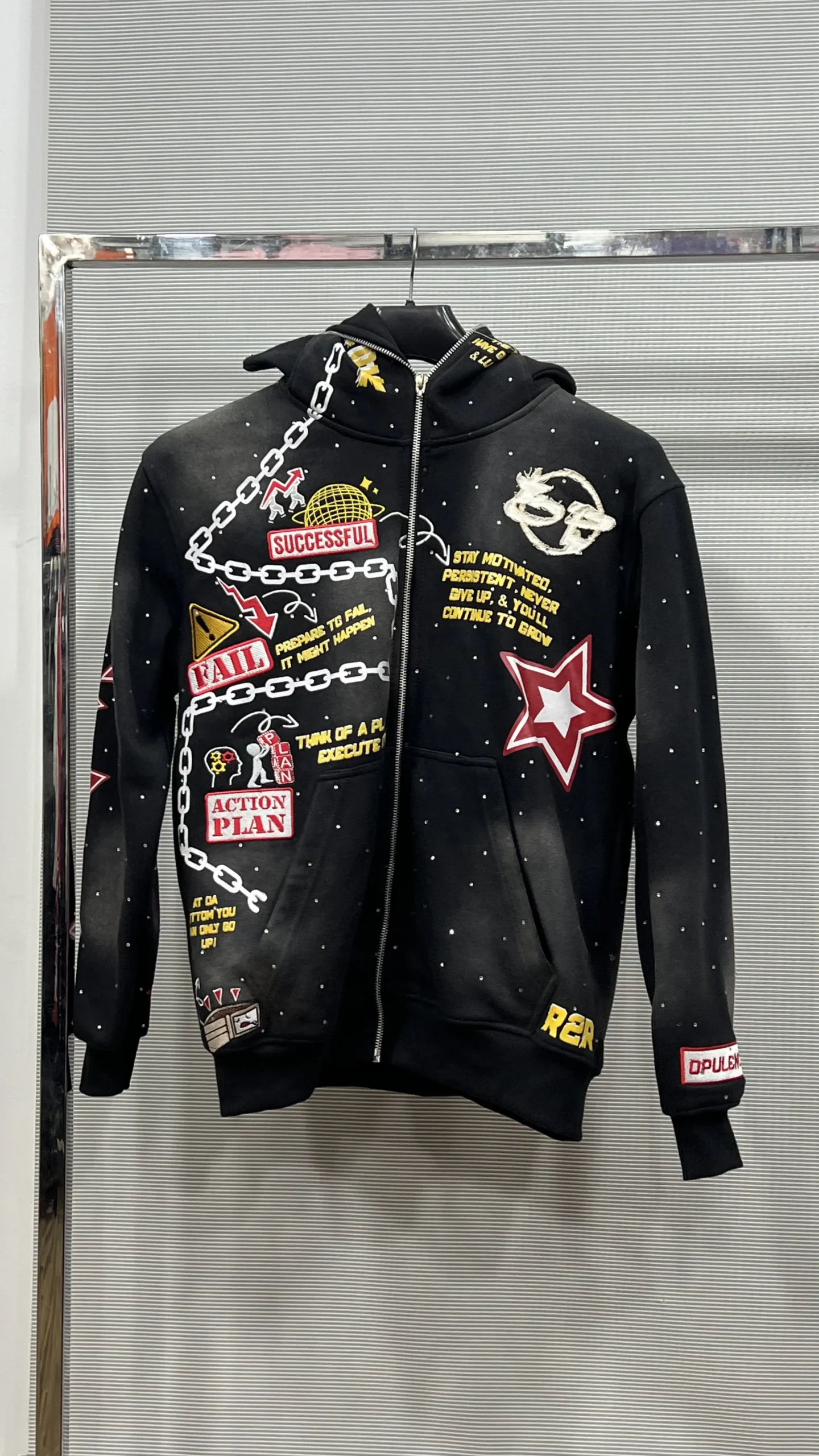
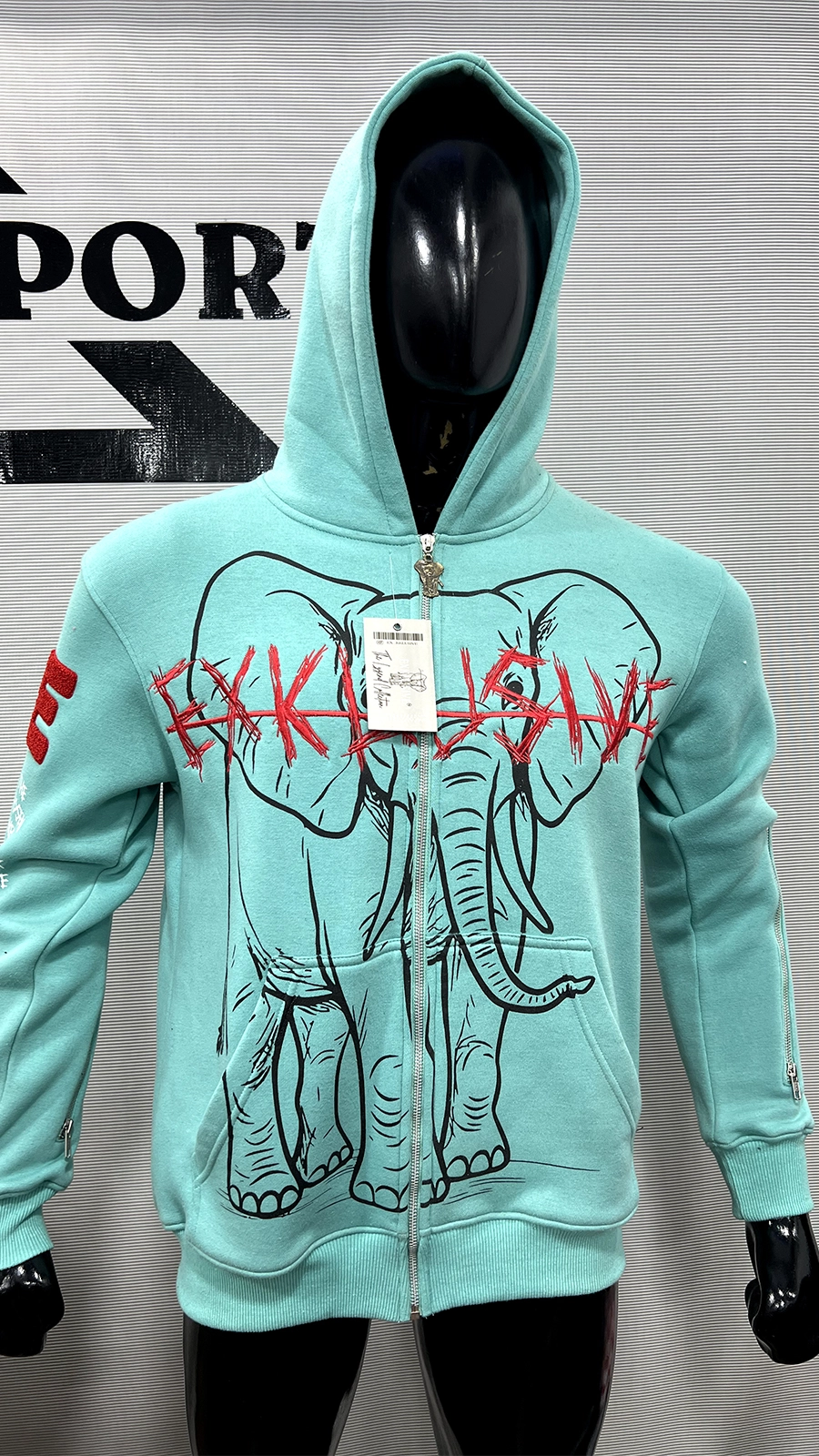
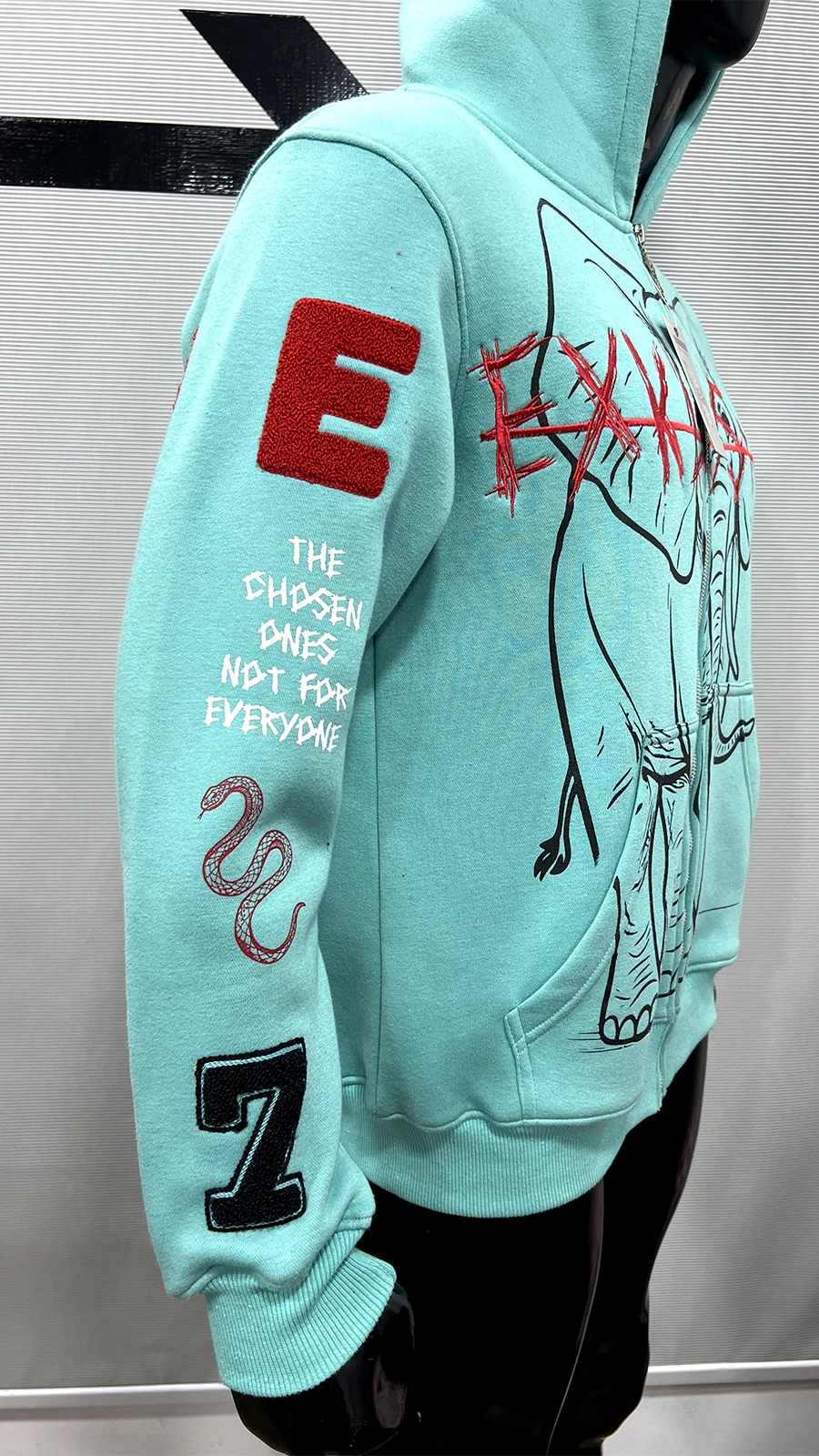
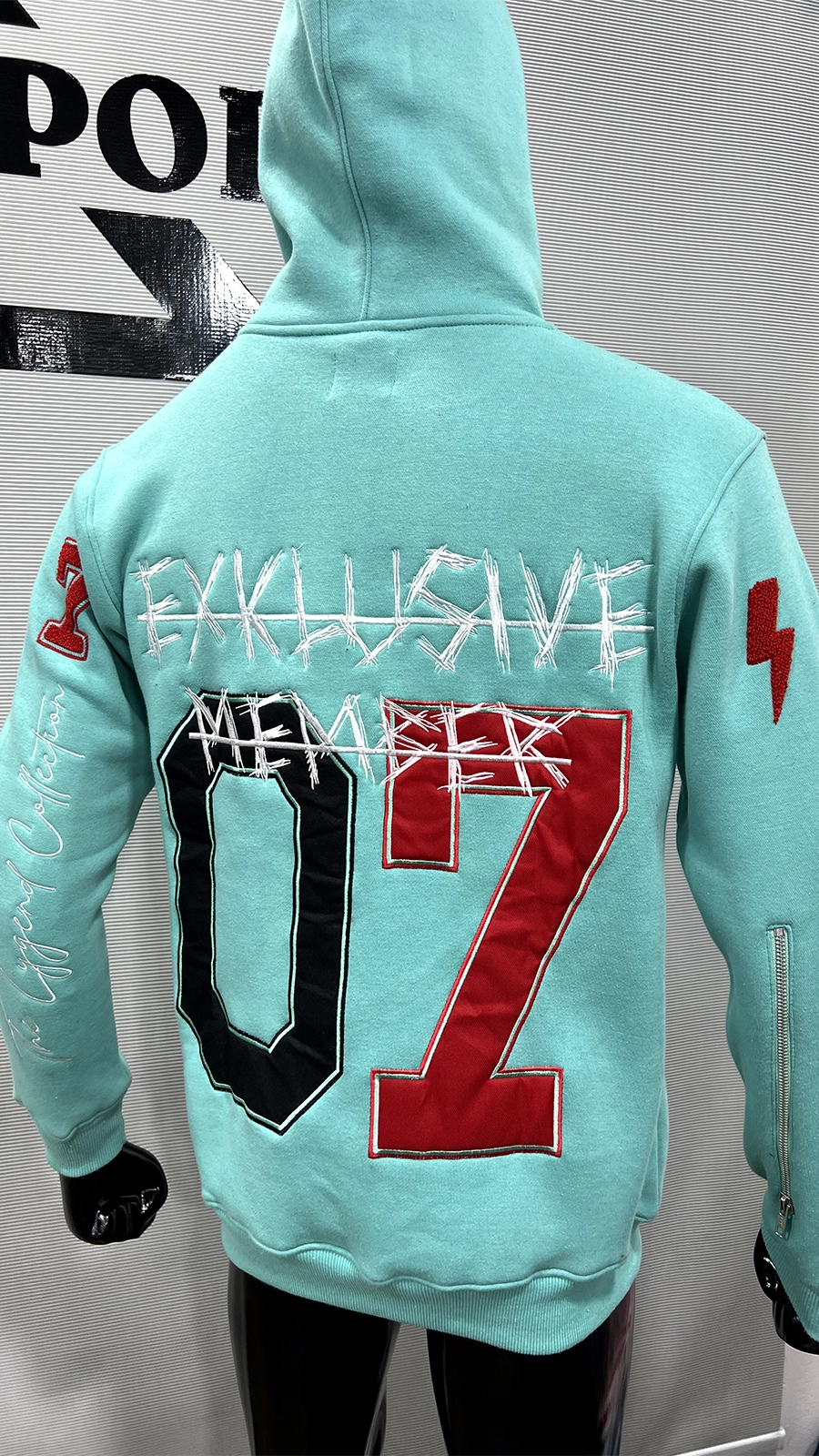
The pieces below are our own production samples, shot on the factory floor — not stock photos. Every order we run is fully custom to your spec, sizes, and branding.
01 — Why Patch Construction Solves Two Different Problems Across This Set
What a Chenille Sweat Suits Manufacturer Solves Twice Over
Our other sweat suits pages each cover a distinct coordination story between the top and bottom. Chenille has its own version, and it’s worth understanding because the reasoning genuinely differs between the two pieces. On the top, we build the design as a separate patch — stitched onto backing, then appliquéd on — as the standard approach, the same convention we use on our chenille hoodie page. On the bottom, patch construction isn’t just the standard choice; it’s close to the only reliable one, given how hard chenille’s thick yarn tension is to manage directly on a curved, tubular leg, the challenge we cover in detail on our chenille sweat pants page.
So both pieces end up using the same construction method, but for different reasons — consistency and quality control on the top, genuine technical necessity on the bottom. It’s worth knowing that distinction, since it means the bottom piece has less flexibility to deviate from patch construction than the top does, even though both pieces will look and feel similar in the finished product.
Yarn thickness is worth deciding for the set as a whole rather than piece by piece. A finer yarn produces a lighter patch on both garments, which matters more here than it would on a single piece, given how much total weight two patches add up to across a full set. Choosing one yarn thickness consistently across the top and bottom also keeps the visual texture matched, rather than one piece reading noticeably bolder or finer than the other.
02 — Fabric and Construction: Why GSM Consistency Matters More Here Than Elsewhere
Fabric and Construction: Why GSM Consistency Matters More Here Than Elsewhere
| Weight | GSM | Chenille Result Across the Set |
|---|---|---|
| Lightweight fleece | 240–280 GSM | Not recommended for either piece — real drape distortion risk |
| Midweight to heavyweight fleece | 300–400+ GSM | Reliable patch support on both pieces |
The fabric-consistency advantage we cover on our other sweat suits pages matters more here than on any technique we’ve covered so far. Our chenille tee page flags real drape distortion risk on lightweight jersey; the same risk applies to either piece of a set if the GSM runs too light. Since a hoodie-and-sweatpants set already shares one heavier fleece weight range without the shorts-style calibration mismatch, that consistency isn’t just convenient here — it’s actively protecting both garments from a genuine quality problem, not merely simplifying our process.
Backing visibility follows the same logic. A hoodie-and-sweatpants set’s typically solid, heavier fleece base gives more margin against backing showing through at the patch edges than a lighter fabric would, but we still match backing color carefully on both pieces rather than treating that margin as license to skip the check.
03 — Placement, Patch Weight Across a Full Set, and Yarn Coordination
Placement, Patch Weight Across a Full Set, and Yarn Coordination
A matching chenille hoodie-and-sweatpants set is a classic varsity and collegiate athletic look — a specific, recognizable aesthetic worth naming directly if that’s the direction your brand is heading, rather than a generic "matching set" framing.
Patch weight is worth thinking about across the whole set, more so than with any other technique we’ve covered for a matched pair. Chenille patches carry real physical bulk from their backing and thick yarn construction — heavier than a flat rhinestone transfer or a printed graphic — so a dense patch on both the chest and the leg adds up to genuinely noticeable total weight across the finished set. Yarn color and texture need to match precisely between the two patches if the design repeats, the same coordination concern we cover on our other sweat suits pages, just applied to chenille yarn here. And patch size needs its own proportioning per garment — a patch scaled for the hoodie’s chest doesn’t automatically translate to the sweatpants leg, the same principle we cover on our chenille sweat shorts page, now applied across two pieces that need to feel proportionally consistent with each other.
If you’re building a full varsity-style collection that also includes a t-shirt or sweatshirt beyond the core hoodie-and-sweatpants set, keep yarn color and style consistent across every piece while still adjusting patch size individually for each garment’s proportions — a cohesive collection reads as one designed line rather than several unrelated pieces that happen to share a logo.
04 — What Separates a Set That Hangs Right From One Where Patches Feel Bolted On
What Separates a Set That Hangs Right From One Where Patches Feel Bolted On
Check patch edges on both pieces — flat, no lifting or curling, the standard chenille check. Flex the bottom piece the way the leg actually moves, not just a static pull, since the curved surface makes this check more important there than on the top’s static chest patch.
Check yarn color and loop density for consistency between the two patches under the same light, and confirm backing color matches the actual garment fabric on both pieces. If both garments carry dense patches, check the overall weight and comfort of the full set worn together — total patch bulk across two garments is worth assessing as a whole, not just piece by piece.
Check the appliqué border on both patches too, if a tackle-twill edge is part of the design — it should sit flat against the fabric along its full perimeter on each piece. Comparing both patches’ border quality side by side often reveals an inconsistency that’s harder to notice when reviewing each garment separately.
05 — MOQ and Sampling: What to Expect
MOQ and Sampling With Your Chenille Sweat Suits Manufacturer
MOQ is 50 complete sets per style — 50 tops and 50 matching bottoms, split across whatever size run you need. Sampling takes 6–10 days, and the full cost is credited against your bulk order once you move forward. That same credit policy applies here as it does across every technique and category we offer.
Wear both pieces together if you can, the same recommendation we make for rhinestone sweat suits — patch weight and hip flex on the bottom are genuinely hard to judge from flat photos, and the combined weight of two patches only becomes clear once you’re actually wearing the full set.
If you’re deciding between yarn thickness options and aren’t sure how bold to go across the whole set, it’s worth sampling both pieces at two different thickness options side by side rather than guessing. Since the finished look and total weight compound across two garments rather than one, the difference between a moderate and a bold yarn choice is more pronounced here than it would be judging a single piece alone.
06 — What Actually Moves Your Price
What Actually Moves Your Price
Patch construction carries a real cost floor on any chenille garment, and here that floor applies to both pieces — you’re paying for two separate patch preparations rather than one shared cost across the set. Patch size on each garment, yarn thickness, fabric GSM, and total order volume (in complete sets) round out the rest.
Yarn thickness affects cost across the whole set too, separate from patch size — a finer yarn typically runs a bit less expensive than the boldest, thickest classic chenille yarn, and that difference compounds across two garments rather than one. If you’re weighing cost against how bold you want the finished set to look, yarn choice is worth discussing alongside patch size rather than as an afterthought once everything else is decided.
We don’t publish flat pricing because those variables interact too much to be useful as a single number. Run your spec through our Instant Quote tool instead — it gives you a price estimate in 5 seconds, a downloadable PDF quote, and a direct line to WhatsApp with your quote pre-filled. Final pricing is confirmed by our team within 24 hours.
07 — Shipping to the UK and EU Duty-Free
Shipping to the UK and EU Duty-Free
Manufacturing in Pakistan carries a trade advantage worth factoring into your landed cost. Apparel made here enters the UK at 0% duty under the Developing Countries Trading Scheme, and the EU at 0% duty under GSP+, versus roughly 12% on equivalent goods sourced from China.
Details on eligibility and the current tariff schedule are on the UK government’s own guidance page: Developing Countries Trading Scheme (DCTS) — GOV.UK. This matters on a matched set order too, since landed cost applies across both pieces of the set rather than a single garment.
08 — When Chenille Isn’t the Right Call
When Chenille Isn’t the Right Call
Chenille isn’t the right call for budget-conscious high-volume orders, since patch construction carries a real cost floor on both pieces regardless of design size. It’s also worth reconsidering for an activewear or performance-focused set, where combined patch weight and stiffness across two garments can genuinely interfere with movement, and it’s the wrong technique for fine detail or small text on either piece. For detailed logos or a lighter, more flexible decoration across the whole set, our Embroidery Sweat Suits page is the better starting point.
If you’re deciding between chenille and embroidery for a full set, weight and how bold you want the finished look are usually the two deciding factors — chenille reads bolder and more textured across both pieces; embroidery keeps the whole set lighter and more flexible through daily wear.
Table of Contents
Simple Process
From Spec to Shipped, in Four Steps
01
Quote & Spec
Run your GSM, placement, and patch size for both pieces through the Instant Quote tool; get a price estimate and a downloadable PDF in 5 seconds.
02
Sample
We construct and appliqué both pieces as a matched sample in 6–10 days; you can join a live video call from the floor before it ships.
03
Approve & Bulk
Approve the sample (its cost is credited to your order) and we run your full size and quantity — production takes 12–15 days.
04
Ship
Finished sets go out via DHL/FedEx air (3–7 days) or sea freight for larger volumes, landing duty-free in the UK and EU.
Our Advantage
Why Brands Choose Malinor
Floor Video Call Before You Pay Anything
See your actual matched set in production, not a stock photo, before you commit to bulk. Both pieces are shown together on the call, not just one garment in isolation.
Sample Cost Credited in Full
Nothing at all you spend on sampling is wasted once you move to bulk.
In-House Chenille Stitching and Patch Construction for Both Pieces
No subcontracting any decoration step to a third shop, so your timeline doesn’t depend on someone else’s queue.
Fast, Direct Replies
Most quote and spec questions get answered within 2 hours during business hours.
Common Questions
Frequently Asked Questions
Does patch construction apply to both the top and bottom the same way?+
The method is the same, but the reasoning differs. On the top, patch construction is our standard, consistent approach for chenille. On the bottom, it’s close to the only reliable option, given how hard chenille’s thick yarn tension is to manage directly on a curved sweatpants leg.
Is patch weight more noticeable on a full set than a single garment?+
Yes, genuinely. Chenille patches carry real physical bulk from backing and thick yarn, more than a flat print or a rhinestone transfer. A dense patch on both the chest and the leg adds up to noticeable total weight across the finished set, worth checking on a worn sample rather than assessed piece by piece.
Do the patches need to be the same size on both pieces?+
Not automatically — a patch scaled correctly for the hoodie’s chest doesn’t translate directly to the sweatpants leg. Each garment needs its own proportioning, even within a coordinated set, so both patches read as sized appropriately for where they sit rather than being one fixed size stretched across two different panels.
Is chenille a good fit for a varsity-style matching set?+
Very much so — a matching chenille hoodie and sweatpants set is a classic varsity and collegiate athletic look, one of the more natural use cases for this technique across a full set.
What’s the minimum order quantity?+
50 complete sets per style, with sizes split however your size run needs. A chenille sweat suit and an embroidered sweat suit in the same order each need their own 50-set minimum, since they’re different styles.
How long does shipping take?+
DHL or FedEx air freight takes 3–7 days worldwide once your order is finished. For larger volumes, sea freight is available at a lower cost per unit but a longer transit time — we’ll walk you through both options once your bulk order is confirmed and ready to move.
Run Your Spec Through the Instant Quote Tool
Get a price estimate in 5 seconds, a downloadable PDF, and a straight line to WhatsApp with your quote pre-filled. Before you pay anything, we’ll get you on a live video call from the production floor.