Over Size Sweat Suits Manufacturer
Over Size Sweat Suits Manufacturer for Drop-Shoulder Matched Sets
As an over size sweat suits manufacturer, we build drop-shoulder hoodie-and-jogger sets where both pieces are patterned oversized together — not one loose piece paired with a standard-cut other half. Fifty sets per style is the minimum, and a 6–10 day sample, credited fully to your bulk order, is the fastest way to check that the shoulder drop and leg width actually read as one silhouette before committing to a 12–15 day bulk run.
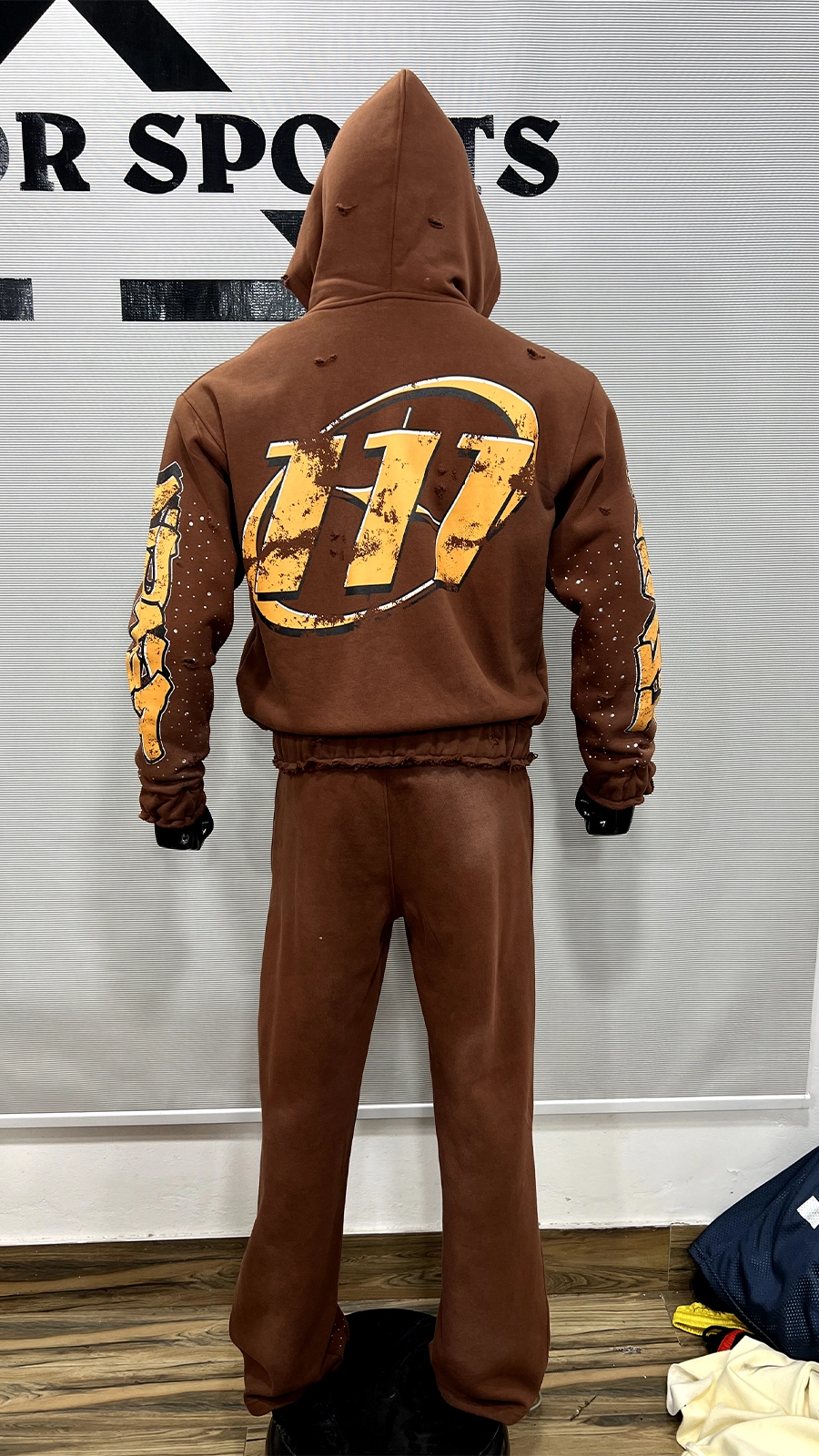
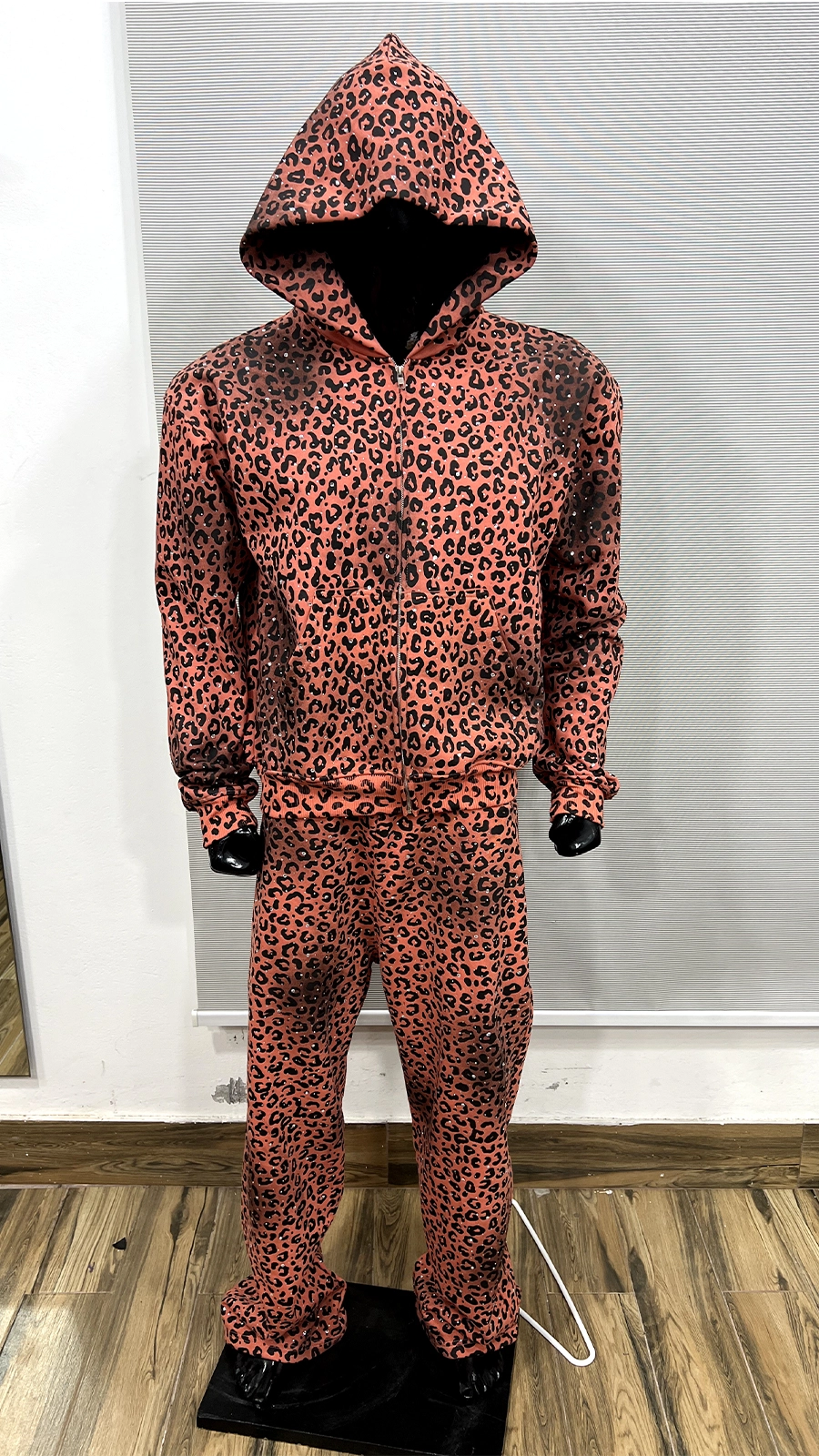
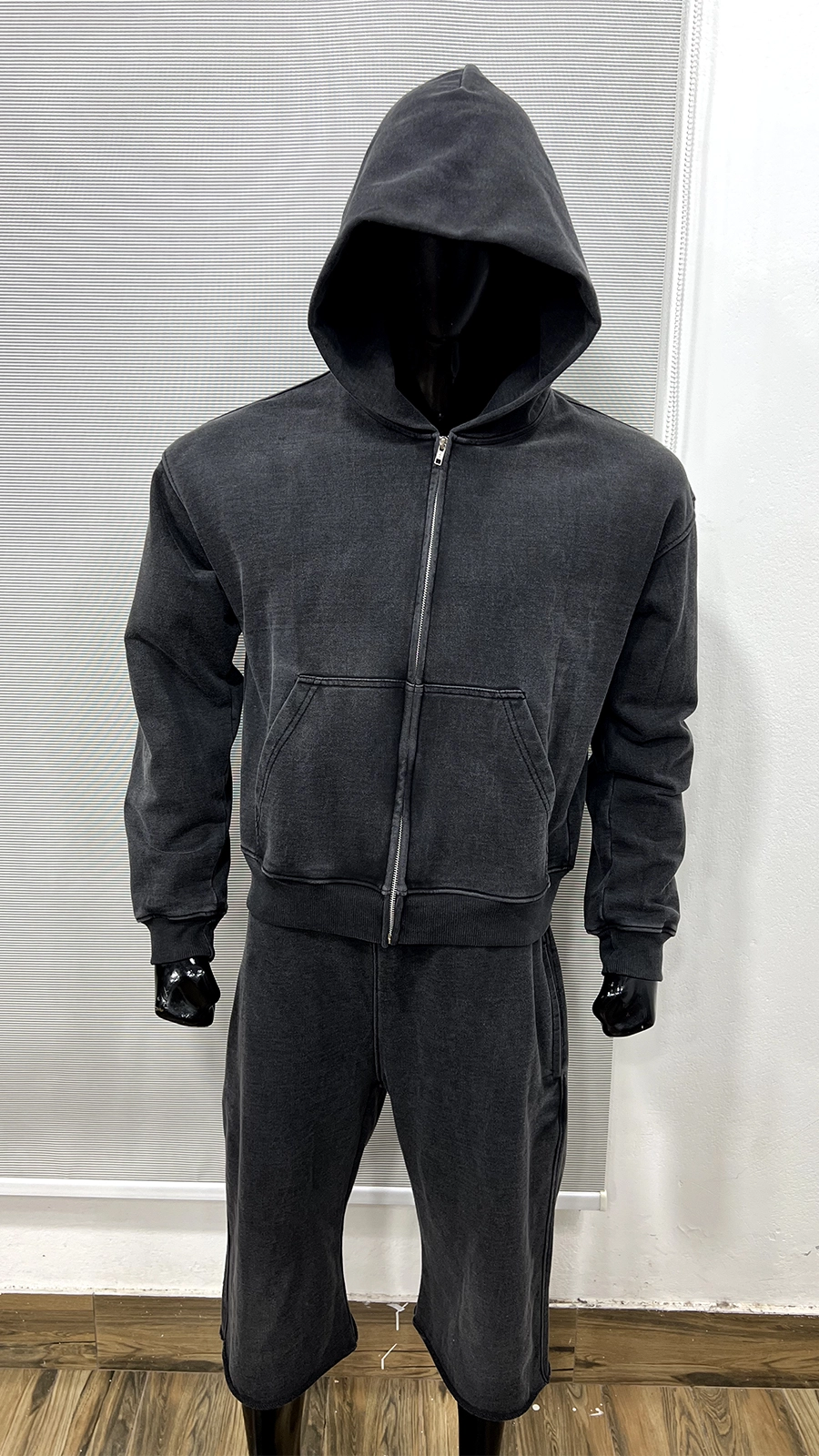
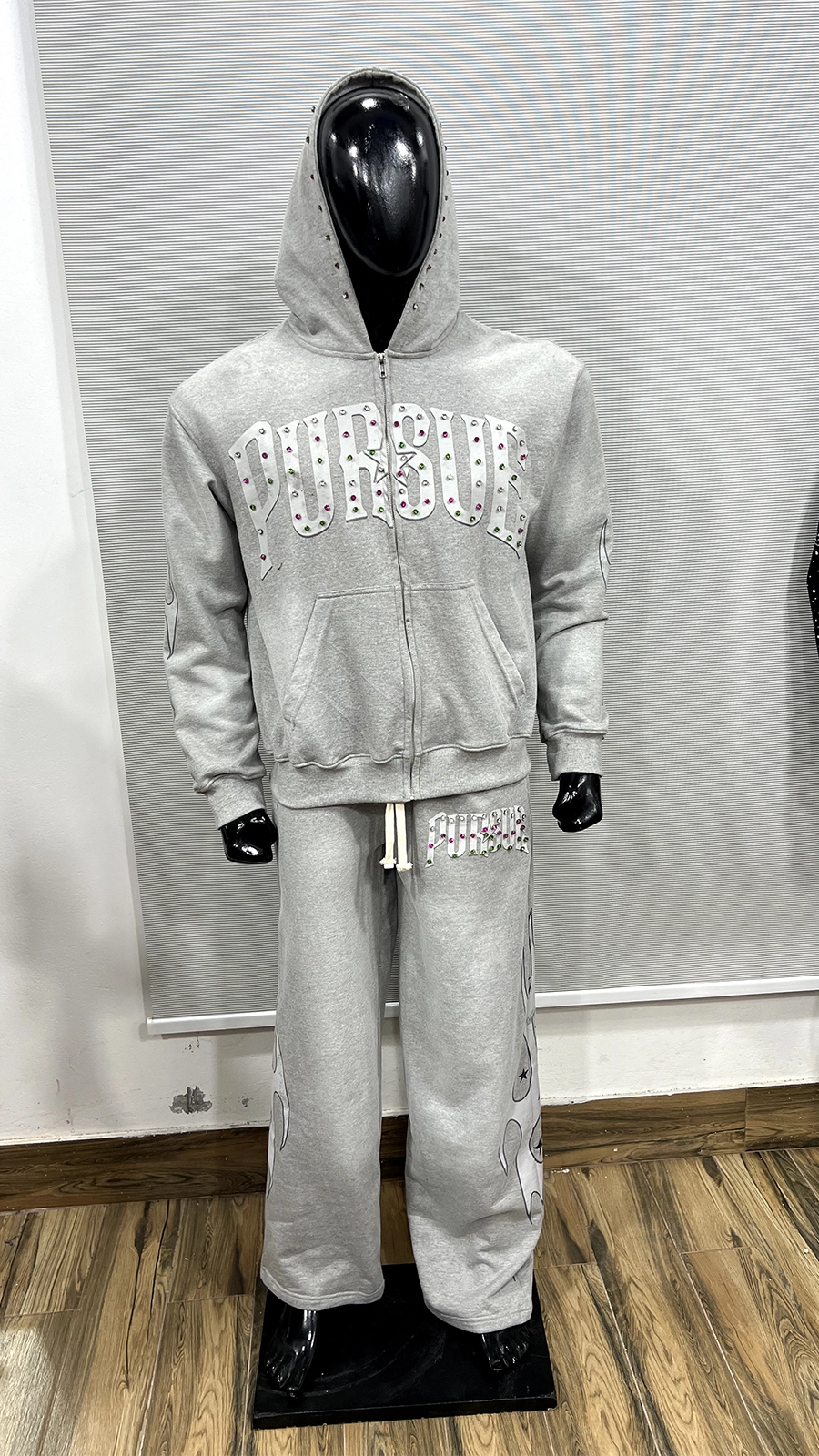
What’s below came off our floor as finished production — the drop-shoulder proportion is what you’re actually seeing, though every order ships in your own fabric, colorway, and decoration, not these ones.
01 — What Makes a Set Genuinely Oversized (Not Just Sized Up)
What an Over Size Sweat Suits Manufacturer Builds Differently
Oversized isn’t a size grade — it’s a different pattern block on both pieces. Grading a standard hoodie pattern up two sizes gives you a bigger hoodie, not an oversized one: the sleeve stays proportional to the body, the shoulder seam still sits where a shoulder actually is, and the extra room just reads as "wrong size" rather than intentional.
A real oversized block moves the shoulder seam down the arm, typically 3–5cm past the natural shoulder point, lengthens the body, and widens the chest and sleeve independently of height. On the bottom, that means a dropped crotch or a wider straight leg, not just a bigger waistband. Both pieces need this treatment together, or the set looks unbalanced — a boxy, drop-shoulder top over joggers that taper in at the ankle like a standard fit reads as two different products that happened to get paired.
Our standard size sweat suits page covers fabric-lot matching between top and bottom in detail — that rule doesn’t change here, it just gets harder to hide. An oversized set has more visible fabric surface area than a standard one, so a shade mismatch that might go unnoticed on a fitted hoodie is much harder to miss across a wider chest panel and a looser leg.
Sizing communication matters here too, more than on a standard set. A lot of buyers who normally wear a size M order a size S in an oversized cut, because the drop and extra room already build in the space a standard M would give them. On a single garment that’s a simple size-chart note. On a set, both the top and bottom size charts need to reflect that same logic together — if your top runs a size down from standard but your jogger chart doesn’t, customers end up ordering a mismatched proportion without realizing it until the set arrives.
02 — Fabric & Construction: Weight for Drape at Volume
Fabric & Construction: Weight for Drape at Volume
Extra fabric only looks intentional if it hangs right. Lightweight fleece on an oversized block tends to balloon or cling depending on movement, neither of which reads as a clean silhouette. You need enough weight for the fabric to drop straight under its own weight.
| Component | Typical GSM | Fabric | Why it’s built this way |
|---|---|---|---|
| Drop-shoulder top | 380–420 GSM | Heavyweight brushed-back fleece | Holds the boxy shape and long body length without collapsing |
| Wide-leg jogger bottom | 340–390 GSM | Same fleece base | Enough structure for a straight leg to hang clean, not balloon |
| Cuffs, hem, waistband rib | N/A | 95/5 or 97/3 cotton-spandex rib, cut narrower relative to body width | Contrast between fitted trim and loose body reads as intentional oversize, not sloppy |
| Drawcord | N/A | Flat cotton cord, dyed to lot | Same set-matching principle as any Malinor set |
Both pieces in an oversized set typically run 20–40 GSM heavier than their standard-size counterparts, specifically to support the drop and the drape. That’s one of the clearest fabric differences between the two set types when you hold them side by side.
03 — Design, Placement, and File Requirements for an Oversized Set
Design, Placement, and File Requirements for an Oversized Set
A chest logo sized for a standard hoodie often looks lost on a drop-shoulder chest panel that’s noticeably wider. Placement graphics on oversized tops usually scale up 15–20% from a standard-fit spec to read at the right proportion — same file, different print size, and that needs to be specified separately, not assumed.
The jogger side follows the same logic. A small hip mark that reads fine on a slim-leg standard jogger can disappear on a wide leg with more fabric around it. We typically recommend either a slightly larger mark or a placement closer to the thigh seam, where there’s less flat surface competing with it.
File requirements don’t change: vector artwork for print and digitizing, Pantone references, separate thread callouts for embroidery. What does change is that we ask for the garment’s actual pattern dimensions before finalizing placement size — an oversized L and a standard L have meaningfully different chest widths, and a placement spec built against the wrong block looks off once it’s printed.
04 — Quality Checks: Drop Shoulder and Hem Consistency
Quality Checks: Drop Shoulder and Hem Consistency
The shoulder seam drop is the measurement to check first. If it varies by more than a few millimeters between units in the same size, the fit shifts noticeably — one hoodie reads oversized, the next in the same batch reads almost standard. That’s a grading and cutting consistency issue, and it’s worth spot-checking across a handful of units from the same run, not just the sample.
Hem length matters more here than on a standard set. An oversized hoodie relies on a long, even hem to read as intentional — unevenness of even a centimeter side to side looks like a mistake at this length in a way it wouldn’t on a shorter, fitted cut.
The kangaroo pocket is worth a specific check too. A pocket sized for a standard block can look undersized once it’s set into a wider, longer body — proportionally it should scale with the drop, not stay fixed at a standard-fit dimension. We size the pocket opening and depth against the actual oversized pattern, not a generic template, and it’s one of the first things worth comparing between your sample and any competitor sample you’re benchmarking against.
On the bottom, check that the wider leg hangs straight rather than pooling or twisting at the seam. A twisted inseam is far more visible on a wide leg than a slim one, since there’s more fabric to show the distortion.
And as with any set: hold both pieces up together in daylight. Oversized garments use more fabric per unit, which means more chances for shade drift within a single roll if the mill isn’t running a tight batch.
05 — MOQ and Sampling: What to Expect
MOQ and Sampling for an Over Size Sweat Suits Manufacturer Order
Same structure as any Malinor set: 50 sets per style minimum, sizes split across the run, both pieces counted toward that one 50-unit minimum rather than as separate SKUs.
Sampling runs 6–10 days, top and bottom shipped together so you can check the proportion between them, not just the color. This is specific to oversized sets: on a standard set you’re mainly checking color match, but on an oversized set you’re also checking that the drop-shoulder top and the wide-leg bottom actually read as one silhouette — something you can only judge properly with both pieces in hand.
Sample cost is credited 100% against your bulk order once approved, same as every other style.
06 — What Moves the Price on an Oversized Set
What Moves the Price on an Oversized Set
Oversized sets use more fabric per unit than standard sets — a wider chest, longer body, and dropped crotch all add cut fabric that a standard block doesn’t need — and that’s the first thing that moves the price versus a standard-fit set in the same weight. Beyond that, the same levers apply: fabric composition, decoration technique and placement count, trim upgrades, and packaging.
We don’t publish flat numbers because an oversized set in 420 GSM heavyweight fleece with embroidery on both pieces sits in a different cost bracket than the same silhouette in 340 GSM fleece with a single print, and there’s no single "oversized set price" that covers both. The Instant Quote tool gives you an estimate in 5 seconds based on your actual specs, generates a downloadable PDF, and lets you continue to WhatsApp with that quote attached. Final pricing is confirmed within 24 hours.
Cutting efficiency plays a quieter role too. A standard-fit pattern nests more efficiently on a roll of fabric, leaving less waste per garment. An oversized block, with its wider panels and longer body, doesn’t nest as tightly, so fabric utilization drops slightly even before you account for the extra fabric the pattern itself needs. That’s baked into fabric cost on any oversized run, not something specific to us, but it’s worth knowing when you’re comparing a quote against a standard-fit set in the same weight.
07 — Shipping to the UK and EU Duty-Free
Shipping to the UK and EU Duty-Free
Apparel made in Pakistan enters the UK duty-free under the Developing Countries Trading Scheme and the EU duty-free under GSP+ — the same 0% rate whether the set is standard fit or oversized, since duty is assessed on the garment category and value, not the pattern block. From China, the comparable set typically carries around 12% duty. Full details are on the UK government’s trading scheme page.
Air freight runs 3–7 days via DHL or FedEx once production wraps. Sea freight is the more economical option for larger oversized-set orders, since the extra fabric per unit adds up in freight weight faster than it does on a standard-fit run.
08 — When Oversize Isn’t the Right Call
When Oversize Isn’t the Right Call
If your brand is built around a fitted, athletic silhouette — something a customer wears to actually move in, not layer over other clothes — an oversized block works against you. The extra fabric and drop shoulder are the whole point of this fit; forcing it onto a fitness-first line just reads as ill-fitting rather than intentional. Standard Size Sweat Suits is the better starting point for that customer.
It’s also worth thinking twice if fabric cost is a tight constraint on a first order. Oversized sets use meaningfully more fabric per unit than standard ones, and on a 50-set minimum run that difference is real money before you’ve sold a single unit. A standard fit set gets you into production at a lower per-unit fabric cost while you test demand.
Table of Contents
Simple Process
From Spec to Shipped, in Four Steps
01
Send Your Set Spec
Oversized top and bottom design, target shoulder drop, one coordinated colorway.
02
We Confirm the Block and Fabric
Drop-shoulder top and wide-leg bottom patterned together, fabric pulled from one matching lot.
03
Sample Set Ships in 6–10 Days
Both pieces together so you can judge the proportion, not just the color; cost credited to bulk.
04
Bulk Production Takes 12–15 Days
Cut to the oversized block, sewn, decorated, paired, and bagged as finished sets ready for air or sea freight.
Our Advantage
Why Brands Choose Malinor
Floor Video Call Before You Pay Anything
See the actual fabric weight your set will be cut from, not just a swatch.
Sample Cost Rolls Straight Into Your Bulk Order
You see the actual drop and proportion in hand before committing to 50 sets, not just a spec sheet.
Pattern Grading, Cutting, and Decoration All In-House
The shoulder-drop consistency that makes or breaks an oversized fit isn’t handed off to a subcontractor.
Fast Replies
Questions about pattern specs don’t sit in a queue.
Common Questions
Frequently Asked Questions
How much drop should the shoulder seam have on an oversized set?+
Most of our oversized sets use a 3–5cm shoulder drop past the natural shoulder point — enough to read as boxy without swallowing the arm. We confirm the exact drop against your reference photos or measurements before cutting, since "oversized" means different things to different brands.
Do the top and bottom need to match in fabric weight?+
They don’t need to be identical, but both should sit in the heavier range — typically 380+ GSM on top, 340+ GSM on the bottom — so the drape holds at oversized volume. A lightweight fabric on either piece tends to look shapeless rather than intentionally oversized.
Can I get a less extreme oversized fit?+
Yes. Shoulder drop and body length are both adjustable. Tell us the silhouette you’re referencing and we’ll spec a drop that matches, from a subtle boxy fit to a fully dropped streetwear cut.
Will a chest logo sized for a standard hoodie work on the oversized top?+
Usually it needs to scale up — placements built for a standard block often look small on a wider oversized chest panel. We typically recommend increasing print or embroidery size by 15–20% and will flag it if your file looks undersized for the pattern.
What’s the MOQ for an oversized set?+
50 sets per style, same as our standard sets — 50 tops and 50 bottoms, sizes split across the run.
How long from sample approval to shipped bulk order?+
12–15 days for production, then 3–7 days by air or longer by sea. Sampling itself takes 6–10 days, with the cost credited against your bulk order.
Run Your Spec Through the Instant Quote Tool
Get a price estimate in 5 seconds, a downloadable PDF, and a straight line to WhatsApp with your quote pre-filled. Before you pay anything, we’ll get you on a live video call from the production floor.