Embroidery T Shirt Manufacturer
Embroidery T Shirt Manufacturer Built Around What Jersey Can Actually Hold
As an embroidery t shirt manufacturer based in Sialkot, Pakistan, we cap stitch density to what your jersey weight can actually support and back every placement with the right stabilizer, so a lightweight tee doesn’t pucker the way a rushed job would. MOQ starts at 50 pieces per style with sizes split however you need, your sample takes 6–10 days and its full cost is credited against the bulk order, and production runs 12–15 days once you approve it.
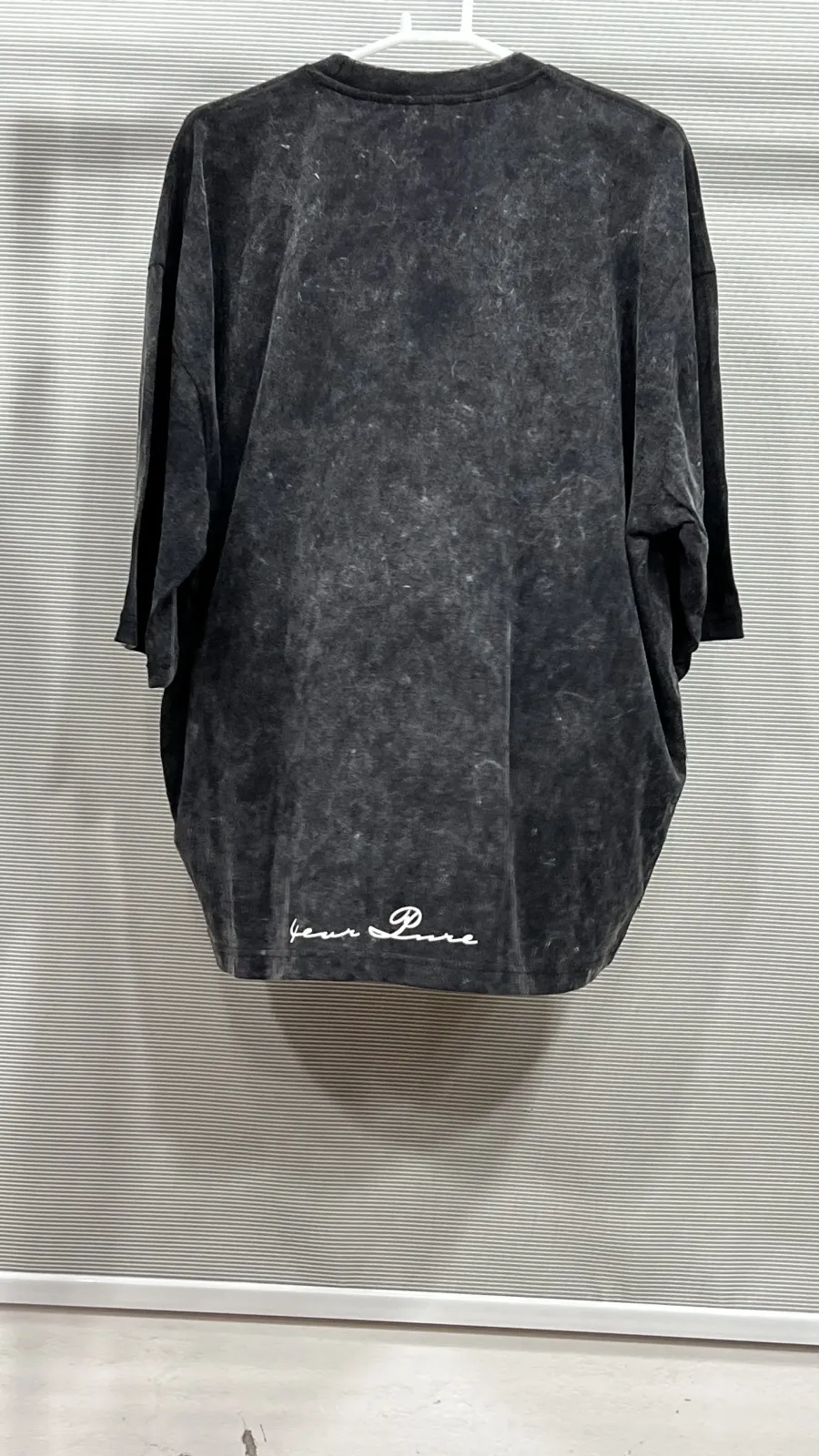
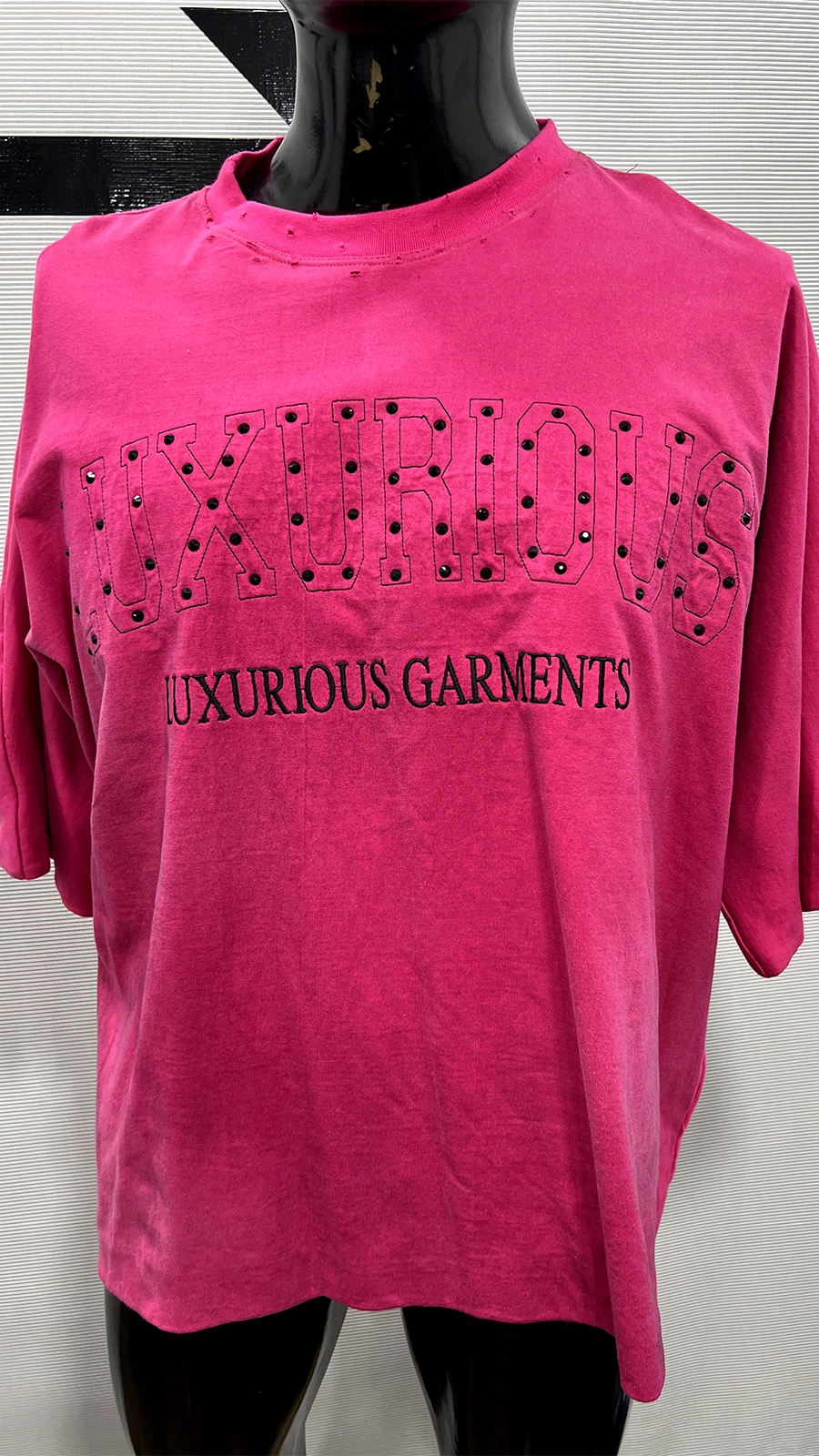
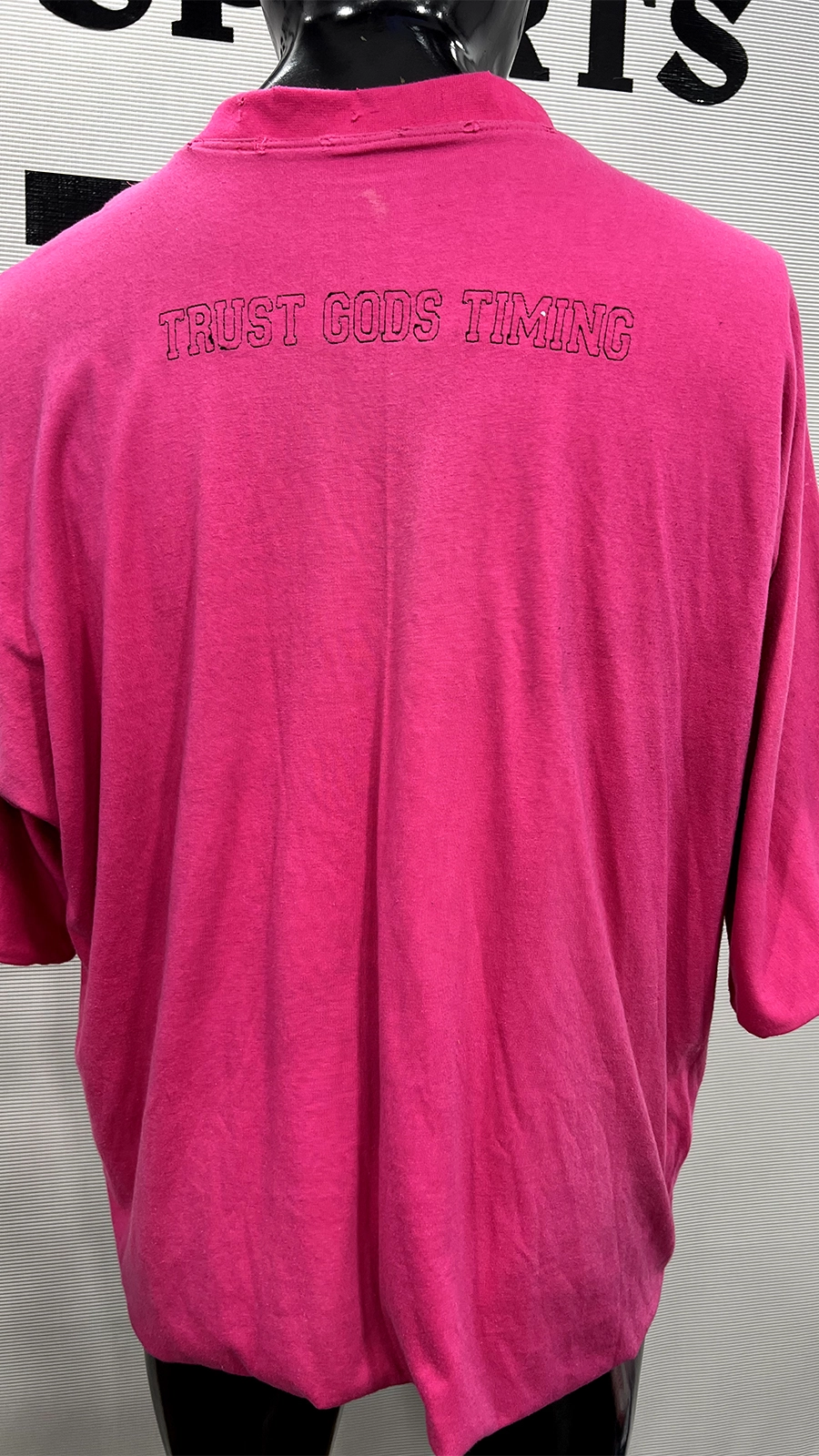
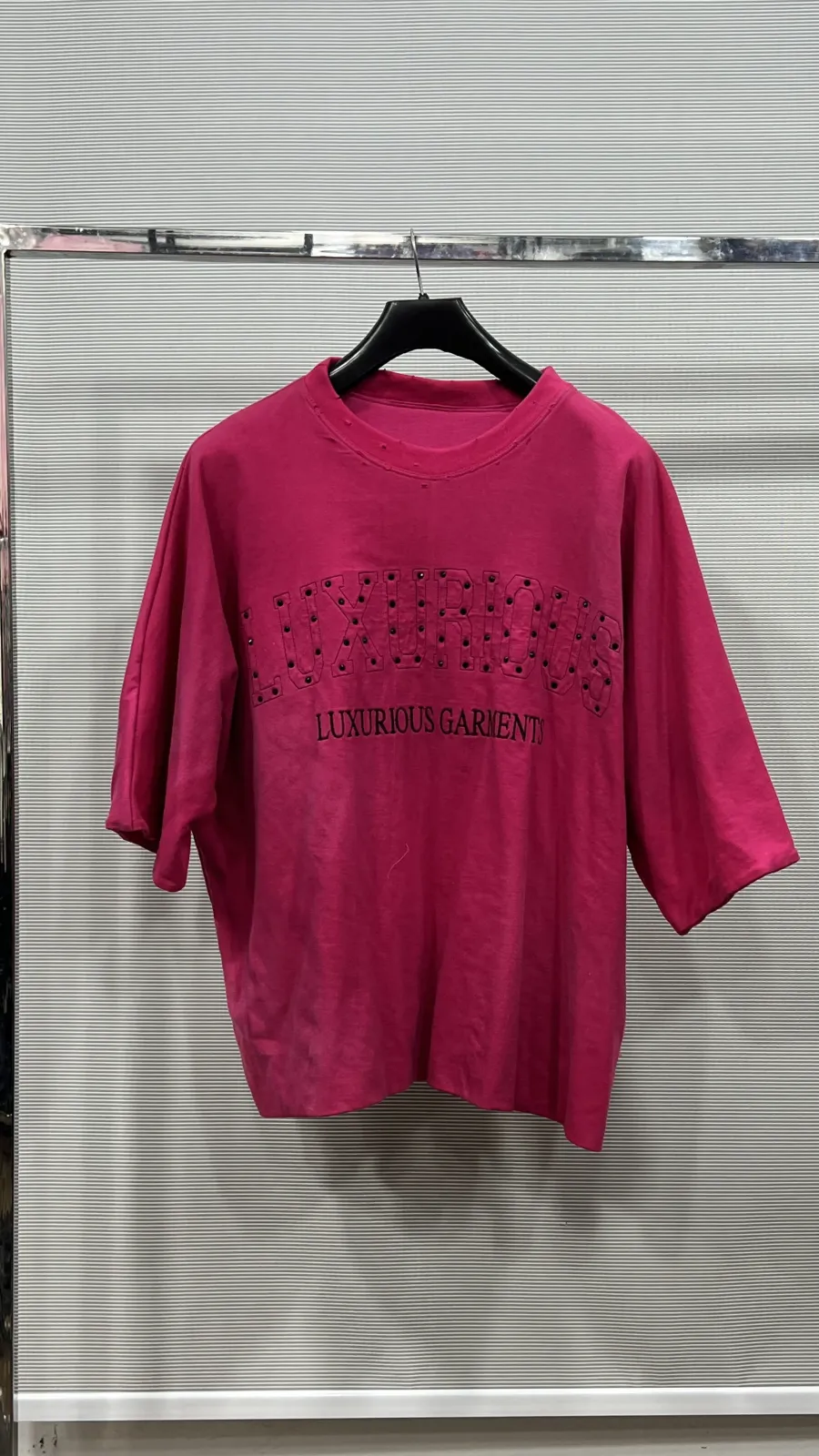
The pieces below are our own production samples, shot on the factory floor — not stock photos. Every order we run is fully custom to your spec, sizes, and branding.
01 — What Embroidery on a Tee Involves — Different Rules Than Fleece
What an Embroidery T Shirt Manufacturer Actually Works Around
The stitching mechanics are the same as any embroidery — a needle follows a digitized stitch file, building up a design thread by thread. What changes completely on a t-shirt is the fabric underneath it. A hoodie’s fleece runs 300–500 GSM with real structural mass; a tee’s jersey knit typically sits at 160–220 GSM, a fraction of that weight. Stitch tension that a heavy fleece shrugs off can pucker a lightweight jersey noticeably, which means everything about how we approach embroidery on a tee — stabilizer choice, hooping, stitch density — gets more conservative than it would on a hoodie.
That’s not a limitation we work around quietly; it’s worth knowing upfront if you’re used to seeing dense, elaborate embroidery on heavier garments and expect the same on a tee. Some designs that look great on 400 GSM fleece simply need to be simplified to work cleanly on 180 GSM jersey.
02 — Fabric and Construction: Why Jersey Caps How Dense a Design Can Get
Fabric and Construction: Why Jersey Caps How Dense a Design Can Get
| Weight | GSM | Embroidery Result |
|---|---|---|
| Lightweight jersey | 160–180 GSM | Small logos only, light stitch density |
| Midweight jersey | 180–200 GSM | Standard chest logos — most of our tee orders run here |
| Heavier jersey | 200–220+ GSM | Slightly denser fills tolerated |
Cut-away stabilizer is close to mandatory on jersey, more so than it is even on fleece. Tear-away stabilizer’s removal process can distort or genuinely tear a thin, stretchy knit, where a heavier fleece has enough body to resist that stress. Fabric quality matters here too: combed cotton’s finer, more uniform yarn holds a cleaner stitch outline than carded cotton, which can show a slightly rougher edge around fine detail — a difference that’s more visible on a tee’s smooth jersey surface than it would be on a hoodie’s already-textured fleece.
03 — Placement, Hooping, and File Requirements
Placement, Hooping, and File Requirements
Left-chest placement still runs 8–10cm, same as any garment. Back embroidery, though, is far less common on tees than on hoodies — a dense embroidered back panel on lightweight jersey both risks puckering and sits directly against skin in a way that’s genuinely less comfortable to wear, unlike a hoodie’s heavier fabric worn over another layer. One placement that is more of a tee thing than a hoodie thing: a small embroidered detail at or just below the neckline, an option that doesn’t really exist on a hoodie since the hood covers that area.
Hooping a stretchy, lightweight tee evenly is a real skill difference from hooping a stiffer fleece hoodie. Too much tension while it’s hooped and the fabric can distort slightly around the design — sometimes visible as a faint dimple even after the hoop comes off. Send us your artwork and Pantone references as usual, and flag your target fabric weight early so we can tell you upfront whether a design needs simplifying to stay within a safe stitch density.
04 — What Separates Clean Embroidery on a Tee From a Puckered Mess
What Separates Clean Embroidery on a Tee From a Puckered Mess
Lay the tee flat and look at the fabric immediately around the stitched area — it should sit as flat as the rest of the panel, with no rippling or dimpling. That check matters more here than on a hoodie, since jersey has so much less mass to hide a tension problem.
Flip it over and check the backing: it should be trimmed close and smooth, since this side sits directly against skin far more often than an embroidered hoodie does, where a hood or an undershirt often buffers it. Check stitch tension for loose threads or visible looping underneath, and look at outline crispness — a clean edge on combed cotton, a touch softer on carded. These are the checks we run on every sample before it goes to bulk.
05 — MOQ and Sampling: What to Expect
MOQ and Sampling With Your Embroidery T Shirt Manufacturer
MOQ is 50 pieces per style, split across whatever size run you need. Sampling takes 6–10 days, and the full cost is credited against your bulk order once you move forward.
Gently stretch the fabric around the embroidered area on your sample before approving it — a properly stabilized design shouldn’t pucker or pull when the shirt flexes the way it will in normal wear. That stretch test matters more on a tee than a hoodie precisely because jersey has more give to begin with.
06 — What Actually Moves Your Price
What Actually Moves Your Price
Stitch count and density, thread color count, placement size, fabric GSM, and total order volume all move the price the same way they would on any embroidery job. One thing worth knowing: jersey’s lower safe stitch-density ceiling can actually cap how elaborate — and how expensive — a design gets, compared to what the same artwork might cost on a heavier fleece garment that can support denser fills.
We don’t publish flat pricing because those variables interact too much to be useful as a single number. Run your spec through our Instant Quote tool instead — it gives you a price estimate in 5 seconds, a downloadable PDF quote, and a direct line to WhatsApp with your quote pre-filled. Final pricing is confirmed by our team within 24 hours.
07 — Shipping to the UK and EU Duty-Free
Shipping to the UK and EU Duty-Free
Manufacturing in Pakistan carries a trade advantage worth factoring into your landed cost. Apparel made here enters the UK at 0% duty under the Developing Countries Trading Scheme, and the EU at 0% duty under GSP+, versus roughly 12% on equivalent goods sourced from China.
Details on eligibility and the current tariff schedule are on the UK government’s own guidance page: Developing Countries Trading Scheme (DCTS) — GOV.UK.
08 — When Embroidery Isn't the Right Call
When Embroidery Isn’t the Right Call
Embroidery isn’t the right call on very lightweight or sheer tees — under about 140 GSM, the fabric struggles to support even a small logo without puckering, no matter how careful the stabilizing is. It’s also the wrong fit for large coverage designs, which get heavy and impractical to stitch on jersey, and for budget-conscious basics where a print achieves similar branding for less. For those cases, our Screen Printing T Shirt page is a more practical starting point.
Table of Contents
Simple Process
From Spec to Shipped, in Four Steps
01
Quote & Spec
Run your GSM, placement, and thread colors through the Instant Quote tool; get a price estimate and a downloadable PDF in 5 seconds.
02
Sample
We digitize your artwork and stitch a physical sample in 6–10 days on your actual fabric weight; you can join a live video call from the floor before it ships.
03
Approve & Bulk
Approve the sample (its cost is credited to your order) and we run your full size and quantity — production takes 12–15 days.
04
Ship
Finished tees go out via DHL/FedEx air (3–7 days) or sea freight for larger volumes, landing duty-free in the UK and EU.
Our Advantage
Why Brands Choose Malinor
Floor Video Call Before You Pay Anything
See your actual embroidery run in production, not a stock photo, before you commit to bulk.
Sample Cost Credited in Full
Nothing you spend on sampling is wasted once you move to bulk.
In-House Digitizing and Stitching
No subcontracting a decoration step to a third shop, so your timeline doesn’t depend on someone else’s queue.
Fast, Direct Replies
Most quote and spec questions get answered within 2 hours during business hours.
Common Questions
Frequently Asked Questions
Why does embroidery pucker more easily on a t-shirt than a hoodie?+
A tee’s jersey knit typically runs 160–220 GSM, far less fabric mass than a hoodie’s 300–500 GSM fleece. Stitch tension that heavier fleece resists without issue can visibly pucker lighter jersey, which is why we’re more conservative with stitch density and more careful with stabilizer choice on tees than on hoodies.
What’s the lightest tee weight that can hold an embroidered logo?+
Around 160 GSM is the practical floor for a small, light-density design. Below roughly 140 GSM, the fabric generally can’t support embroidery at all without noticeable puckering, regardless of how well it’s stabilized. If your fabric is on the lighter end, we’ll usually recommend keeping the design small and simple, or considering a print instead.
Can you embroider the back of a t-shirt?+
Technically yes, but it’s uncommon and not usually the practical choice. A dense embroidered back panel on lightweight jersey risks puckering, and it sits directly against skin in a way that’s less comfortable than the same placement on a hoodie’s heavier fabric. For large back coverage, a print handles it more comfortably and economically.
Why does the backing matter more on a t-shirt than a hoodie?+
Because it’s more likely to sit directly against skin. A hoodie is often worn over another layer, or the hood and thicker fabric add some buffer; a tee frequently doesn’t have that. We trim backing close and smooth specifically because wearer comfort matters more on this garment than it does on a heavier one.
What’s the minimum order quantity?+
50 pieces per style, with sizes split however your size run needs — you’re not locked into 50 of one size. An embroidered tee and a screen-printed tee in the same order each need their own 50-piece minimum, since they’re different styles.
How long does shipping take?+
DHL or FedEx air freight takes 3–7 days worldwide once your order is finished. For larger volumes, sea freight is available at a lower cost per unit but a longer transit time — we’ll walk you through both options once your bulk order is confirmed.
Run Your Spec Through the Instant Quote Tool
Get a price estimate in 5 seconds, a downloadable PDF, and a straight line to WhatsApp with your quote pre-filled. Before you pay anything, we’ll get you on a live video call from the production floor.