Rhinestone T Shirt Manufacturer
Rhinestone T Shirt Manufacturer With Room for a Full Bling Design
As a rhinestone t shirt manufacturer based in Sialkot, Pakistan, we build bold, full-coverage stone designs that a bulkier garment can’t carry as easily — a tee’s lighter overall weight means a bigger design stays wearable instead of turning heavy. MOQ starts at 50 pieces per style with sizes split however you need, your sample takes 6–10 days and its full cost is credited against the bulk order, and production runs 12–15 days once you approve it.
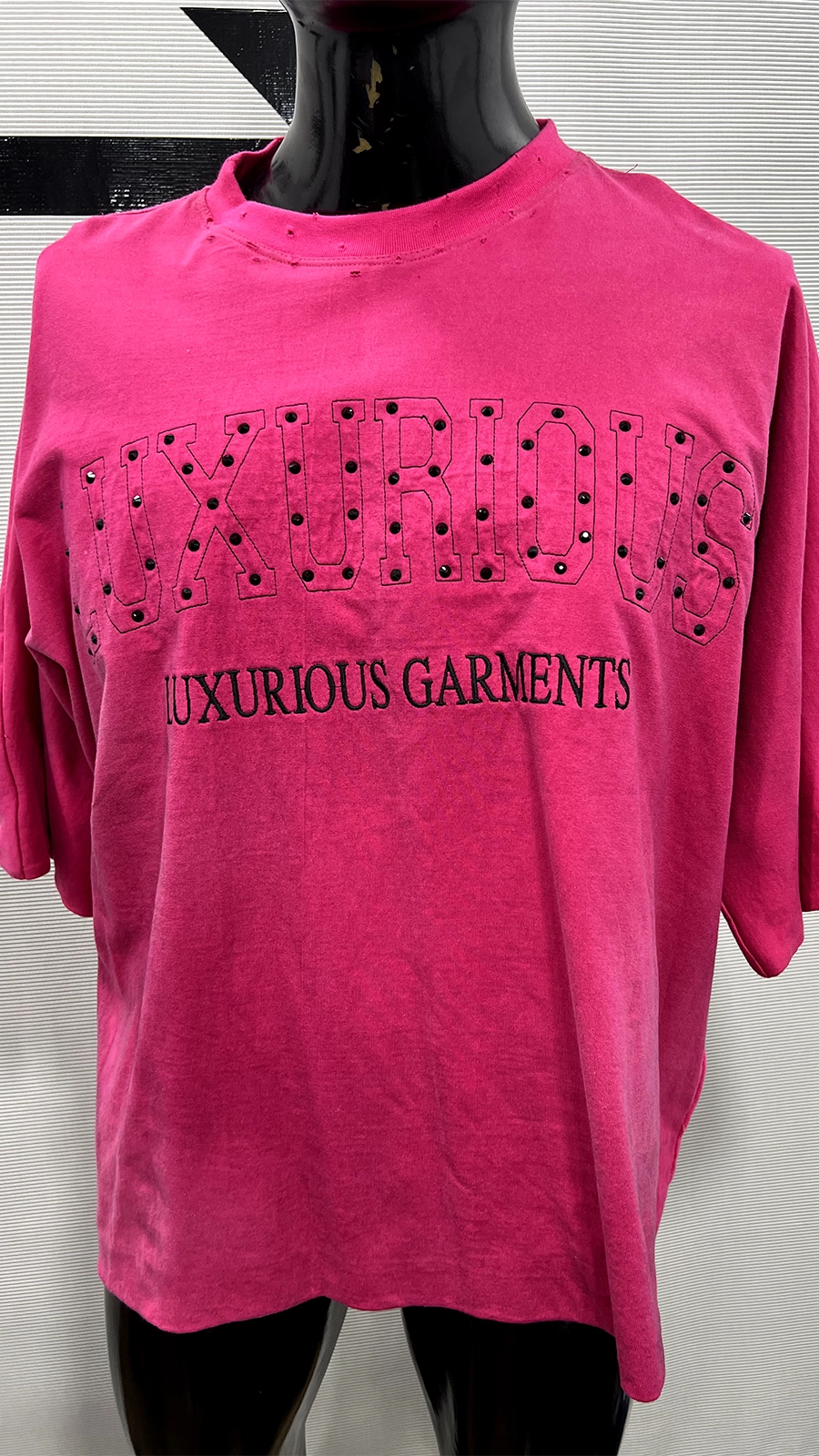
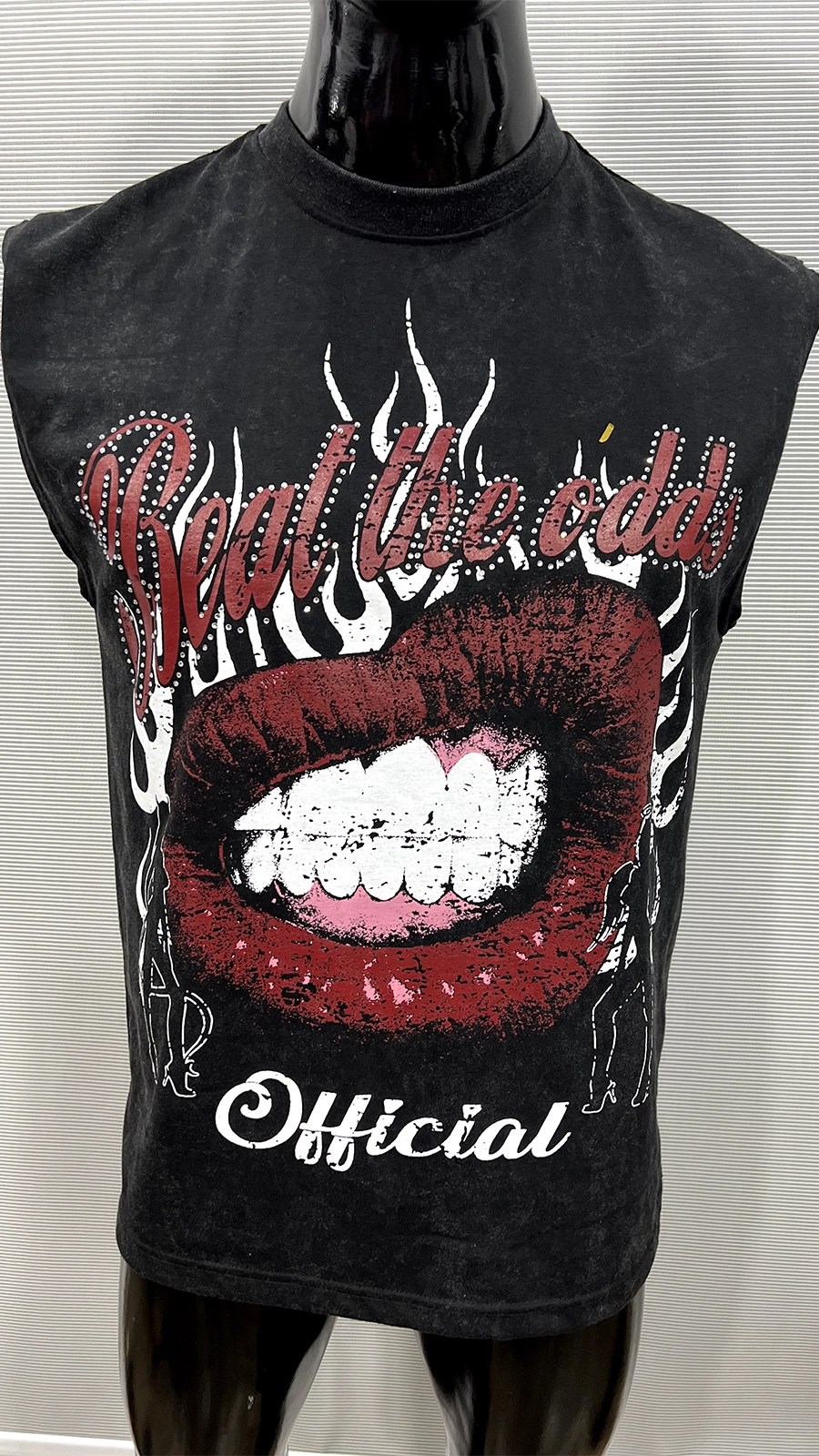
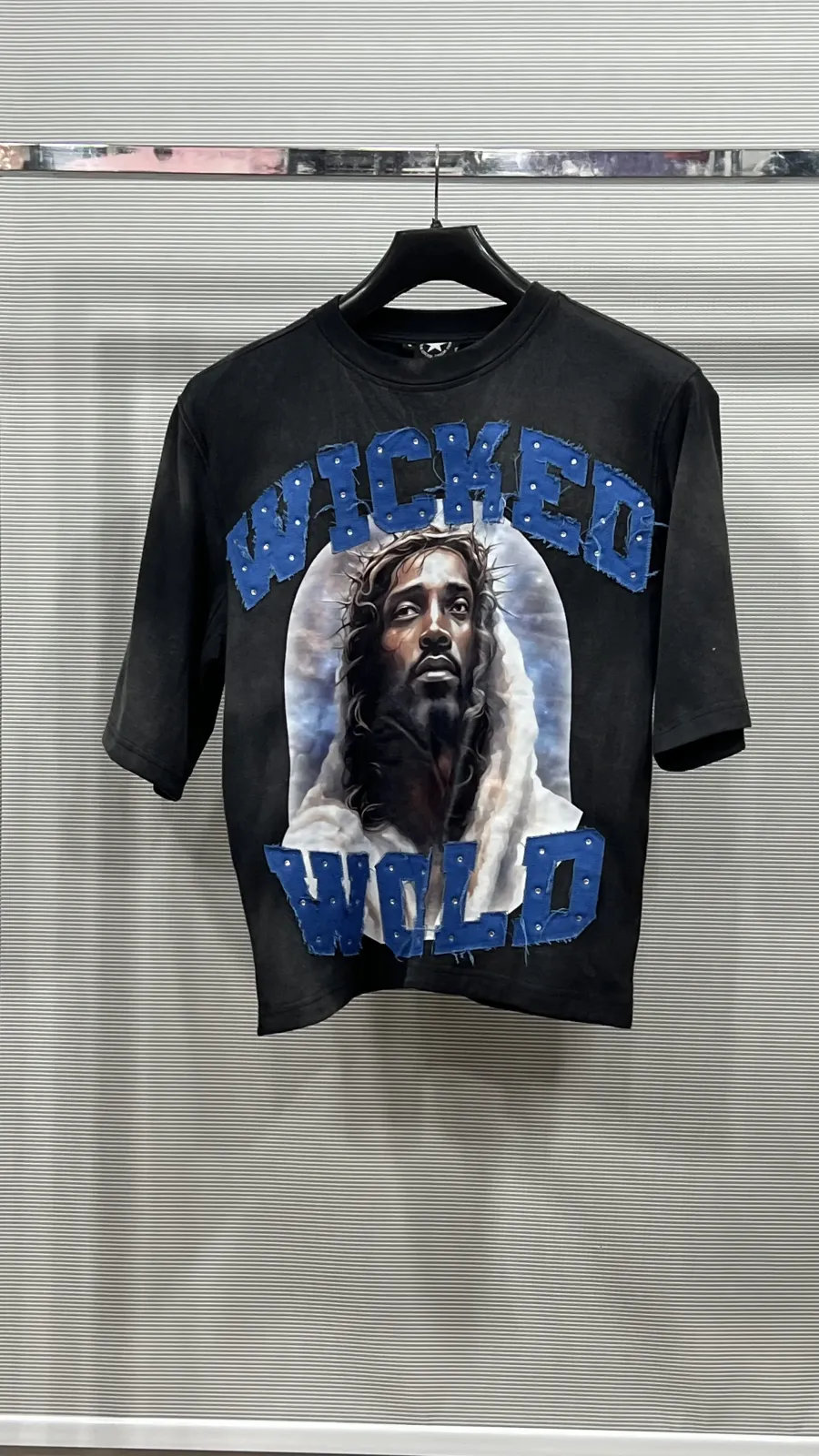
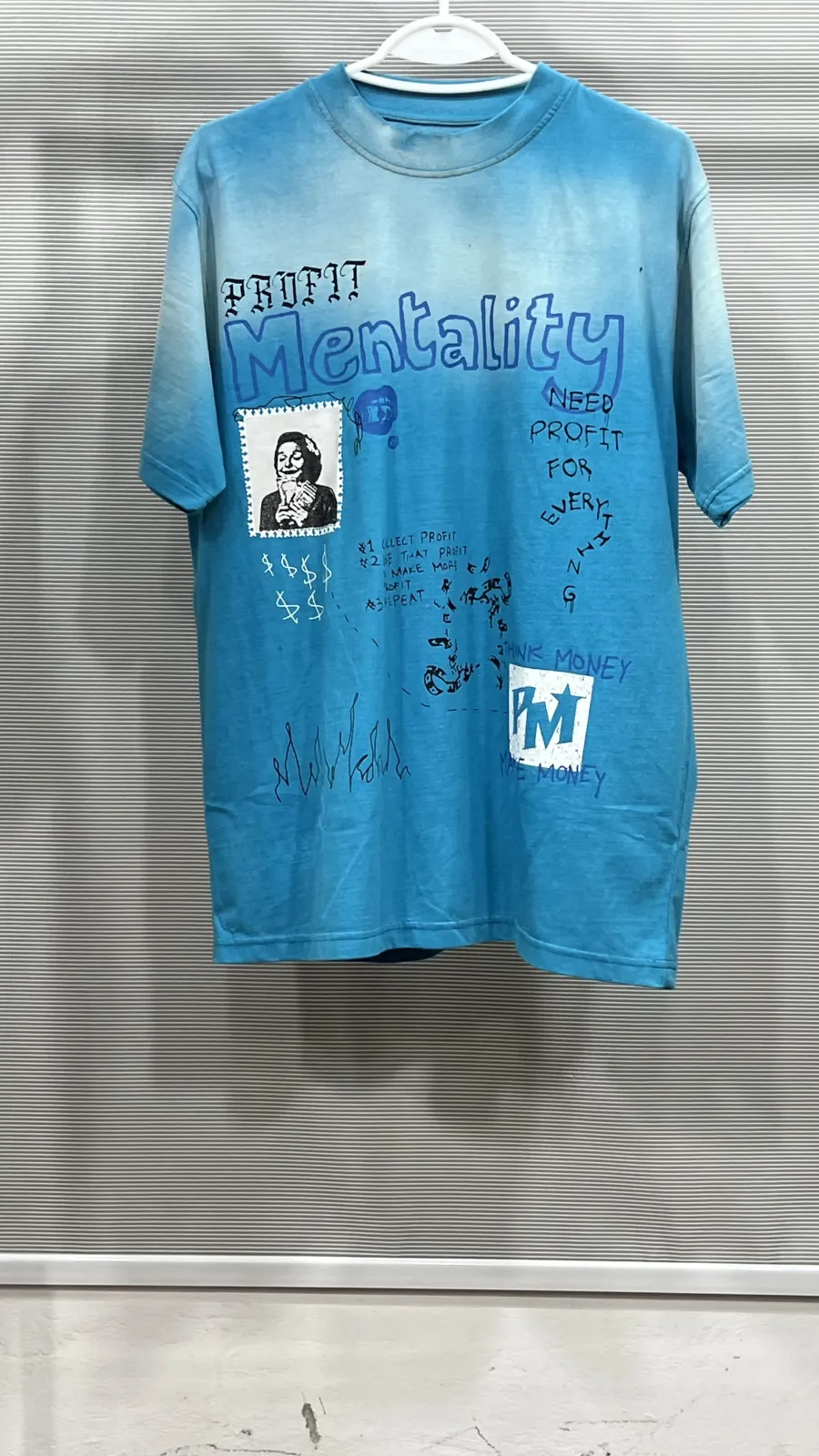
The pieces below are our own production samples, shot on the factory floor — not stock photos. Every order we run is fully custom to your spec, sizes, and branding.
01 — Why Rhinestone Designs Can Go Bigger and Bolder on a Tee
What a Rhinestone T Shirt Manufacturer Can Do That a Hoodie Can’t
Hotfix rhinestones work the same way on any garment — heat-activated adhesive on the back of each stone, bonded to the fabric under a heat press, either applied stone by stone with a wand for one-off pieces or arranged on a transfer template for consistent bulk production. What changes on a t-shirt is how much design you can actually carry without the garment feeling like it’s working against you.
A hoodie’s weight is already substantial before you add a stone patch to it, so heavier designs make the whole garment feel bulkier fast. A tee starts much lighter, which means a full word spelled out in rhinestones across the chest, or a denser all-over accent pattern, stays wearable in a way the same coverage would struggle to on fleece. That’s a real part of why "bling tee" is such a well-established category on its own — full-coverage rhinestone lettering reads as the tee’s default look in a lot of streetwear and going-out fashion, not a rare upgrade the way it tends to be on a hoodie.
02 — Fabric and Construction: Heat Press Stability on Lighter Cotton
Fabric and Construction: Heat Press Stability on Lighter Cotton
Rhinestone application still needs a flat, stable surface under the heat press, but the GSM threshold that matters shifts down significantly from a hoodie’s range. A tee running under roughly 180 GSM can show a subtly uneven surface after pressing, where a heavier hoodie fleece has more mass to resist that same pressure. Most rhinestone tee orders land in the 180–220 GSM range specifically for that reason — light enough to stay comfortable, heavy enough to hold a clean press.
One genuine advantage tees have over hoodies here: a flatter, smoother, more predictable surface under the press. There’s no kangaroo pocket or hood bulk to work around, which makes template application more consistent across a bulk run — fewer surprises from garment to garment than you’d get pressing the same design onto a bulkier hoodie.
Stone material is worth deciding early, too. Glass and crystal stones catch more light and hold their sparkle longest, which is the look most people picture when they think "rhinestone tee." Acrylic stones cost and weigh less, which genuinely matters more here than on a hoodie — since a tee is meant to stay light, a heavily stoned design in acrylic keeps the garment noticeably more wearable than the same coverage in glass would. The trade-off is a duller shine and more visible scratching over time, so it’s a real decision between long-term sparkle and everyday comfort, not just a budget line item.
03 — Design Placement, Neckline Trim, and File Requirements
Design Placement, Neckline Trim, and File Requirements
Stone sizing follows the same SS convention as any rhinestone job — SS6–SS10 for detail, SS16–SS30 for bold statement pieces — and most designs mix sizes for visual depth. On a tee specifically, full chest coverage and spelled-out lettering are common enough that we treat them as a standard request rather than an unusual one, which isn’t quite true on a hoodie.
One placement that’s genuinely more of a tee thing: stone trim running along a crew or v-neck edge, a scattered or lined treatment that doesn’t have a real equivalent on a hoodie’s ribbed hood opening. Rhinestones are also frequently layered over or around a printed base graphic on tees, adding sparkle accents to specific parts of an existing design rather than carrying the whole look on their own — a combination that shows up far more often here than on fleece. Send us vector or high-resolution reference artwork along with your preferred stone size mix, and flag if you’re layering onto a print so we can plan stone placement around it.
Spelled-out lettering deserves its own note, since it’s such a common request on tees specifically. Every letter needs to be sized and spaced consistently, or the finished word reads as uneven even if each individual letter is stitched cleanly — a small size drift across eight or ten letters is far more noticeable than the same drift on a single-letter chest patch. We check letter-to-letter consistency on the template before it’s ever pressed onto fabric, catching spacing or sizing issues at the digitizing stage rather than after a design is already committed to a garment.
04 — What Separates a Bond That Holds From One That Falls Off
What Separates a Bond That Holds From One That Falls Off
Bond strength still comes down to heat press accuracy — most hotfix adhesive activates around 150–165°C for a specific dwell time, and getting that wrong in either direction either leaves a weak bond or risks scorching the fabric. We press-test a stone at the edge of every design before it ships, and on a tee specifically, we also check comfort: a densely stoned area can feel stiff or slightly scratchy directly against skin in a way that’s more noticeable on a tee worn without another layer than it would be on a hoodie.
That comfort factor is worth planning around at the design stage — avoiding high-contact zones like under the arm for dense stone coverage, or considering a lining approach on very heavily stoned pieces. Beyond bond and comfort, check template alignment for evenness and confirm stone clarity and color consistency across the design, the same checks that apply to any rhinestone job regardless of garment.
Care instructions matter even more here than on a hoodie, since a rhinestone tee sees more direct contact with jewelry, bag straps, and seatbelts than a garment usually worn under a jacket or with something layered over it. Cold wash, inside-out, and no tumble heat are the baseline, same as any rhinestone piece — but it’s worth actually saying that to your customer on a tee, since the stones sit closer to the kind of everyday friction that shortens their lifespan.
05 — MOQ and Sampling With Your Rhinestone T Shirt Manufacturer
MOQ and Sampling With Your Rhinestone T Shirt Manufacturer
MOQ is 50 pieces per style, split across whatever size run you need. Sampling takes 6–10 days, and the full cost is credited against your bulk order once you move forward.
Since the template is custom-cut for your specific design, sampling confirms stone size mix, placement, bond strength, and — for a tee specifically — how the finished piece actually feels to wear before we commit that template to a 50-piece run. If you’re going for dense, full-coverage stonework, ask to handle the sample yourself rather than just looking at photos; comfort is something you genuinely have to feel.
06 — What Actually Moves Your Price
What Actually Moves Your Price
Total stone count and size mix remain the biggest cost drivers, more so than color complexity would be on a print. Because full-coverage designs are more common and more practical on tees, it’s worth knowing that a bigger design genuinely costs more — there’s no shortcut around stone count once you’ve decided how bold you want the look. Template setup carries a one-time digitizing and cutting cost, efficient across a bulk run; hand-application skips that setup but carries higher per-piece labor cost, better suited to very small quantities.
We don’t publish flat pricing because those variables interact too much to be useful as a single number. Run your spec through our Instant Quote tool instead — it gives you a price estimate in 5 seconds, a downloadable PDF quote, and a direct line to WhatsApp with your quote pre-filled. Final pricing is confirmed by our team within 24 hours, so you’re never left waiting overnight for a number to plan around.
07 — Shipping to the UK and EU Duty-Free
Shipping to the UK and EU Duty-Free
Manufacturing in Pakistan carries a trade advantage worth factoring into your landed cost. Apparel made here enters the UK at 0% duty under the Developing Countries Trading Scheme, and the EU at 0% duty under GSP+, versus roughly 12% on equivalent goods sourced from China.
Details on eligibility and the current tariff schedule are on the UK government’s own guidance page: Developing Countries Trading Scheme (DCTS) — GOV.UK.
08 — When Rhinestone Isn't the Right Call
When Rhinestone Isn’t the Right Call
Rhinestone isn’t the right call for activewear, where stones can catch on other garments or dig in during movement, or for budget-conscious high-volume basics, since stone count adds up fast at scale. It’s also worth a second thought for everyday casual pieces meant for all-day comfort — a densely stoned tee worn without another layer can feel stiffer against skin than most people expect from a basic tee. If a bold look without that trade-off matters more, our Embroidery T Shirt page holds up in daily wear without the same care restrictions.
Table of Contents
Simple Process
From Spec to Shipped, in Four Steps
01
Quote & Spec
Run your GSM, stone size mix, and placement through the Instant Quote tool; get a price estimate and a downloadable PDF in 5 seconds.
02
Sample
We digitize your design, cut a transfer template, and heat-press a physical sample in 6–10 days; you can join a live video call from the floor before it ships.
03
Approve & Bulk
Approve the sample (its cost is credited to your order) and we run your full size and quantity — production takes 12–15 days.
04
Ship
Finished tees go out via DHL/FedEx air (3–7 days) or sea freight for larger volumes, landing duty-free in the UK and EU.
Our Advantage
Why Brands Choose Malinor
Floor Video Call Before You Pay Anything
See your actual rhinestone run in production, not a stock photo, before you commit to bulk.
Sample Cost Credited in Full
Nothing you spend on sampling is wasted once you move to bulk.
In-House Digitizing and Heat Pressing
No subcontracting a decoration step to a third shop, so your timeline doesn’t depend on someone else’s queue.
Fast, Direct Replies
Most quote and spec questions get answered within 2 hours during business hours.
Common Questions
Frequently Asked Questions
Why can rhinestone designs be bigger on a t-shirt than on a hoodie?+
A hoodie already carries more weight before you add stones to it, so a large stone design makes the whole garment feel noticeably heavier. A tee starts much lighter, so a full-coverage design — even a whole word spelled out in stones — stays wearable in a way the same coverage would struggle to on fleece. That’s part of why full bling designs are so common specifically on tees.
Can rhinestones be combined with a printed t-shirt design?+
Yes, and it’s a popular combination on tees specifically — stones added as accents over or around a printed graphic, highlighting part of the design rather than carrying the whole look alone. Send us the print file along with your rhinestone reference so we can plan stone placement around the printed elements rather than guessing afterward.
Will a heavily stoned t-shirt feel uncomfortable to wear?+
It can, if the design isn’t planned with that in mind. A dense stone area feels stiffer and can be slightly scratchy directly against skin, more noticeable on a tee worn without another layer than on a hoodie. We’ll talk through placement — avoiding high-contact zones like under the arm — if you’re going for heavy coverage, so the finished piece is bold without being uncomfortable. Choosing acrylic over glass stones for a very dense design can also help keep the overall weight and stiffness down.
What GSM works best for a rhinestone t-shirt?+
Most orders land between 180–220 GSM. Go lighter than about 180 GSM and the heat press can leave a subtly uneven surface, since there’s less fabric mass to resist the pressure. That threshold sits lower than what a hoodie needs, since tee jersey and hoodie fleece are different fabric families entirely — a spec that works fine on fleece can still be too light for a clean rhinestone press on a tee.
What’s the minimum order quantity?+
50 pieces per style, with sizes split however your size run needs — you’re not locked into 50 of one size. A rhinestone tee and an embroidered tee in the same order each need their own 50-piece minimum, since they’re different styles.
How long does shipping take?+
DHL or FedEx air freight takes 3–7 days worldwide once your order is finished. For larger volumes, sea freight is available at a lower cost per unit but a longer transit time — we’ll walk you through both options once your bulk order is confirmed and ready to go.
Run Your Spec Through the Instant Quote Tool
Get a price estimate in 5 seconds, a downloadable PDF, and a straight line to WhatsApp with your quote pre-filled. Before you pay anything, we’ll get you on a live video call from the production floor.