Sleeveless T Shirt Manufacturer
Sleeveless T Shirt Manufacturer: Where the Real Work Happens at the Armhole
As a sleeveless t shirt manufacturer based in Sialkot, Pakistan, we treat the armhole as the part of the garment that actually determines quality — properly bound and stretch-tested so it holds its shape instead of gaping open after a few washes. MOQ starts at 50 pieces per style with sizes split however you need, your sample takes 6–10 days and its full cost is credited against the bulk order, and production runs 12–15 days once you approve it.
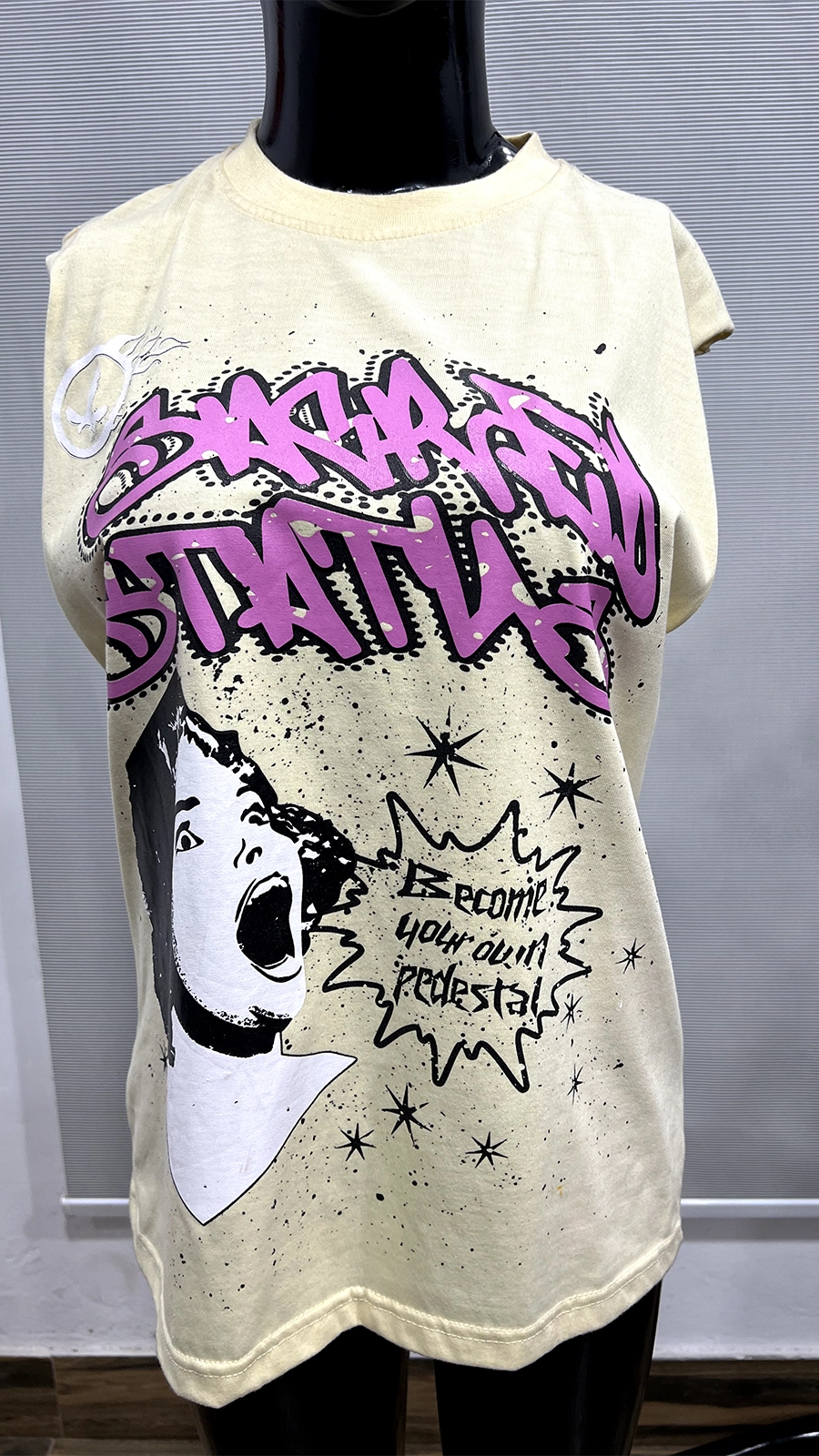
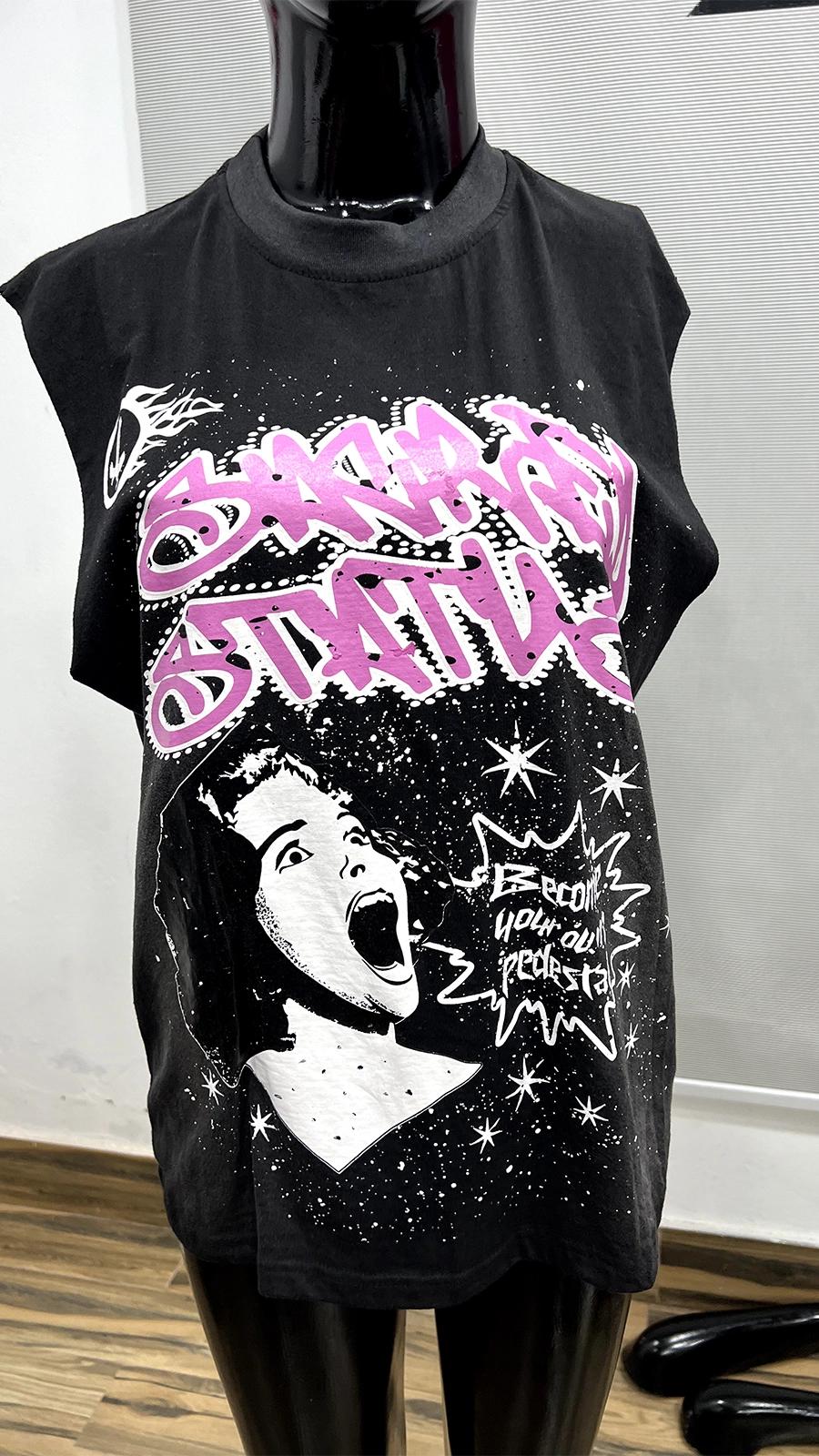
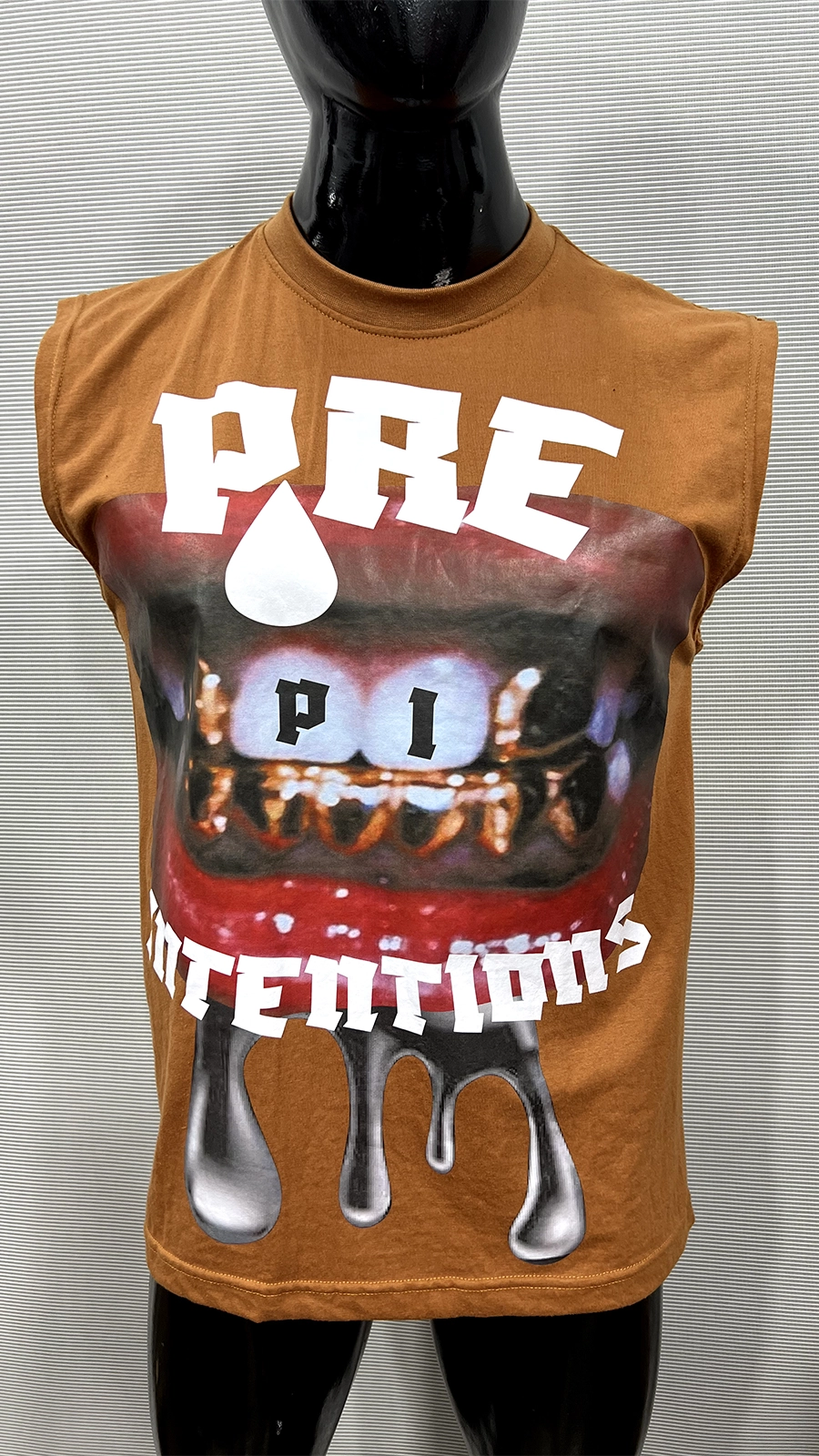
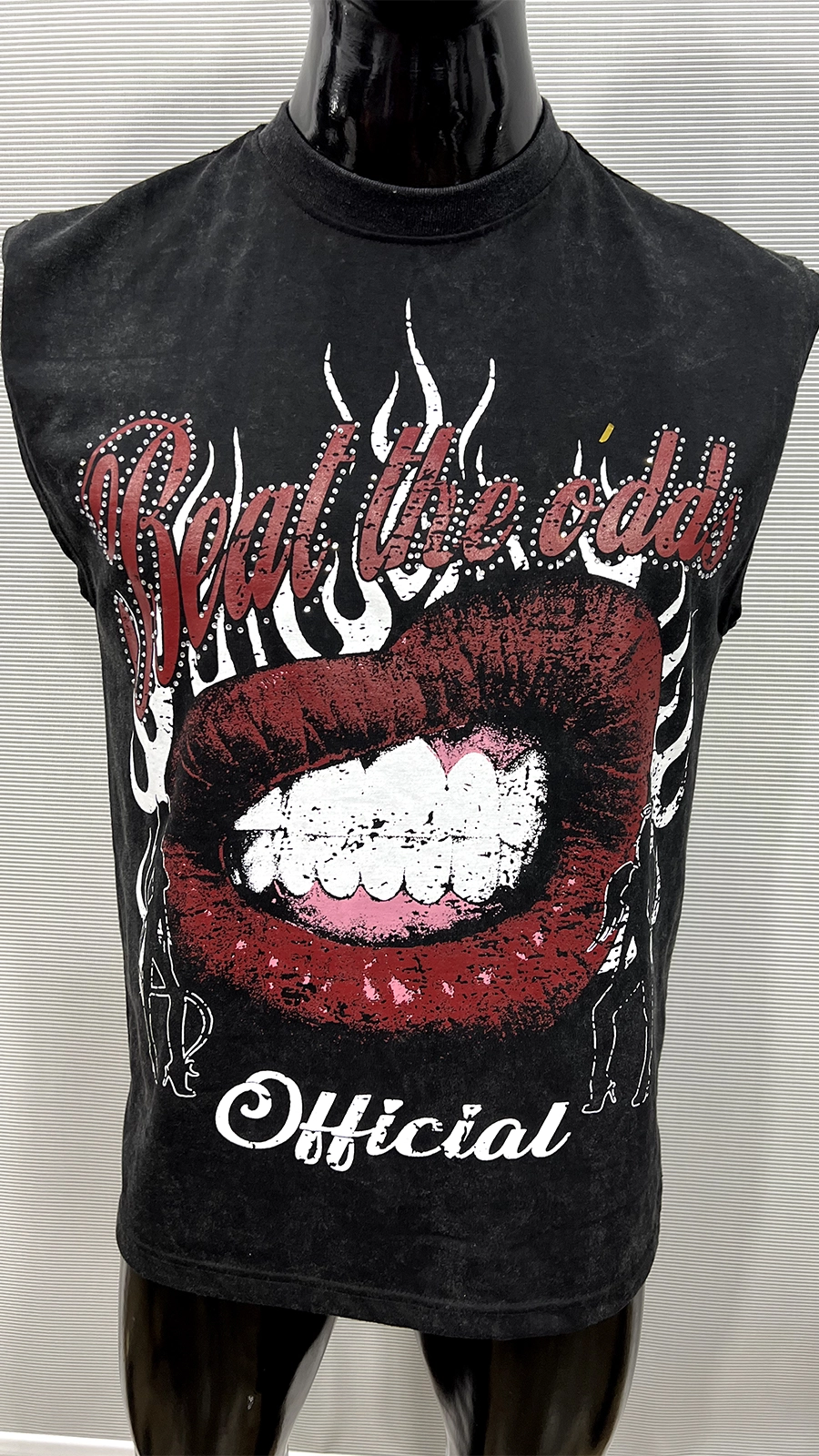
The pieces below are our own production samples, shot on the factory floor — not stock photos. Every order we run is fully custom to your spec, sizes, and branding.
01 — Why the Armhole, Not the Missing Sleeve, Is the Real Construction Challenge
What a Sleeveless T Shirt Manufacturer Actually Has to Solve
A sleeveless tee isn’t a standard tee with the sleeves left off — it’s a genuinely different pattern with a different problem to solve. On a sleeved tee, the shoulder seam and neckline carry most of the construction risk. On a sleeveless one, that risk shifts almost entirely to the armhole: a curved raw edge with no sleeve to attach, which needs its own finishing to lie flat and hold its shape rather than stretching open over time.
Shoulder construction changes too. Without a sleeve piece to set in, the shoulder seam and the fabric panel width around it get planned differently from the start, not just trimmed down from a sleeved pattern. Get this wrong and the armhole can sit too tight, restricting arm movement, or too loose, gaping open at the side in a way that’s uncomfortable and visible — a defect that’s genuinely more noticeable on a sleeveless garment than an equivalent construction issue would be on a sleeved one, simply because there’s more skin and fabric edge on display.
Sleeveless tees serve a few genuinely different markets, and it’s worth knowing which one you’re building for. Gym and athletic wear favors the muscle-tee cut specifically for freedom of movement. Festival and streetwear tanks lean toward a more relaxed armhole. And a growing use case is layering — a sleeveless piece worn under an open shirt or jacket, where the armhole rarely gets seen directly but still needs to hold its shape under the layer on top of it. Each of these puts slightly different priorities on fit and finish, which is worth mentioning when you brief us.
02 — Fabric and Construction: Binding Options and Why Bias-Cut Matters
Fabric and Construction: Binding Options and Why Bias-Cut Matters
| Armhole Finish | Description | Best For |
|---|---|---|
| Ribbed binding | A rib knit strip folded over the raw edge and stitched | Athletic or muscle-tee look, the most durable option |
| Folded hem | Self-fabric turned under and stitched flat | A clean, minimal finish at lower cost |
| Raw or cut edge | Left unfinished, sometimes styled deliberately | A DIY or distressed aesthetic |
Ribbed binding needs to be cut on the bias, or knit with enough stretch, to curve properly around the armhole without puckering — a straight-grain strip simply won’t sit flat against a curved edge no matter how carefully it’s sewn. Stretch recovery matters just as much as the initial fit: a binding with poor recovery stretches out permanently after repeated wear and washing, and once an armhole gapes, there’s no fixing it short of replacing the binding entirely. We test recovery on every fabric batch before committing it to a bulk order specifically because of how visible and uncomfortable a failed armhole is compared to almost any other construction issue on a tee.
Shoulder taping, the reinforcement we use on any standard tee to keep the neckline from stretching out, applies here too, and arguably matters even more. A sleeveless garment’s shoulder seam carries a bit more visual weight without a sleeve drawing the eye elsewhere, so a shoulder that’s started to sag or stretch is more immediately obvious here than on a garment with full sleeves.
03 — Fit Variants, Placement, and File Requirements
Fit Variants, Placement, and File Requirements
"Sleeveless" actually covers a few distinct silhouettes worth naming separately. A muscle tee runs a narrower shoulder with a deep, dropped armhole for an athletic look. A tank-adjacent cut keeps a wider armhole and a more relaxed shoulder line. A racerback goes further still, narrowing the back panel into a Y or U shape — a real pattern change, not just a different armhole finish, since it affects the entire back piece. Tell us which silhouette you’re after specifically; "sleeveless" alone doesn’t fully specify the pattern the way it might seem to.
Chest placement still runs the usual 8–10cm convention, but the exposed shoulder and side area — free of a sleeve seam that would otherwise interrupt a design — opens up placement options a sleeved tee doesn’t offer as cleanly, like a design that wraps from the front panel around toward the side seam.
If you’re planning a wraparound or side-panel design, send us the artwork with the armhole and side seam positions marked, since a design meant to flow around the body needs to account for exactly where those construction lines fall on your chosen silhouette. A muscle tee’s deeper armhole leaves less usable side panel than a tank-style cut does, so the same wraparound concept needs different proportions depending on which fit you’ve settled on.
04 — What Separates a Binding That Holds From One That Gapes
What Separates a Binding That Holds From One That Gapes
Check that the binding lies completely flat around the whole armhole curve, with no twisting, puckering, or visible pulling at any point — a binding that was cut on the straight grain instead of the bias will usually show puckering somewhere along the curve, even if it looks fine at a glance. Measure binding width at a few points around the armhole; it should stay consistent all the way around rather than narrowing or widening unevenly.
Then run the check that actually matters most: stretch the armhole gently and let it go. It should spring back to its original shape rather than staying stretched out. That single test tells you more about long-term wear than anything else you can check on a fresh sample, since a binding that looks perfect on day one can still have poor recovery that only shows up after real use.
05 — MOQ and Sampling With Your Sleeveless T Shirt Manufacturer
MOQ and Sampling With Your Sleeveless T Shirt Manufacturer
MOQ is 50 pieces per style, split across whatever size run you need. Sampling takes 6–10 days, and the full cost is credited against your bulk order once you move forward.
Specify your silhouette — muscle tee, tank-style, or racerback — clearly upfront, since these are different patterns rather than variations on the same one, and mixing them up at the spec stage means a wasted sample round. If you can, try the sample on a body rather than just reviewing it flat or in photos; armhole gaping and fit issues are much easier to spot and feel when the garment is actually worn.
If you’re ordering multiple silhouettes in the same launch — a muscle tee and a tank, say — sample both separately rather than assuming one binding spec works across both. The deeper armhole on a muscle tee puts different stress on the binding than a tank’s wider, more relaxed cut does, and confirming both independently avoids a surprise once you’re looking at the full production run.
06 — What Actually Moves Your Price
What Actually Moves Your Price
Armhole binding construction is a genuine extra step compared to a standard hemmed sleeve opening, though it replaces the sleeve-setting work a sleeved tee requires — the two roughly balance out, so a sleeveless tee doesn’t typically cost dramatically more or less than a standard tee at the same GSM. Binding fabric choice (self-fabric vs. a contrast rib with different elastane content) can shift cost slightly, along with the usual factors of decoration technique, fabric GSM, and total order volume.
A contrast-color binding, where the armhole trim is a different shade or fabric from the body, adds a small design flourish some brands like — but it also means sourcing and stocking a second fabric specifically for that trim, which is worth factoring in if you’re deciding between a self-fabric and a contrast look.
We don’t publish flat pricing because those variables interact too much to be useful as a single number. Run your spec through our Instant Quote tool instead — it gives you a price estimate in 5 seconds, a downloadable PDF quote, and a direct line to WhatsApp with your quote pre-filled. Final pricing is confirmed by our team within 24 hours.
07 — Shipping to the UK and EU Duty-Free
Shipping to the UK and EU Duty-Free
Manufacturing in Pakistan carries a trade advantage worth factoring into your landed cost. Apparel made here enters the UK at 0% duty under the Developing Countries Trading Scheme, and the EU at 0% duty under GSP+, versus roughly 12% on equivalent goods sourced from China.
Details on eligibility and the current tariff schedule are on the UK government’s own guidance page: Developing Countries Trading Scheme (DCTS) — GOV.UK. It’s worth checking directly if landed cost factors into comparing us against a supplier without the same access.
08 — When Sleeveless Isn't the Right Call
When Sleeveless Isn’t the Right Call
Sleeveless isn’t the right call if your customer needs arm coverage, whether for cold-weather use or a brand look built around a fuller silhouette — the exposed armhole is the whole point of the style, which works against either goal. If you want the same casual tee feel with actual sleeve coverage, our Standard Size T Shirt page or our Long Sleeve T Shirt page are the better starting points depending on how much coverage you need.
Table of Contents
Simple Process
From Spec to Shipped, in Four Steps
01
Quote & Spec
Run your GSM, silhouette (muscle, tank, or racerback), and binding choice through the Instant Quote tool; get a price estimate and a downloadable PDF in 5 seconds.
02
Sample
We cut and sew your sleeveless sample in 6–10 days, binding tested for recovery; you can join a live video call from the floor before it ships.
03
Approve & Bulk
Approve the sample (its cost is credited to your order) and we cut your full size run — production takes 12–15 days.
04
Ship
Finished tees go out via DHL/FedEx air (3–7 days) or sea freight for larger volumes, landing duty-free in the UK and EU.
Our Advantage
Why Brands Choose Malinor
Floor Video Call Before You Pay Anything
See your actual sleeveless run in production, not a stock photo, before you commit to bulk.
Sample Cost Credited in Full
Nothing you spend on sampling is wasted once you move to bulk.
In-House Cutting, Binding, and Finishing
No subcontracting any construction step to a third shop, so your timeline doesn’t depend on someone else’s queue.
Fast, Direct Replies
Most quote and spec questions get answered within 2 hours during business hours.
Common Questions
Frequently Asked Questions
Why does the armhole matter more than people think on a sleeveless tee?+
Because it’s the part of the garment doing the structural work a sleeve would normally do. A sleeved tee’s biggest construction risks sit at the shoulder and neckline; on a sleeveless tee, that risk shifts to a curved raw edge that needs proper binding and good stretch recovery, or it gapes open and stays that way after enough wear.
What’s the difference between a muscle tee, a tank, and a racerback?+
A muscle tee has a narrow shoulder and a deep, dropped armhole for an athletic look. A tank-style cut keeps a wider armhole and a more relaxed shoulder. A racerback changes the entire back panel into a narrower Y or U shape — a real pattern difference, not just a different armhole finish. They’re distinct silhouettes, so it’s worth specifying which one you mean.
Will the armhole binding stretch out and gape over time?+
It can, if the binding fabric has poor stretch recovery or was cut on the wrong grain. We test recovery on every fabric batch and cut binding on the bias or from proper stretch rib specifically to prevent this. On your sample, stretch the armhole gently and check that it springs back rather than staying loose — that’s the clearest sign of whether it’ll hold up.
Can I still put a design on the shoulder area of a sleeveless tee?+
Yes — the exposed shoulder and side area, free of a sleeve seam, actually opens up placement options a sleeved tee can’t offer as cleanly, including designs that wrap from the front panel toward the side. Standard chest placement still works fine too if that’s what you’re after.
What’s the minimum order quantity?+
50 pieces per style, with sizes split however your size run needs — you’re not locked into 50 of one size. A sleeveless tee and a standard tee in the same order each need their own 50-piece minimum, since they’re different styles.
How long does shipping take?+
DHL or FedEx air freight takes 3–7 days worldwide once your order is finished. For larger volumes, sea freight is available at a lower cost per unit but a longer transit time — we’ll walk you through both options once your bulk order is confirmed and ready to go.
Run Your Spec Through the Instant Quote Tool
Get a price estimate in 5 seconds, a downloadable PDF, and a straight line to WhatsApp with your quote pre-filled. Before you pay anything, we’ll get you on a live video call from the production floor.