Acid Washed T Shirt Manufacturer
Acid Washed T Shirt Manufacturer Where Wash Timing Gets Less Forgiving
As an acid washed t shirt manufacturer based in Sialkot, Pakistan, we run tighter wash timing on jersey than we would on fleece — the same tumble-and-bleach process, calibrated for a fabric with far less margin before contrast turns into fiber damage. MOQ starts at 50 pieces per style with sizes split however you need, your sample takes 6–10 days and its full cost is credited against the bulk order, and production runs 12–15 days once you approve it.
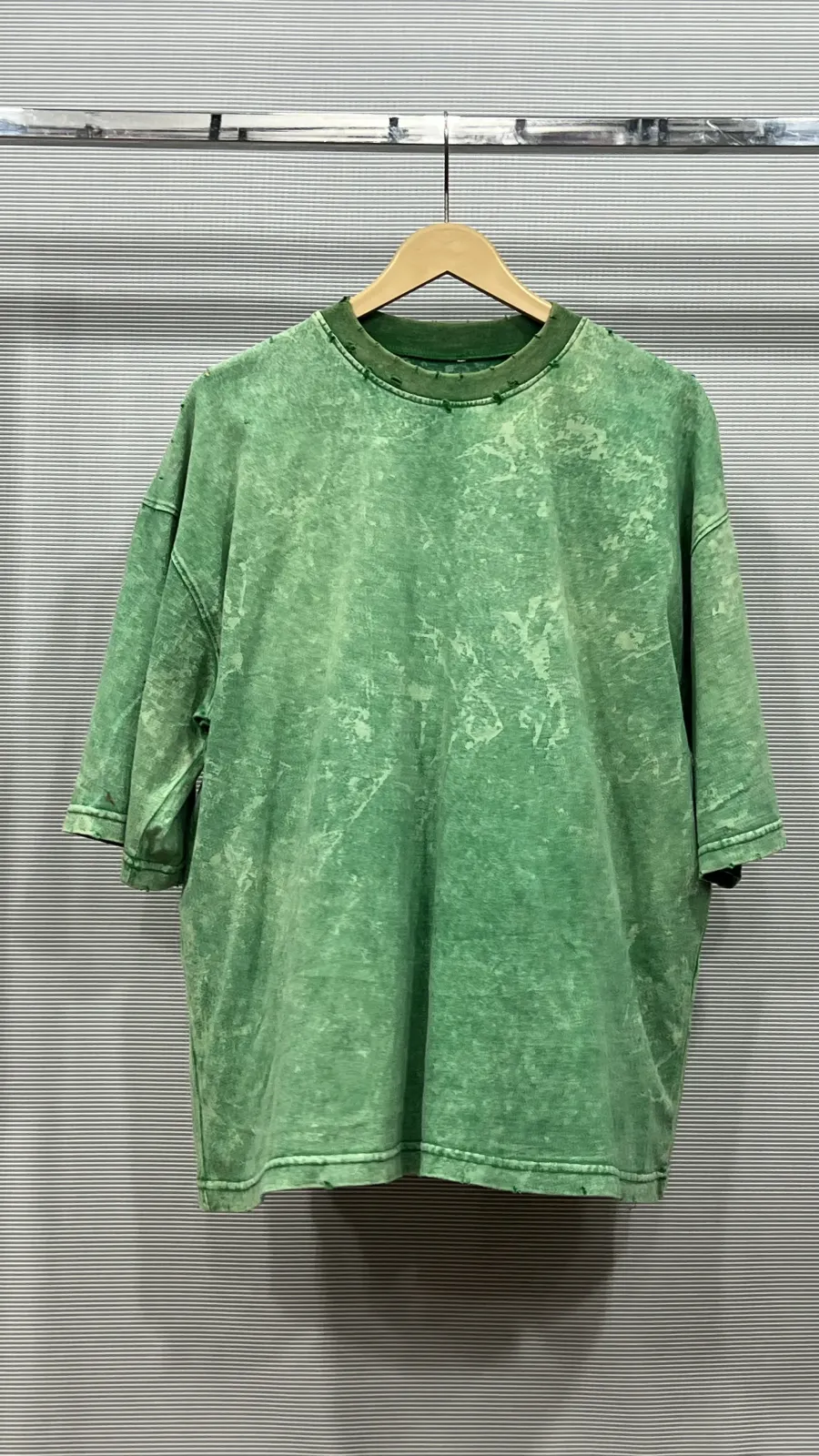
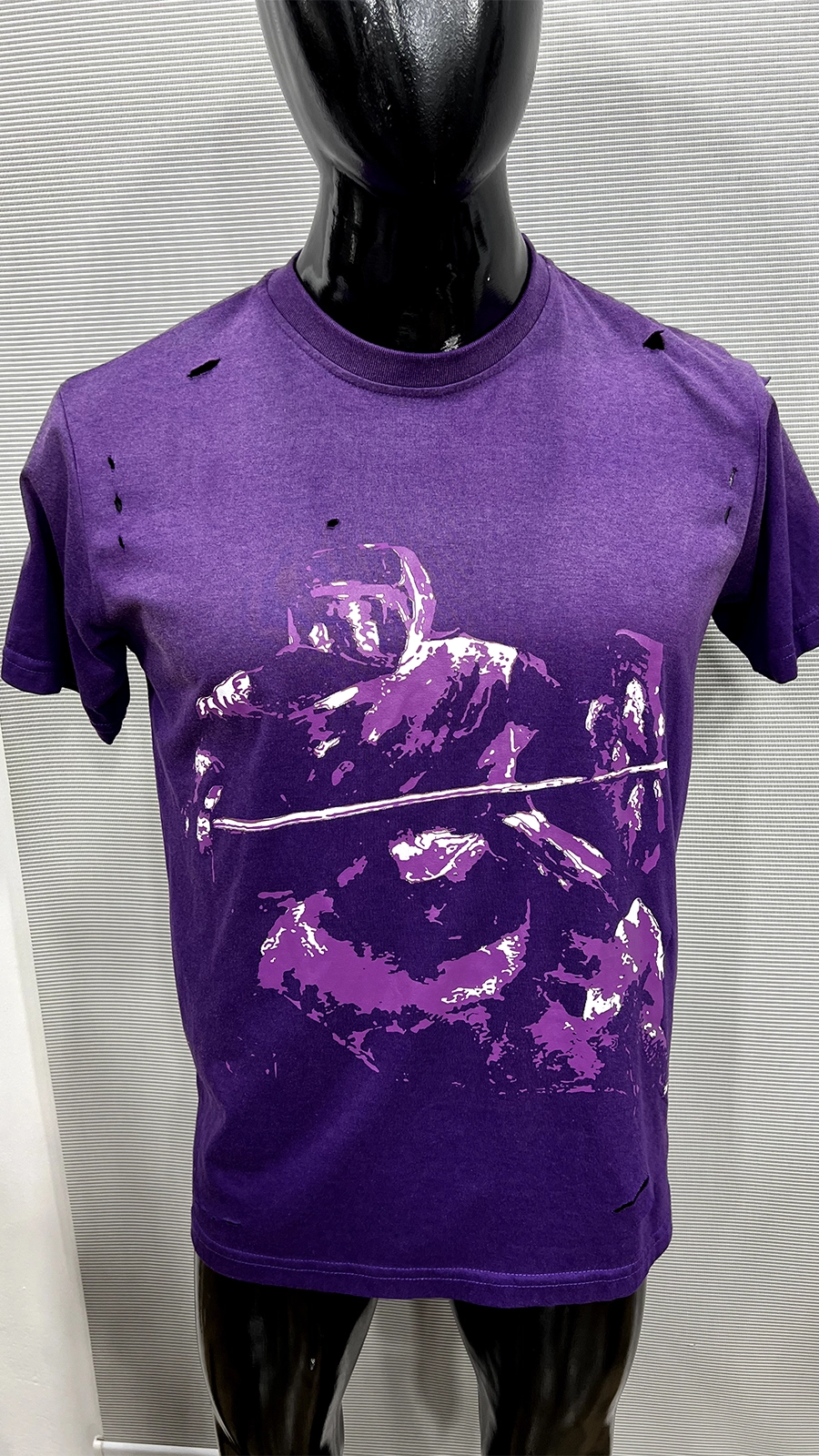
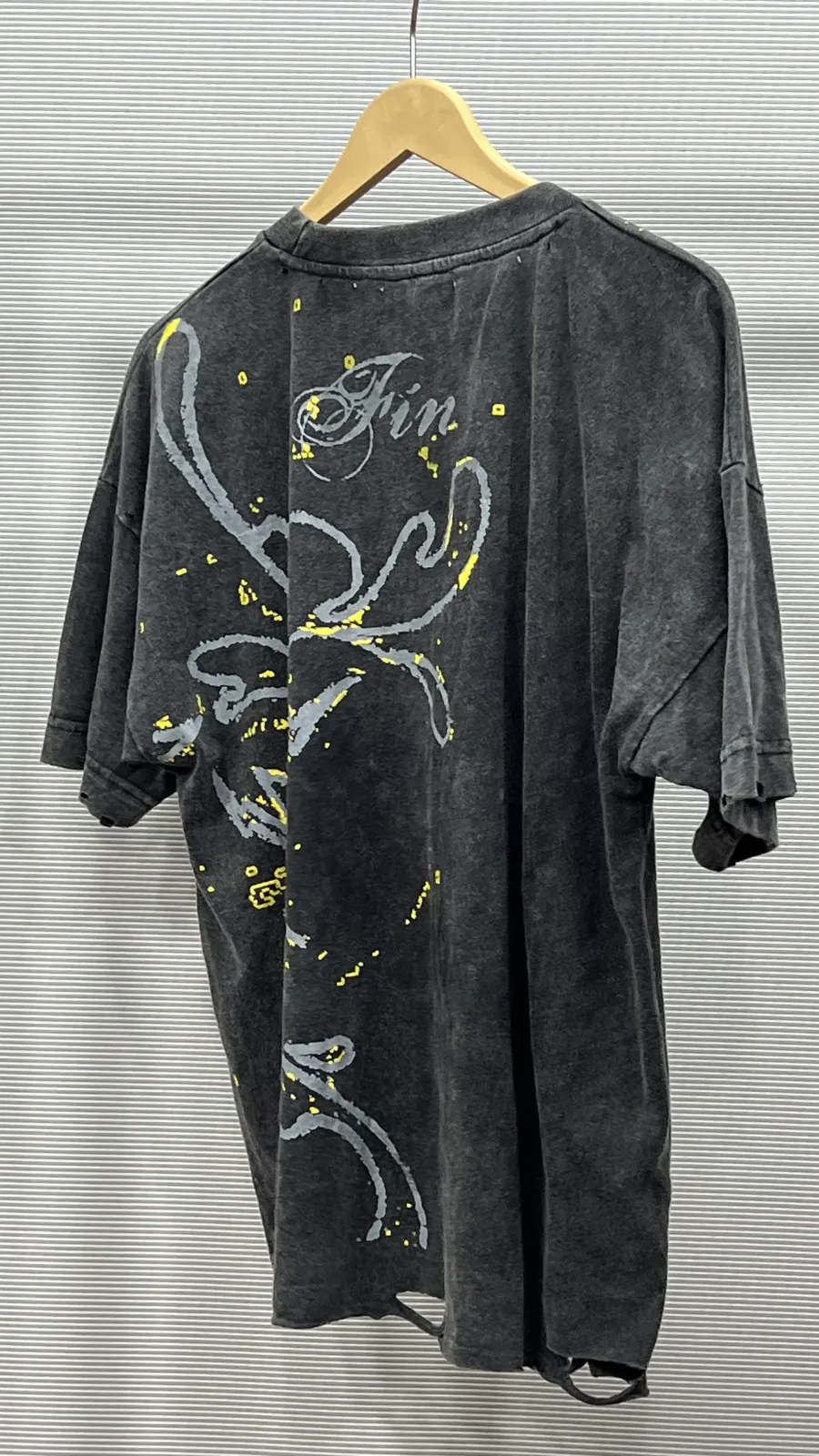
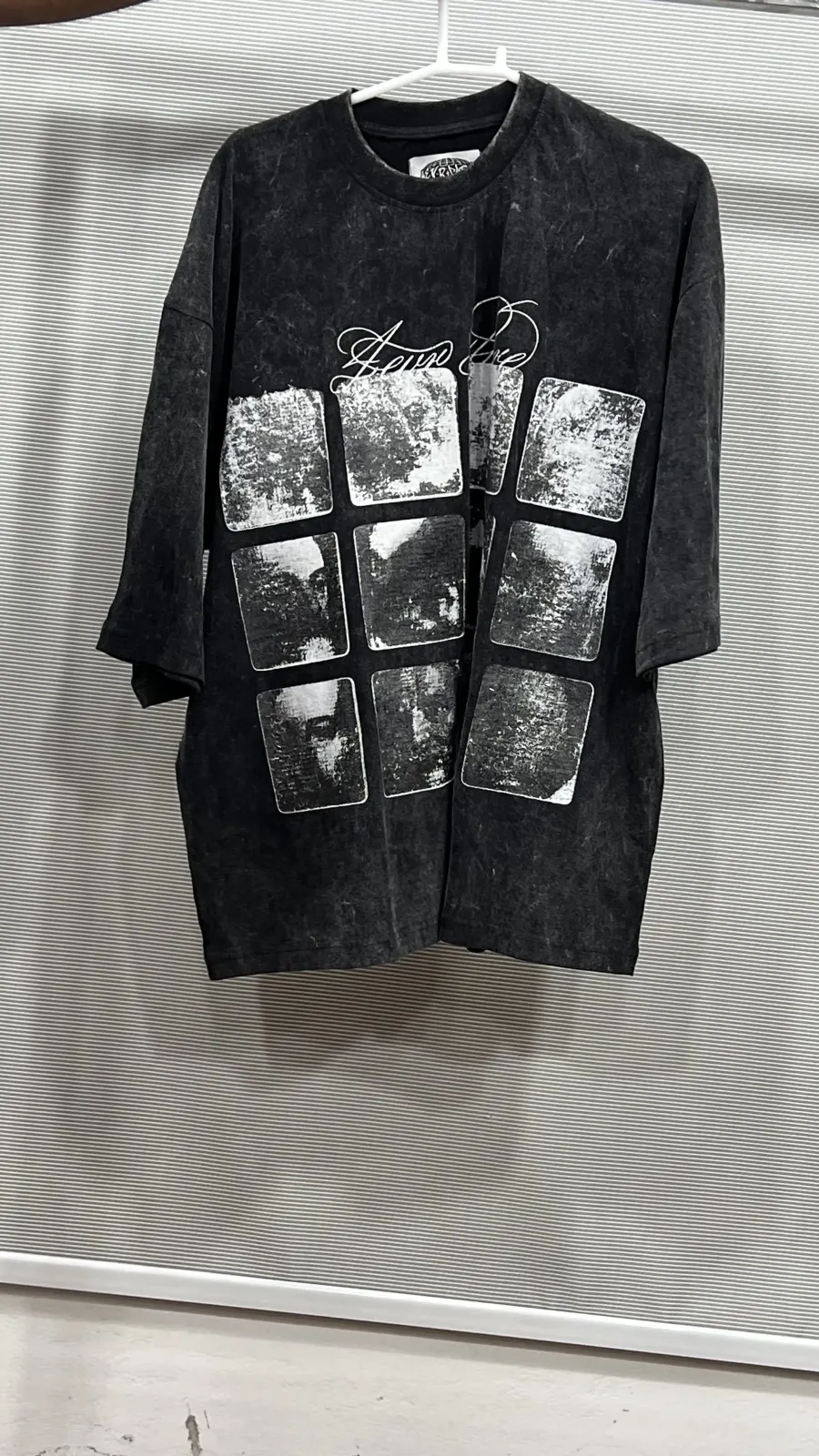
The pieces below are our own production samples, shot on the factory floor — not stock photos. Every order we run is fully custom to your spec, sizes, and branding.
01 — Why Wash Timing Needs a Tighter Window on a Tee
What an Acid Washed T Shirt Manufacturer Has to Time More Precisely
Acid wash works the same way on any fabric — garments tumbled with pumice stones soaked in a bleaching agent, the random contact creating the mottled, high-contrast pattern the technique is known for. What changes on a tee is how much room there is between "enough contrast" and "too much damage." A hoodie’s heavier fleece can absorb a slightly longer wash cycle without much consequence. A tee’s lighter jersey has far less fiber mass to spare, so the same timing that’s perfectly safe on fleece can start genuinely degrading a tee’s fabric strength.
There’s a connection worth drawing to a risk covered on our distress t-shirt page: jersey’s knit structure can run or ladder if a weak point gets stressed at the wrong moment, the same way a stocking runs. Over-processed acid wash combines chemical bleaching with mechanical tumbling, and pushed too far, that combination can create the same kind of unintended weak point — not a deliberate design choice, just fabric damage that happens to look similar to it. Tight timing control is what keeps the two apart.
There’s a genuine upside to this fabric worth mentioning too. The softening effect that comes with a properly timed acid wash is more directly felt on a tee than on a hoodie, simply because a tee sits closer to skin without another layer in between. Customers who buy acid washed tees specifically for that lived-in softness are getting a more pronounced version of that benefit than the same treatment delivers on heavier fleece — one more reason the technique has such a strong, established following in tee-specific fashion, from vintage band merch to general worn-in streetwear basics.
02 — Fabric and Construction: Cotton Content and a Different Shrink Pattern
Fabric and Construction: Cotton Content and a Different Shrink Pattern
| Fabric | Cotton Content | Acid Wash Result on a Tee |
|---|---|---|
| 100% cotton jersey | High | Strong, predictable bleach reaction |
| Cotton/poly blend | Medium | Reduced fade in poly-heavy areas |
| Heavy poly-blend | Low | Rare on tees, weak and unpredictable |
Here’s a genuine advantage tees carry into this technique: standard tee fabric is already high-cotton by default, in a way hoodie fleece often isn’t once you factor in the poly content brands choose for warmth and durability. That means acid wash tends to perform more reliably and predictably on a standard tee than it sometimes does on fleece — you’re less likely to run into a fabric-composition compromise here than you would sourcing a hoodie for the same technique.
Shrinkage behaves a little differently too. Jersey knit tends to shrink more in length than width during the wash process if it isn’t properly stabilized beforehand, a different pattern than fleece’s more uniform shrink. We still cut every garment oversized before washing to land at your correct finished measurement, but the specific allowance is calibrated to jersey’s particular shrink direction rather than just applying a flat percentage borrowed from fleece production.
03 — Color Choice, Distress Pairing, and Spec Requirements
Color Choice, Distress Pairing, and Spec Requirements
The same principle applies as on any acid wash job — dark bases show dramatic contrast, light bases barely register the effect. Tees actually offer a bit more flexibility here than hoodies do in practice, since lightweight jersey in a wide range of dark base colors is generally easier to source than the same color range in heavier fleece.
Acid wash and fabric distressing are commonly paired on tees, arguably more often than on hoodies — the vintage band tee aesthetic tends to go all-in on a worn look across the whole garment, combining the bleached mottling with actual rips or sanded spots for a complete thrifted-grunge package. If that’s your direction, plan both together rather than treating them as separate decisions; they interact, and sequencing them correctly on the same production run gives a more convincing result than layering one onto a garment already finished with the other. Since there’s no artwork file for a wash spec, send us reference photos of your target intensity, pattern density, and base color, and we’ll run a test batch to calibrate before bulk.
The order of operations actually matters here. Washing before distressing lets the bleaching pattern establish first, so any subsequent rips or sanded spots land against an already-mottled background — which tends to look more cohesive than distressing a garment first and then hoping the wash treats the torn edges evenly. We’ll walk you through the sequencing that fits your specific design rather than defaulting to one order regardless of what you’re going for.
04 — What Separates a Controlled Wash From Weakened Fabric on a Tee
What Separates a Controlled Wash From Weakened Fabric on a Tee
Feel the fabric first, the same check as on any acid wash job, but hold it to a stricter standard on a tee — it should feel worn-in and softened, never noticeably thin or brittle compared to an unwashed piece at the same GSM. Brittleness is a bigger red flag here than on a hoodie, since jersey has so much less structural margin to begin with.
Check for any lingering bleach smell, which points to incomplete neutralization — a step that matters even more on thin fabric, since there’s less material to buffer a rinse that didn’t fully do its job. And look closely at the bleached pattern for any spot that looks less like contrast and more like actual fiber breakdown; on jersey specifically, that’s the early warning sign of the running risk covered above, and it’s worth catching before the garment ever reaches a customer.
If you’ve also ordered distressing on the same garment, check the interaction between the two processes specifically — a reinforced tear near a heavily bleached zone needs both treatments to have landed correctly, since a weakened area from over-processing combined with a nearby tear compounds the running risk rather than the two issues staying independent of each other.
05 — MOQ and Sampling: What to Expect
MOQ and Sampling With Your Acid Washed T Shirt Manufacturer
MOQ is 50 pieces per style, split across whatever size run you need. Sampling takes 6–10 days, and the full cost is credited against your bulk order once you move forward.
Given the tighter margin for error on this fabric, ask to see the neutralization step confirmed and handle the sample fabric closely yourself rather than judging from photos alone. That direct check is the clearest way to confirm the wash landed in the safe zone between visible contrast and actual fabric weakening before we run it across a full 50-piece batch.
06 — What Actually Moves Your Price
What Actually Moves Your Price
Wash timing and intensity move price the same way they would on any acid wash job — a subtle wash costs less than a heavy, high-contrast one. Base fabric GSM and cotton content, total order volume, and whether the wash is combined with distressing (a common pairing on tees specifically) all factor in too, with the distress combination adding a genuine second production step on top of the wash itself.
If you’re weighing whether the distress pairing is worth the added cost, it’s worth thinking about what the finished piece needs to communicate. A wash-only tee reads as faded and worn but still structurally clean; adding distressing pushes it further toward a genuinely thrifted, well-loved feel. Neither is more "correct" — it depends on how far into the vintage aesthetic your brand wants to go, and that’s a conversation worth having with our team before you lock in a spec.
We don’t publish flat pricing because those variables interact too much to be useful as a single number. Run your spec through our Instant Quote tool instead — it gives you a price estimate in 5 seconds, a downloadable PDF quote, and a direct line to WhatsApp with your quote pre-filled. Final pricing is confirmed by our team within 24 hours.
07 — Shipping to the UK and EU Duty-Free
Shipping to the UK and EU Duty-Free
Manufacturing in Pakistan carries a trade advantage worth factoring into your landed cost. Apparel made here enters the UK at 0% duty under the Developing Countries Trading Scheme, and the EU at 0% duty under GSP+, versus roughly 12% on equivalent goods sourced from China.
Details on eligibility and the current tariff schedule are on the UK government’s own guidance page: Developing Countries Trading Scheme (DCTS) — GOV.UK.
08 — When Acid Wash Isn't the Right Call on a Tee
When Acid Wash Isn’t the Right Call on a Tee
Acid wash isn’t the right call on a genuinely lightweight tee, where the safe timing window narrows even further than on a standard-weight jersey. It’s also the wrong choice for a light-colored base garment, since the effect barely registers without dark fabric to contrast against, and for the rare poly-heavy tee blend, where the bleaching reaction is weak and unpredictable regardless of timing. If you want a worn-in look with more control and a wider margin for error, our Spray Washed T Shirt page is a milder, more targeted alternative.
Table of Contents
Simple Process
From Spec to Shipped, in Four Steps
01
Quote & Spec
Run your GSM, base color, and target wash intensity through the Instant Quote tool; get a price estimate and a downloadable PDF in 5 seconds.
02
Sample
We run a calibration wash and produce a physical sample in 6–10 days; you can join a live video call from the floor before it ships.
03
Approve & Bulk
Approve the sample (its cost is credited to your order) and we run your full size and quantity — production takes 12–15 days.
04
Ship
Finished tees go out via DHL/FedEx air (3–7 days) or sea freight for larger volumes, landing duty-free in the UK and EU.
Our Advantage
Why Brands Choose Malinor
Floor Video Call Before You Pay Anything
See your actual wash run in production, not a stock photo, before you commit to bulk.
Sample Cost Credited in Full
Nothing you spend on sampling is wasted once you move to bulk.
In-House Washing and Neutralization
No subcontracting a decoration step to a third shop, so your timeline doesn’t depend on someone else’s queue.
Fast, Direct Replies
Most quote and spec questions get answered within 2 hours during business hours.
Common Questions
Frequently Asked Questions
Why does acid wash need more careful timing on a t-shirt than a hoodie?+
A tee’s lighter jersey has far less fiber mass to spare than a hoodie’s fleece, so the same wash duration that’s safe on fleece can start genuinely degrading a tee’s fabric strength. We run tighter timing windows on tees specifically to land in the safe zone between visible contrast and actual fiber damage.
Is acid wash more reliable on a t-shirt because of the cotton content?+
Generally yes. Standard tee fabric is already high-cotton by default, where hoodie fleece often includes polyester for warmth and durability. Since the bleaching agent reacts with cotton fiber specifically, tees tend to give a more predictable, consistent result than fleece blends chosen with other priorities in mind.
Does acid washing shrink a t-shirt differently than a hoodie?+
Somewhat — jersey knit tends to shrink more in length than width during the wash process if it isn’t stabilized beforehand, a different pattern than fleece’s more uniform shrink. We cut every garment oversized before washing, calibrated to that specific shrink direction rather than a flat percentage borrowed from fleece production.
Is acid wash commonly combined with distressing on tees?+
Yes, more often than on hoodies in our experience — vintage band tee styling tends to combine bleached mottling with actual rips or sanded spots for a full worn-in look. If that’s your direction, plan both together from the start; sequencing them on the same production run gives a more convincing result than treating them as separate steps.
What’s the minimum order quantity?+
50 pieces per style, with sizes split however your size run needs — you’re not locked into 50 of one size. An acid washed tee and a distressed tee in the same order each need their own 50-piece minimum, since they’re different styles.
How long does shipping take?+
DHL or FedEx air freight takes 3–7 days worldwide once your order is finished. For larger volumes, sea freight is available at a lower cost per unit but a longer transit time — we’ll walk you through both options once your bulk order is confirmed and ready to go.
Run Your Spec Through the Instant Quote Tool
Get a price estimate in 5 seconds, a downloadable PDF, and a straight line to WhatsApp with your quote pre-filled. Before you pay anything, we’ll get you on a live video call from the production floor.