Standard Size Sweat Shorts Manufacturer
Standard Size Sweat Shorts Manufacturer Where Inseam Length Is the Whole Spec
As a standard size sweat shorts manufacturer based in Sialkot, Pakistan, we treat inseam length as the single most important measurement on the garment — a 5-inch short and a 9-inch short are genuinely different products, not the same shorts cut at different points. MOQ starts at 50 pieces per style with sizes split however you need, your sample takes 6–10 days and its full cost is credited against the bulk order, and production runs 12–15 days once you approve it.
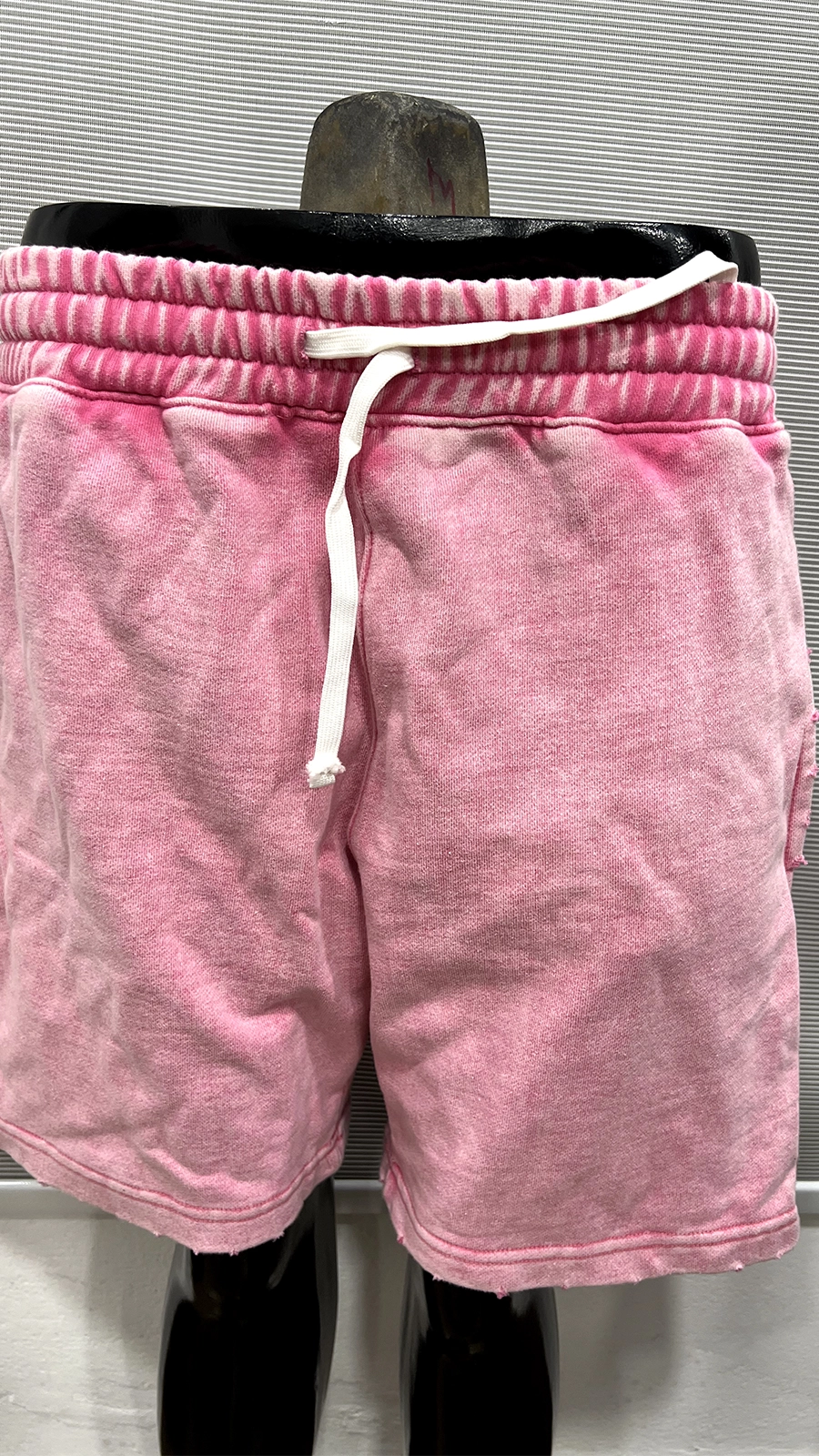
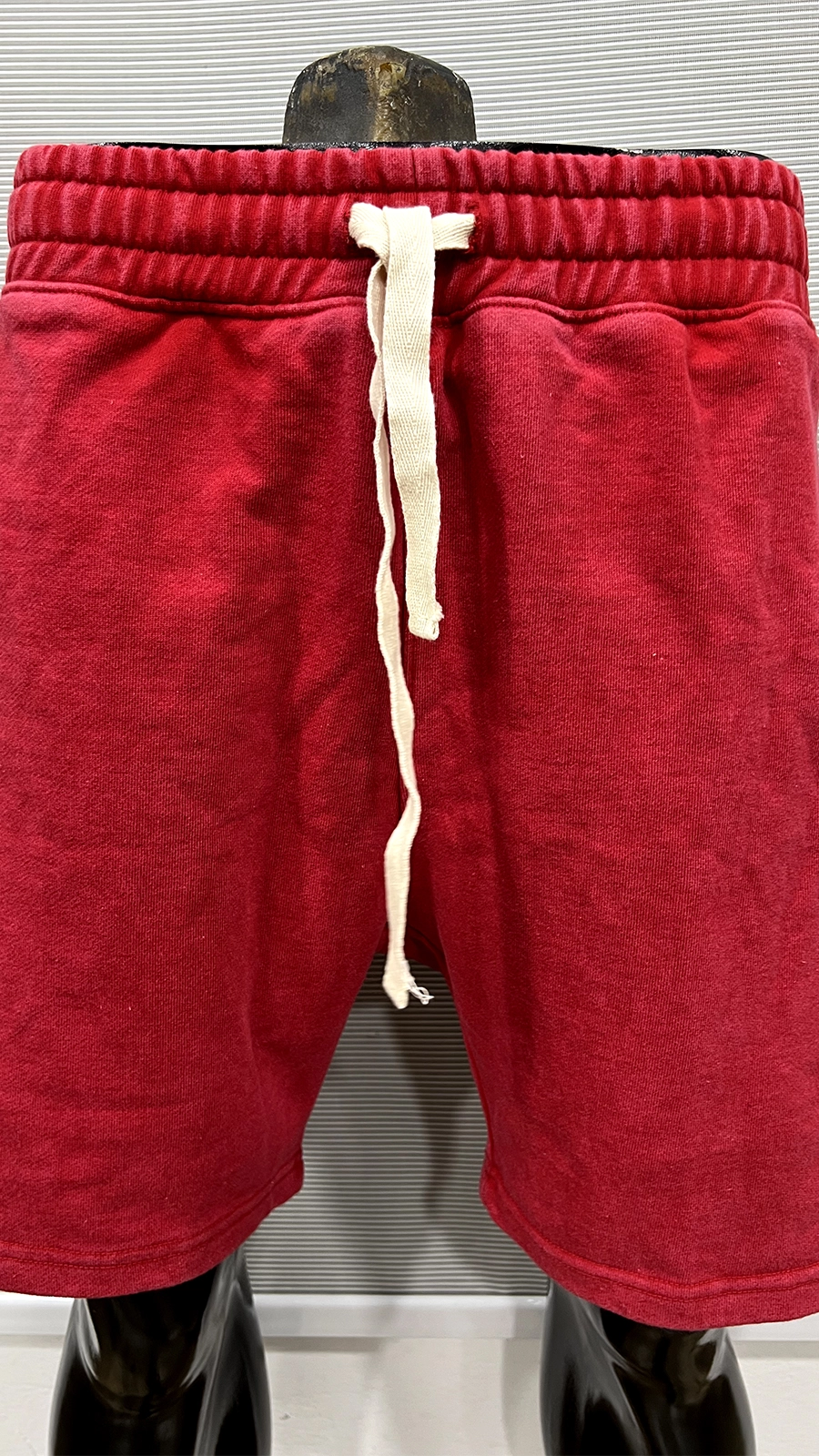
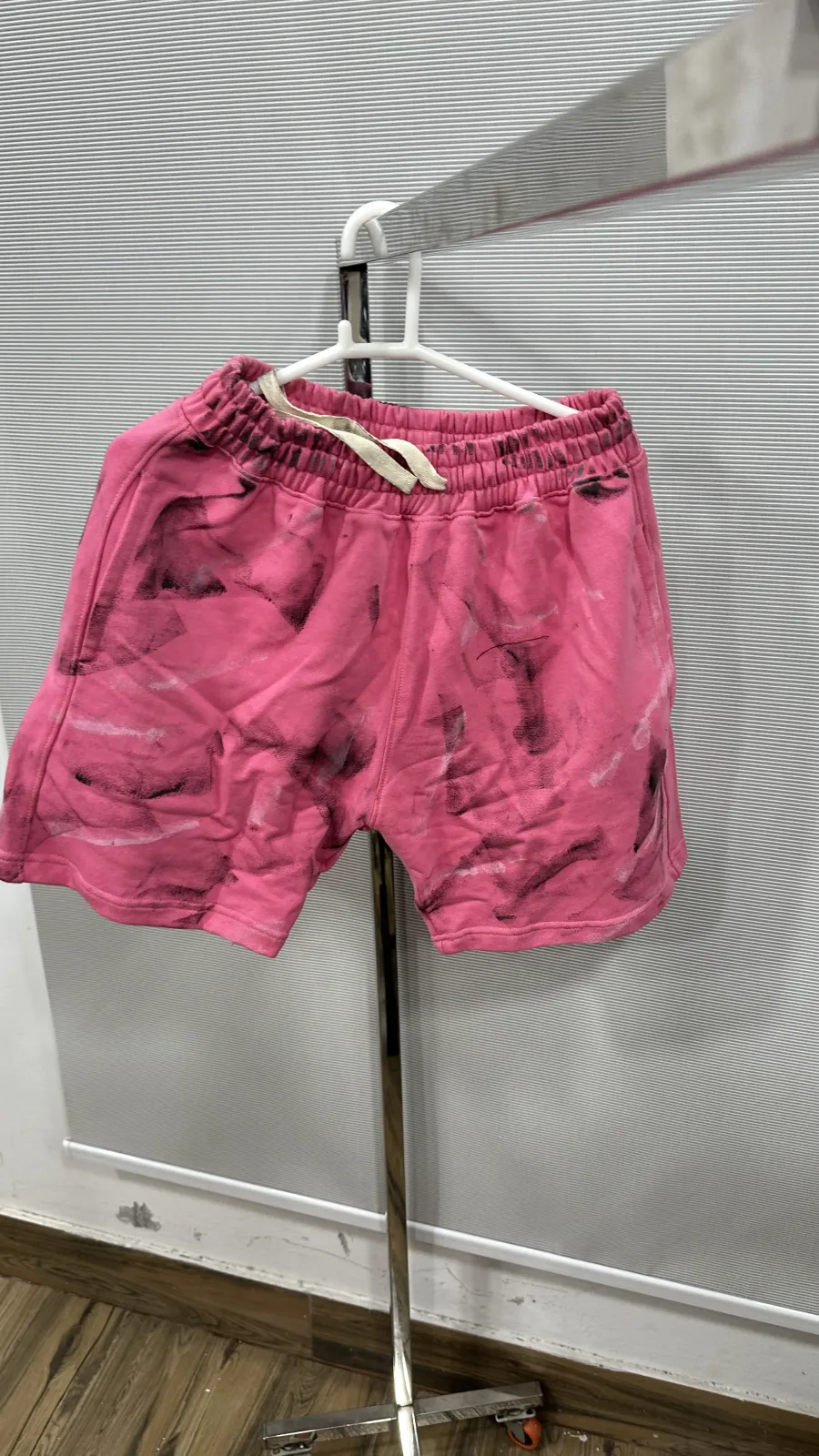
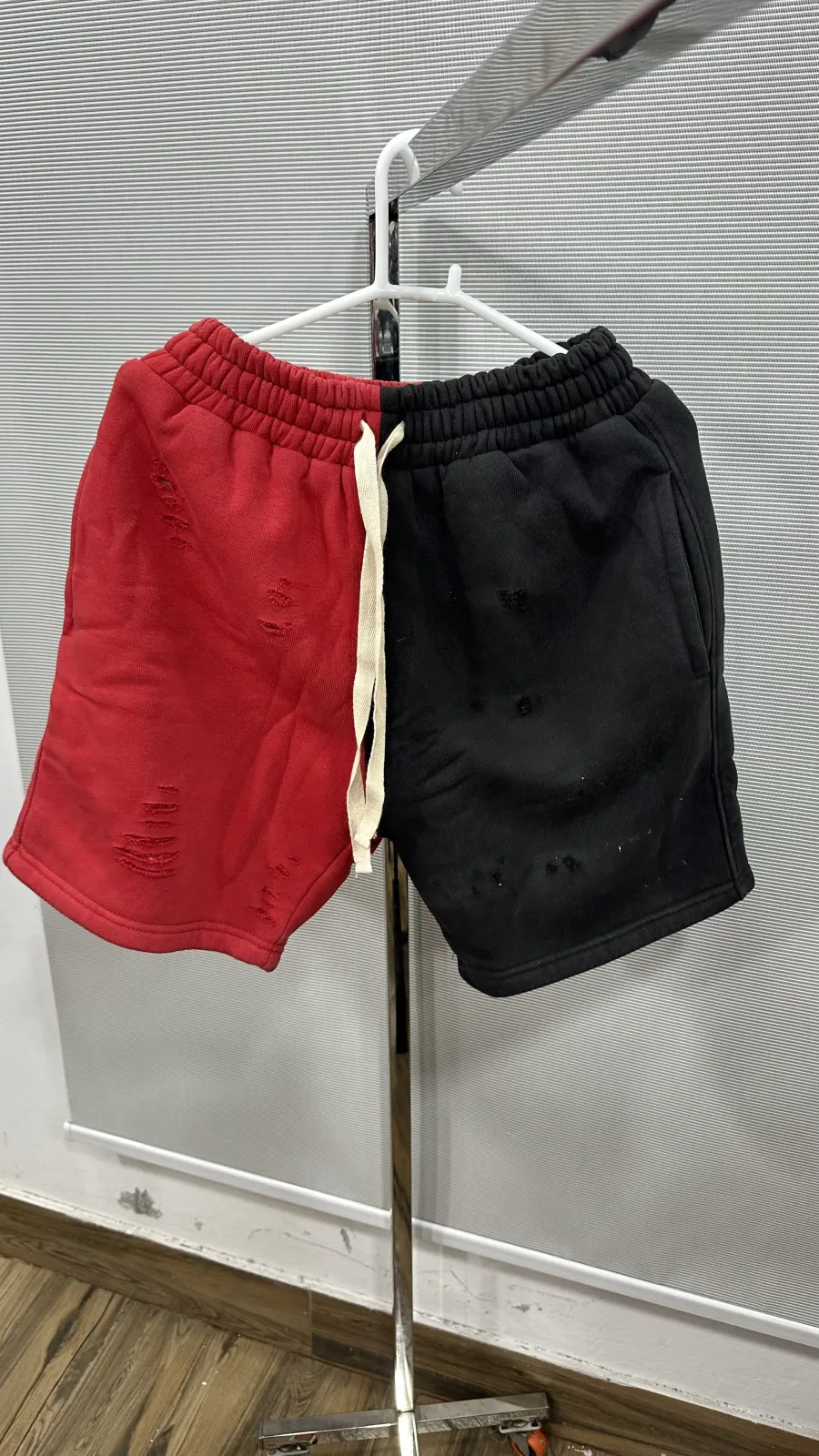
The pieces below are our own production samples, shot on the factory floor — not stock photos. Every order we run is fully custom to your spec, sizes, and branding.
01 — Why Inseam Length Is the Defining Spec on Sweat Shorts
What a Standard Size Sweat Shorts Manufacturer Grades First
On sweatpants, overall leg length is mostly a proportion detail that scales with the size you order. On sweat shorts, inseam length is the entire product decision. A 5-inch inseam, a 7-inch inseam, and a 9-inch inseam aren’t the same short trimmed to different points — they’re genuinely different silhouettes that read as different products to a customer browsing your line, the same way a crop tee and a standard tee are different garments rather than variations on one idea.
That’s worth stating plainly before anything else, because it changes how you should brief us. “Standard sweat shorts” isn’t a complete spec on its own the way “standard sweatpants” almost is — the exact inseam measurement is the detail that actually defines what you’re ordering, and it needs to be specified in inches or centimeters from the start rather than described loosely as “shorts length.”
Common inseam lengths run roughly 5 to 9 inches for a casual sweat short, with anything longer typically crossing into the territory our Long Short category covers instead. A 5-inch inseam reads as a compact, athletic-leaning cut; a 9-inch inseam sits closer to a relaxed lounge silhouette. Neither is “standard” in the way that word implies a default — you’re choosing a specific point on that range, and it’s worth deciding deliberately rather than defaulting to whatever a reference photo happened to show.
02 — Fabric and Construction: Gusset, Liner, and Side Slits
Fabric and Construction: Gusset, Liner, and Side Slits
| Weight | GSM | Best For |
|---|---|---|
| Midweight fleece | 280–320 GSM | Warm-weather casual shorts |
| Heavyweight fleece | 350–450 GSM | Structured athletic or lounge shorts |
Sweat shorts skip a few considerations that matter on full-length sweatpants entirely — there’s no ankle to reach, so cuff style and leg taper simply don’t apply here. What does carry over is the gusseted crotch, arguably just as important on shorts as on pants, since range of motion at that seam matters whether the leg is long or short.
A few details are more specific to shorts. A mesh liner — a lightweight inner layer sewn into the waistband, common on athletic and gym shorts — adds support and a layer of coverage separate from the outer fleece; it’s a genuine construction addition, not standard on every pair. Side slits, small vents at the hem opening on one or both sides, are another shorts-specific detail that aids ease of movement, particularly on athletic-leaning designs.
Pocket options carry over from sweatpants — side seam, patch, or back pockets are all still available — but a shorter leg gives pocket placement less room to work with than a full-length pant does. A pocket sized for a sweatpant thigh can sit awkwardly close to the hem on a short inseam short if it isn’t scaled down to match the shorter panel it’s on.
Interior brushing matters here the same way it does on sweatpants — a soft, brushed backing keeps the fabric comfortable against skin, especially relevant on shorts since more leg surface stays in direct contact with the fabric than it does under a full-length pant leg. We don’t scale back interior finish quality just because the panel itself is smaller.
03 — Placement and Why Shorts Have Less Room Than Sweatpants
Placement and Why Shorts Have Less Room Than Sweatpants
Placement geography follows the same general logic as our sweatpants pages — hip and outer thigh for a logo, side-seam text as an alternative — but the usable surface area is genuinely smaller here simply because the leg itself is shorter. A large thigh graphic proportioned for a full-length sweatpant leg won’t translate directly onto a 5-inch inseam short; the design needs to be planned specifically for the shorter panel rather than scaled down from a longer-leg reference.
Waistband placement conventions carry over unchanged from sweatpants — the same elastic and drawcord logic, the same rise considerations. Send us your artwork with the actual inseam length in mind, since that measurement determines exactly how much usable thigh panel you’re designing for.
A design that’s been scaled down proportionally from a sweatpants reference sometimes doesn’t translate cleanly onto a shorts panel, since the relationship between the waistband, the hem, and the thigh curve compresses differently on a much shorter leg. It’s usually better to design specifically for the shorts panel dimensions from the start than to shrink a pants-proportioned design and hope it reads the same way at a smaller scale.
04 — What Separates Shorts That Hold Their Shape From Ones That Sag
What Separates Shorts That Hold Their Shape From Ones That Sag
Check the waistband the same way you would on any sweatpant — stretch it and confirm it snaps back rather than staying loose. Check the gusset seam for flat, even construction, the same reinforcement point that matters on full-length pants. If a mesh liner is part of your spec, check that it’s securely attached at the waistband and doesn’t bunch or shift independently of the outer fabric.
Check side slits for clean, finished edges that lie flat rather than fraying or curling — a raw or poorly finished slit edge is one of the more common quality misses on shorts specifically, since it’s a smaller detail that’s easy to rush during construction.
Check the exact inseam measurement against your spec too, on more than one size if possible — since it’s the defining detail of the product, an inseam that’s landed a half-inch off from what you approved reads as a genuinely different garment to a customer, not a minor tolerance variance. That’s a more consequential measurement error here than a similar discrepancy would be on almost any dimension of a pair of sweatpants.
05 — MOQ and Sampling: What to Expect
MOQ and Sampling With Your Standard Size Sweat Shorts Manufacturer
MOQ is 50 pieces per style, split across whatever size run you need. Sampling takes 6–10 days, and the full cost is credited against your bulk order once you move forward. That same credit policy applies here as it does across every technique and category we offer.
Specify your exact inseam length in your initial brief rather than a general description — this is the single detail most likely to cause a resample if it’s left vague. Also confirm upfront whether you want a mesh liner, since that’s a construction decision built into the pattern from the start rather than something easily added after a sample’s already been approved without it.
If you’re testing a few different inseam lengths for a new product line — say, deciding between 5-inch and 7-inch for your core short — it’s genuinely worth sampling both rather than guessing which one your customers will prefer based on reference photos alone. The difference between those two lengths is significant enough on the body that it’s hard to judge accurately without seeing and trying on the actual finished pieces, and getting this one measurement right matters more here than almost any other spec decision you’ll make on this product.
06 — What Actually Moves Your Price
What Actually Moves Your Price
A mesh liner adds a real construction step and material cost compared to a basic unlined short. Side slits add a small amount of finishing work on top of a standard hem. Fabric GSM, waistband construction complexity, and total order volume round out the rest, the same factors that apply to sweatpants.
Inseam length itself doesn’t move price much on its own — a 5-inch and a 9-inch inseam use slightly different amounts of fabric, but the difference is modest compared to factors like liner, decoration, and volume. Where inseam length matters more for your budget is indirectly, through how much usable placement area you have for a large-format decoration design.
We don’t publish flat pricing because those variables interact too much to be useful as a single number. Run your spec through our Instant Quote tool instead — it gives you a price estimate in 5 seconds, a downloadable PDF quote, and a direct line to WhatsApp with your quote pre-filled. Final pricing is confirmed by our team within 24 hours.
07 — Shipping to the UK and EU Duty-Free
Shipping to the UK and EU Duty-Free
Manufacturing in Pakistan carries a trade advantage worth factoring into your landed cost. Apparel made here enters the UK at 0% duty under the Developing Countries Trading Scheme, and the EU at 0% duty under GSP+, versus roughly 12% on equivalent goods sourced from China.
Details on eligibility and the current tariff schedule are on the UK government’s own guidance page: Developing Countries Trading Scheme (DCTS) — GOV.UK. It’s worth checking directly if landed cost is a factor in comparing us against a supplier based somewhere without the same preferential access.
08 — When Standard Fit Isn't the Right Call
When Standard Fit Isn’t the Right Call
Standard fit isn’t the right call if your brand is built around a boxier, relaxed silhouette — a true-to-body cut just won’t deliver that look regardless of inseam length. If that’s your brand, our Over Size Sweat Shorts page is the better starting point. And if you’re picturing a longer length that reads more like a basketball short than a standard casual one, check our Long Short page instead.
Table of Contents
Simple Process
From Spec to Shipped, in Four Steps
01
Quote & Spec
Run your GSM, exact inseam length, and liner preference through the Instant Quote tool; get a price estimate and a downloadable PDF in 5 seconds.
02
Sample
We cut and sew your standard fit sample in 6–10 days at your specified inseam; you can join a live video call from the floor before it ships.
03
Approve & Bulk
Approve the sample (its cost is credited to your order) and we cut your full size run — production takes 12–15 days.
04
Ship
Finished shorts go out via DHL/FedEx air (3–7 days) or sea freight for larger volumes, landing duty-free in the UK and EU.
Our Advantage
Why Brands Choose Malinor
Floor Video Call Before You Pay Anything
See your actual shorts run in production, not a stock photo, before you commit to bulk.
Sample Cost Credited in Full
Nothing at all you spend on sampling is wasted once you move to bulk.
In-House Cutting, Sewing, and Finishing
No subcontracting any construction step to a third shop, so your timeline doesn’t depend on someone else’s queue.
Fast, Direct Replies
Most quote and spec questions get answered within 2 hours during business hours.
Common Questions
Frequently Asked Questions
Why does inseam length matter so much on sweat shorts?+
Because unlike sweatpants, where overall leg length is a proportion detail, a shorts’ inseam is the entire product decision. A 5-inch and a 9-inch inseam read as genuinely different products to a customer, not variations on the same style. It needs to be specified as an exact measurement in your brief rather than described loosely.
Do sweat shorts need the same gusset as sweatpants?+
Yes — the gusseted crotch matters just as much on shorts, since range of motion at that seam is a concern regardless of leg length. It’s one of the few construction elements that carries over from sweatpants unchanged, along with waistband and rise considerations.
What is a mesh liner and do I need one?+
It’s a lightweight inner layer sewn into the waistband, common on athletic and gym shorts, adding support and a layer of coverage separate from the outer fleece. It’s a genuine construction addition rather than a standard default, so it’s worth deciding upfront whether your product needs one — it’s built into the pattern from the start, not something we add after the fact.
What are side slits and why do some shorts have them?+
Small vents at the hem opening on one or both sides, mainly there to aid ease of movement — common on athletic-leaning designs. They need clean, finished edges that lie flat; a raw or poorly finished slit is one of the more common small quality misses on shorts specifically.
What’s the minimum order quantity?+
50 pieces per style, with sizes split however your size run needs — you’re not locked into 50 of one size. A standard fit short and an oversized short in the same order each need their own 50-piece minimum, since they’re different styles.
How long does shipping take?+
DHL or FedEx air freight takes 3–7 days worldwide once your order is finished. For larger volumes, sea freight is available at a lower cost per unit but a longer transit time — we’ll walk you through both options once your bulk order is confirmed and ready to move.
Run Your Spec Through the Instant Quote Tool
Get a price estimate in 5 seconds, a downloadable PDF, and a straight line to WhatsApp with your quote pre-filled. Before you pay anything, we’ll get you on a live video call from the production floor.