Rhinestone Sweat Pants Manufacturer
Rhinestone Sweat Pants Manufacturer Where Placement Has to Account for Movement
As a rhinestone sweat pants manufacturer based in Sialkot, Pakistan, we plan stone placement around where the hip actually flexes during normal wear, not just where a design looks good laid flat on a table. MOQ starts at 50 pieces per style with sizes split however you need, your sample takes 6–10 days and its full cost is credited against the bulk order, and production runs 12–15 days once you approve it.
The pieces below are our own production samples, shot on the factory floor — not stock photos. Every order we run is fully custom to your spec, sizes, and branding.
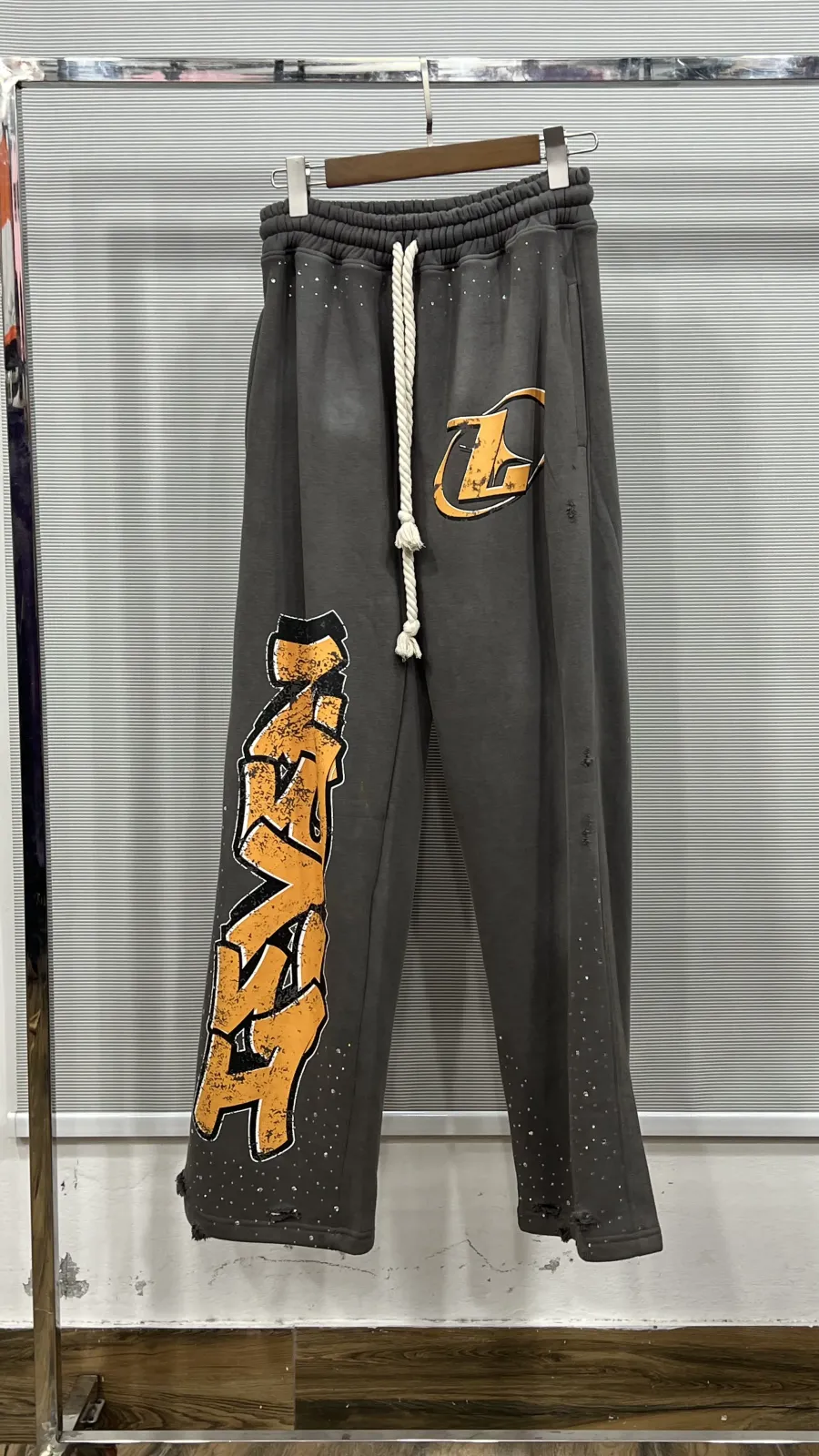
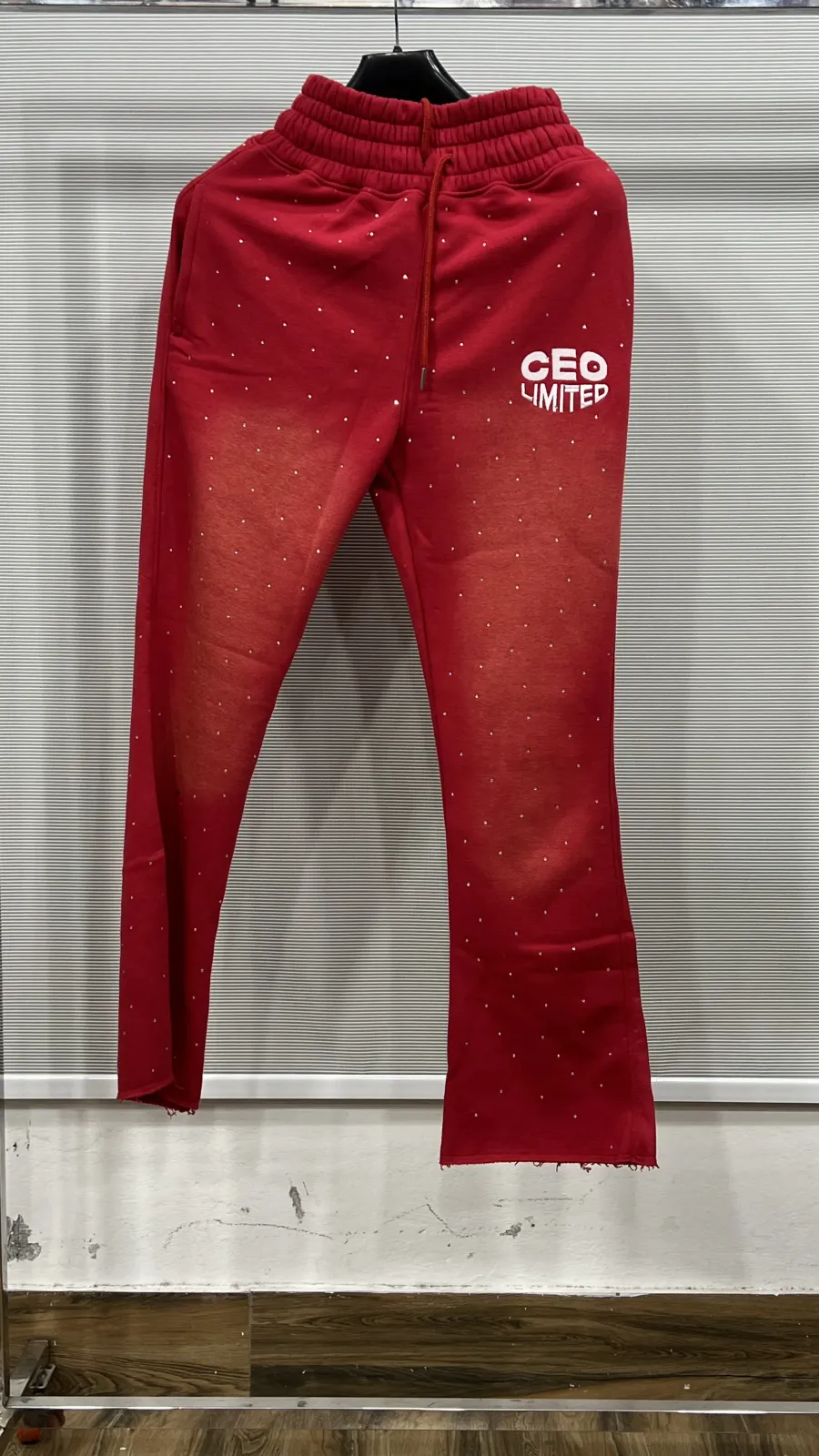
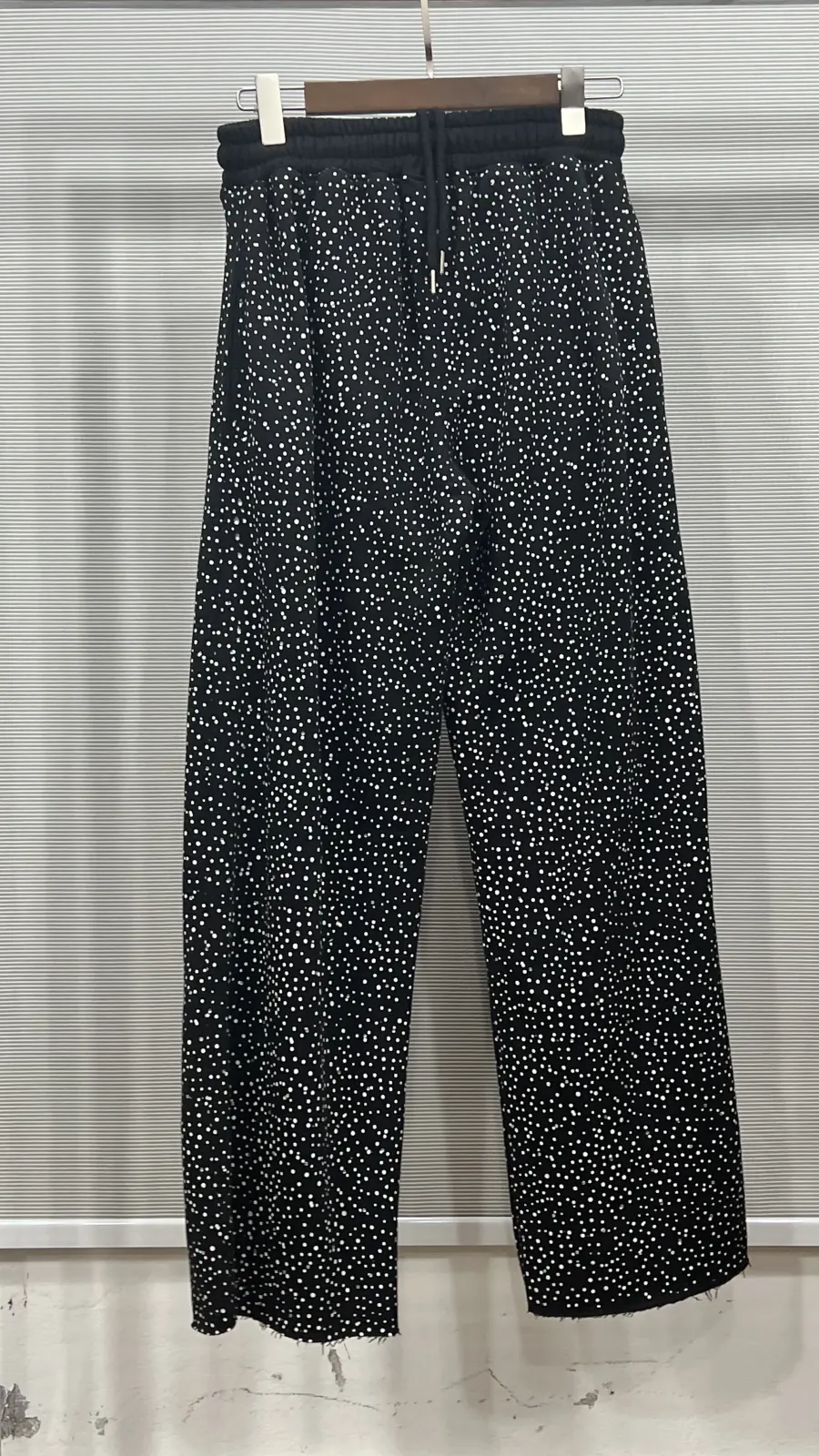
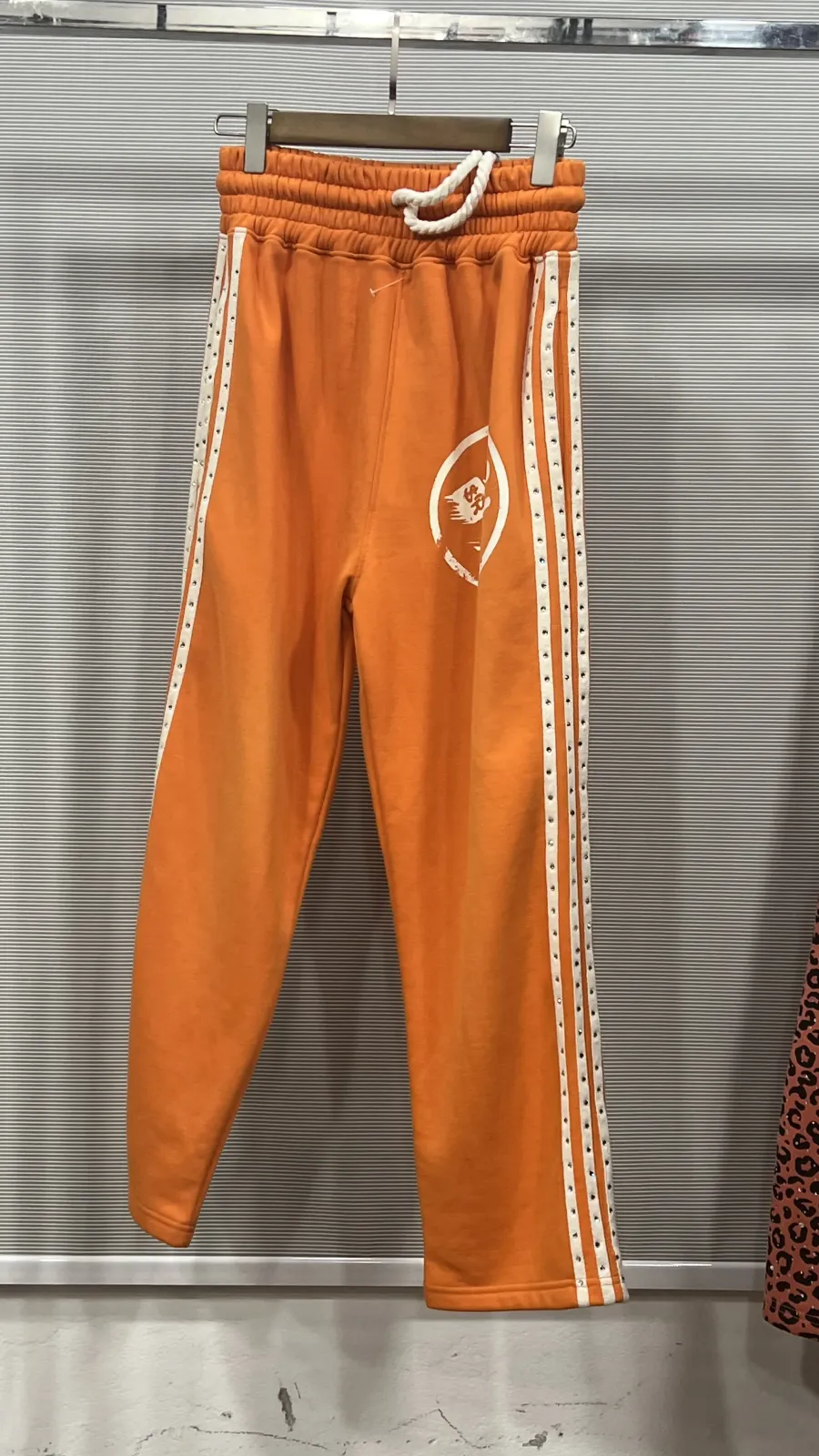
01 — Why Rhinestone Application Can Stay Simple Where Other Techniques Can't
What a Rhinestone Sweat Pants Manufacturer Doesn’t Have to Fight
Screen printing and DTG both need specialized equipment or careful handling to deal with a sweatpant leg’s tubular shape — a leg-shaped platen for one, a platen-size ceiling for the other. Rhinestone application doesn’t run into either problem the same way. Since it’s a heat-and-pressure process rather than wet ink, the leg can be laid flat and folded under a standard heat press without the smearing risk screen printing has to manage on a tubular garment. That’s a genuine equipment advantage this technique carries on sweatpants specifically.
What doesn’t go away is the leg’s taper and curve affecting how evenly heat and pressure land across a design. A larger stone placement spanning the hip curve needs careful positioning so the whole template makes even contact with the press — miss that and part of the design can bond weakly while the rest holds fine, an inconsistency that’s easy to miss on a quick visual check but shows up fast once stones start falling off in exactly the spot that didn’t get full pressure.
Stone material choice matters a bit more on this garment than it does on a static placement, too. Glass and crystal stones catch more light and hold their sparkle longest, but they also weigh and cost more, which adds up at a joint that’s moving constantly. Acrylic stones keep the design lighter and more flexible at the hip, a genuine practical advantage here beyond just the cost savings we’ve mentioned on other rhinestone pages.
02 — Fabric and Construction: Why Heavier Fleece Helps Rhinestone Hold
Fabric and Construction: Why Heavier Fleece Helps Rhinestone Hold
| Weight | GSM | Rhinestone Result on Sweatpants |
|---|---|---|
| Midweight fleece | 320–360 GSM | Small designs, standard heat press stability |
| Heavyweight fleece | 380–450+ GSM | The most reliable support for larger or denser designs |
Sweatpants fabric already runs heavier than a tee’s jersey by default, and that works in rhinestone’s favor the same way it helps embroidery on this garment — more fabric mass gives the heat press something stable to work against, avoiding the rippled surface risk that shows up on lighter fabric. It’s a genuine parallel to what we’ve found true across sweatpants decoration generally: this garment’s heavier fleece is often an advantage rather than a constraint.
Dwell time and press temperature need slight recalibration for the thicker fabric, though — heat has to fully penetrate through a heavier fleece to properly activate the hotfix adhesive, and a press setting calibrated for a lighter tee can under-cure the bond on denser sweatpants fabric if it isn’t adjusted.
Care instructions matter here for a similar reason to any rhinestone piece — cold wash, inside-out, and no tumble heat all protect the bond over time. On sweatpants specifically, it’s worth mentioning to your customer that repeated flexing at the hip during wear is a normal part of what the design has to withstand, which is exactly why we test bond strength against actual movement on the sample rather than just a static tug.
03 — Placement, Hip Movement, and Waistband Trim
Placement, Hip Movement, and Waistband Trim
Hip and outer thigh placement is the classic rhinestone sweatpants look, especially common in loungewear and women’s athleisure. A waistband trim — stones running along or near the waistband edge — is a second popular option. Both need real consideration for how the body actually moves in this spot: the hip flexes constantly during normal wear, in a way a static chest placement on a hoodie never has to account for.
That movement consideration affects both comfort and design planning. A densely stoned patch right at a point of repeated flex can feel stiffer against skin than the same density would elsewhere, and it’s worth discussing placement boundaries that avoid the most active flex zones if all-day comfort matters to your product. Waistband-trim stones need the same elastic caution as embroidery near a waistband — placement and backing shouldn’t compromise the elastic’s stretch recovery. And if you want a mirrored design across both legs, both need matched template placement, the same symmetry requirement covered on our embroidery and screen printing sweatpants pages. Rhinestone sweatpants also pair naturally with a matching rhinestone hoodie or sweatshirt as a coordinated set, if that’s part of your collection plan.
Stone sizing at the hip tends to skew toward the bolder end of the SS scale — SS16 and up — since a hip placement is meant to catch the eye at a glance rather than reward close inspection the way a small detailed chest logo might. That’s not a hard rule, but it’s the pattern we see most often in successful rhinestone sweatpants designs, and worth keeping in mind if you’re deciding on stone size mix.
04 — What Separates a Bond That Holds From One That Cracks at the Hip
What Separates a Bond That Holds From One That Cracks at the Hip
Press-test a stone at the edge of the design, the same check as any rhinestone job — a gentle pull shouldn’t lift it. On sweatpants specifically, also flex the fabric the way the hip actually moves rather than just pulling flat; a bond that holds under a straight pull can still crack or lift under the twisting, flexing motion this placement sees in real wear.
Check alignment and spacing for evenness across the whole design, particularly at the hip curve where uneven press contact is most likely to show up. If stones sit near the waistband, stretch it and confirm normal recovery. And check both legs against each other if you’ve ordered a mirrored design, the same symmetry check that applies to any two-leg decoration on this garment.
Check stone finish and clarity too, the same as any rhinestone job — a cloudy or chipped stone stands out immediately next to clean ones, and it’s worth catching on the sample rather than discovering it across an entire production run. These checks together are what separate a design that looks and holds up the way it should from one that starts shedding stones or showing wear within the first few weeks of actual use.
05 — MOQ and Sampling: What to Expect
MOQ and Sampling With Your Rhinestone Sweat Pants Manufacturer
MOQ is 50 pieces per style, split across whatever size run you need. Sampling takes 6–10 days, and the full cost is credited against your bulk order once you move forward.
Actually wear the sample and move in it if you can, rather than just checking it laid flat — hip flex is something you can only properly evaluate on a body. If the placement feels stiff or restrictive during real movement, that’s worth adjusting before the design gets locked into a 50-piece template rather than discovering it after.
If wearing the sample yourself isn’t practical, ask us to send video of the sample being moved in — a few basic motions like sitting, walking, and stretching are usually enough to reveal whether a hip placement is going to be comfortable in daily use, and it’s a far better proxy than a static photo.
06 — What Actually Moves Your Price
What Actually Moves Your Price
Total stone count and size mix remain the primary cost driver, the same as any rhinestone job. Template setup for a mirrored two-leg design costs more than a single placement, since it’s effectively two coordinated jobs. Fabric GSM and total order volume round out the rest.
Stone material also affects price directly, separate from count and size — glass and crystal cost more per stone than acrylic, and on a hip design where you might be weighing weight and flex alongside sparkle, that’s a decision worth making deliberately rather than defaulting to the priciest option without considering whether it actually suits how the garment gets worn.
We don’t publish flat pricing because those variables interact too much to be useful as a single number. Run your spec through our Instant Quote tool instead — it gives you a price estimate in 5 seconds, a downloadable PDF quote, and a direct line to WhatsApp with your quote pre-filled. Final pricing is confirmed by our team within 24 hours.
07 — Shipping to the UK and EU Duty-Free
Shipping to the UK and EU Duty-Free
Manufacturing in Pakistan carries a trade advantage worth factoring into your landed cost. Apparel made here enters the UK at 0% duty under the Developing Countries Trading Scheme, and the EU at 0% duty under GSP+, versus roughly 12% on equivalent goods sourced from China.
Details on eligibility and the current tariff schedule are on the UK government’s own guidance page: Developing Countries Trading Scheme (DCTS) — GOV.UK. It’s worth checking directly if landed cost is a factor in your sourcing decision.
08 — When Rhinestone Isn't the Right Call
When Rhinestone Isn’t the Right Call
Rhinestone isn’t the right call for activewear or performance sweatpants, where stones at a flex point genuinely interfere with movement rather than just adding visual weight. It’s also worth a second thought for budget-conscious high-volume basics, since stone count adds up fast, and for anyone prioritizing an all-day-comfort product over a bold look. If a textured, eye-catching design without those trade-offs matters more, our Embroidery Sweat Pants page holds up in daily wear without the same movement considerations.
Table of Contents
Simple Process
From Spec to Shipped, in Four Steps
01
Quote & Spec
Run your GSM, stone size mix, and placement through the Instant Quote tool; get a price estimate and a downloadable PDF in 5 seconds.
02
Sample
We digitize your design, cut a transfer template, and heat-press a physical sample in 6–10 days; you can join a live video call from the floor before it ships.
03
Approve & Bulk
Approve the sample (its cost is credited to your order) and we run your full size and quantity — production takes 12–15 days.
04
Ship
Finished sweatpants go out via DHL/FedEx air (3–7 days) or sea freight for larger volumes, landing duty-free in the UK and EU.
Our Advantage
Why Brands Choose Malinor
Floor Video Call Before You Pay Anything
See your actual rhinestone run in production, not a stock photo, before you commit to bulk.
Sample Cost Credited in Full
Nothing at all you spend on sampling is wasted once you move to bulk.
In-House Digitizing and Heat Pressing
No subcontracting any decoration step to a third shop, so your timeline doesn’t depend on someone else’s queue.
Fast, Direct Replies
Most quote and spec questions get answered within 2 hours during business hours.
Common Questions
Frequently Asked Questions
Can rhinestones be applied to a sweatpant leg without special equipment?+
Yes — this is actually an advantage rhinestone application has over screen printing on this garment. Because it’s a heat-and-pressure process rather than wet ink, the leg can be laid flat under a standard heat press without the smearing risk screen printing has to manage on a tubular shape. Careful positioning across the leg’s curve still matters, but the equipment itself stays simple.
Will a rhinestone patch at the hip feel uncomfortable when I move?+
It can, if the design isn’t planned with hip flex in mind. The hip moves constantly during normal wear, unlike a static chest placement, so a densely stoned patch right at the most active flex point can feel stiffer than the same design elsewhere. We’ll talk through placement boundaries with you if all-day comfort matters for your product.
Can rhinestones be placed along the waistband?+
Yes, and it’s a popular trim option. It needs the same care as embroidery near a waistband — the stones and backing shouldn’t compromise the elastic’s stretch recovery. We keep placement and backing clear of the elastic zone specifically to avoid affecting how the waistband functions.
Does heavier sweatpants fleece help rhinestones hold better?+
Yes, genuinely. Sweatpants fabric already runs heavier than tee jersey by default, which gives the heat press more stable fabric to work against and reduces the rippled-surface risk that shows up on lighter material. Press dwell time and temperature do need adjusting for the thicker fabric, though, to make sure heat fully penetrates and activates the adhesive.
What’s the minimum order quantity?+
50 pieces per style, with sizes split however your size run needs — you’re not locked into 50 of one size. A rhinestone sweatpant and an embroidered sweatpant in the same order each need their own 50-piece minimum, since they’re different styles.
How long does shipping take?+
DHL or FedEx air freight takes 3–7 days worldwide once your order is finished. For larger volumes, sea freight is available at a lower cost per unit but a longer transit time — we’ll walk you through both options once your bulk order is confirmed and ready to move.
Run Your Spec Through the Instant Quote Tool
Get a price estimate in 5 seconds, a downloadable PDF, and a straight line to WhatsApp with your quote pre-filled. Before you pay anything, we’ll get you on a live video call from the production floor.