DTG Printing Sweat Pants Manufacturer
DTG Printing Sweat Pants Manufacturer Where the Platen Sets the Real Limit
As a DTG printing sweat pants manufacturer based in Sialkot, Pakistan, we’ll tell you upfront that this technique is built for small, sharp placements on pants, not full-leg coverage — our printer’s platen simply can’t reach the length of a whole leg in one pass. MOQ starts at 50 pieces per style with sizes split however you need, your sample takes 6–10 days and its full cost is credited against the bulk order, and production runs 12–15 days once you approve it.
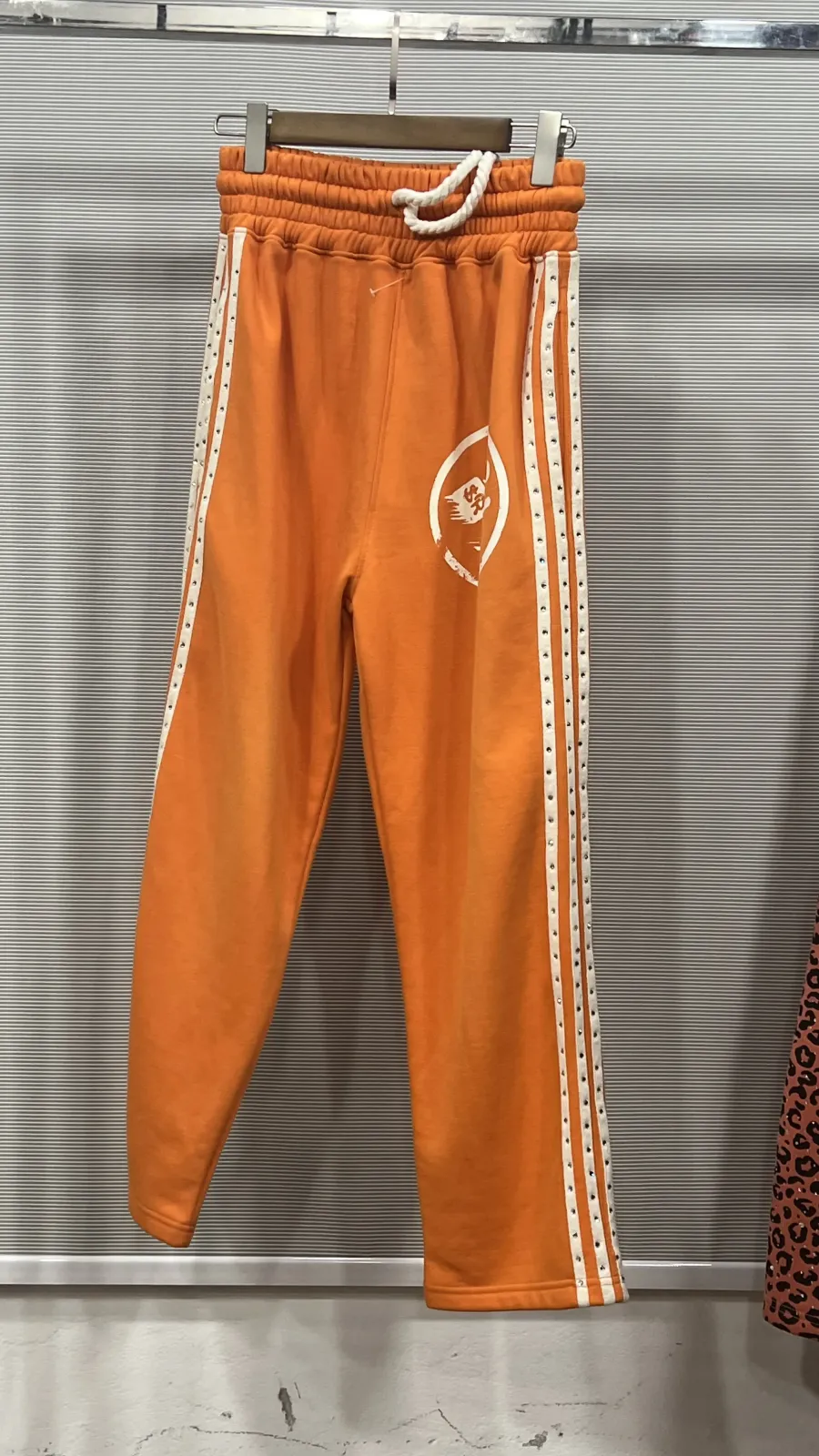
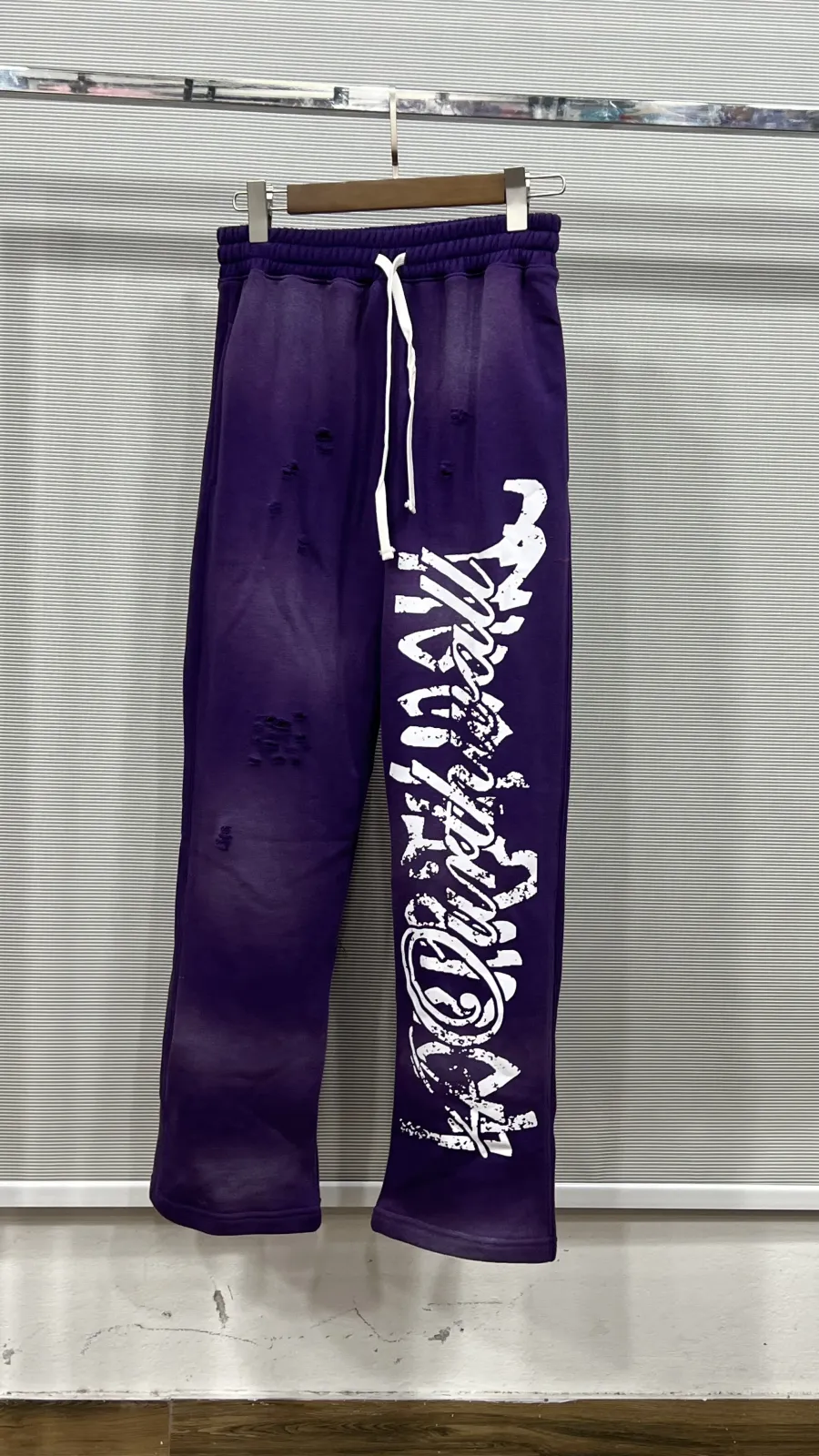
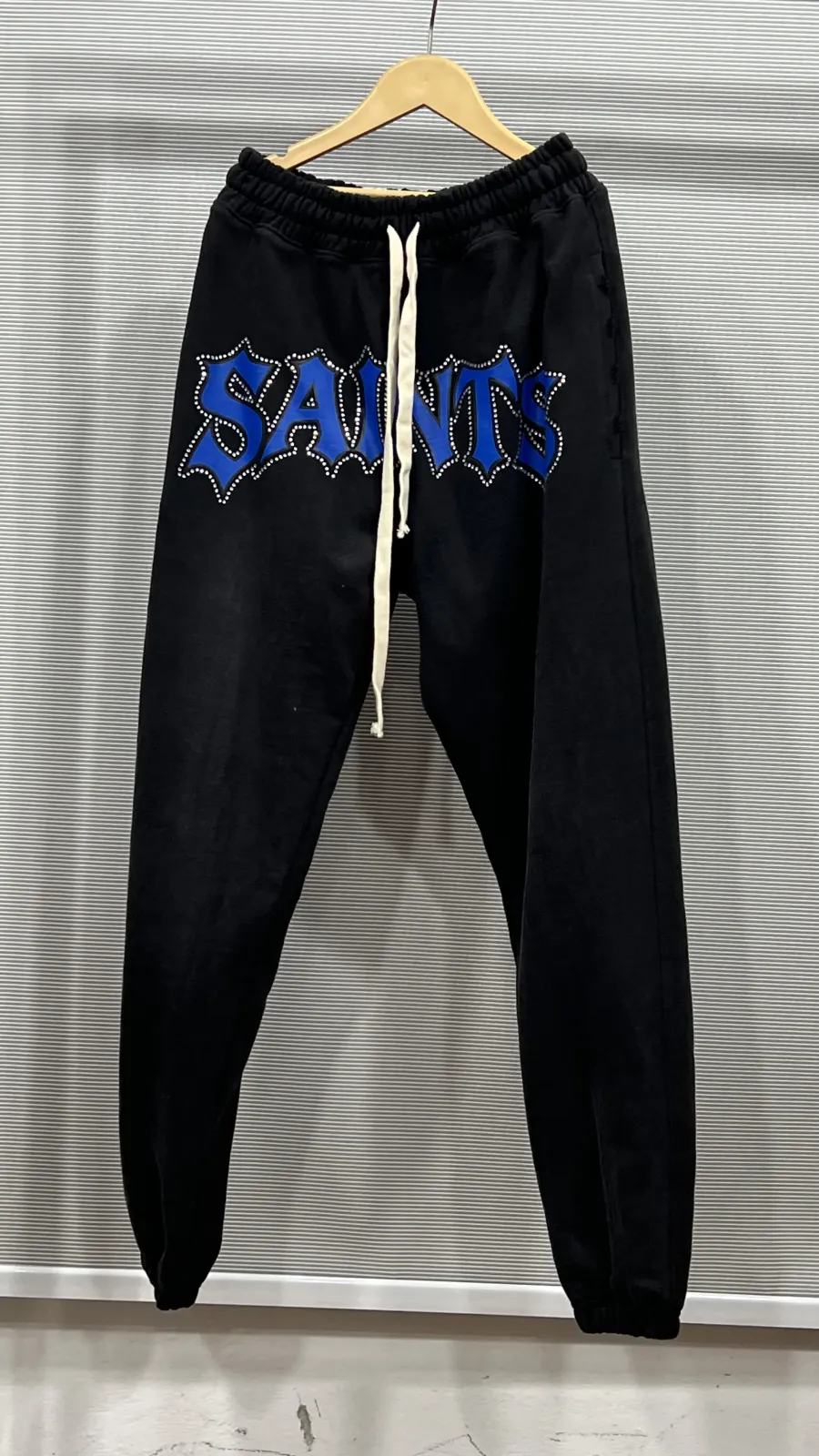
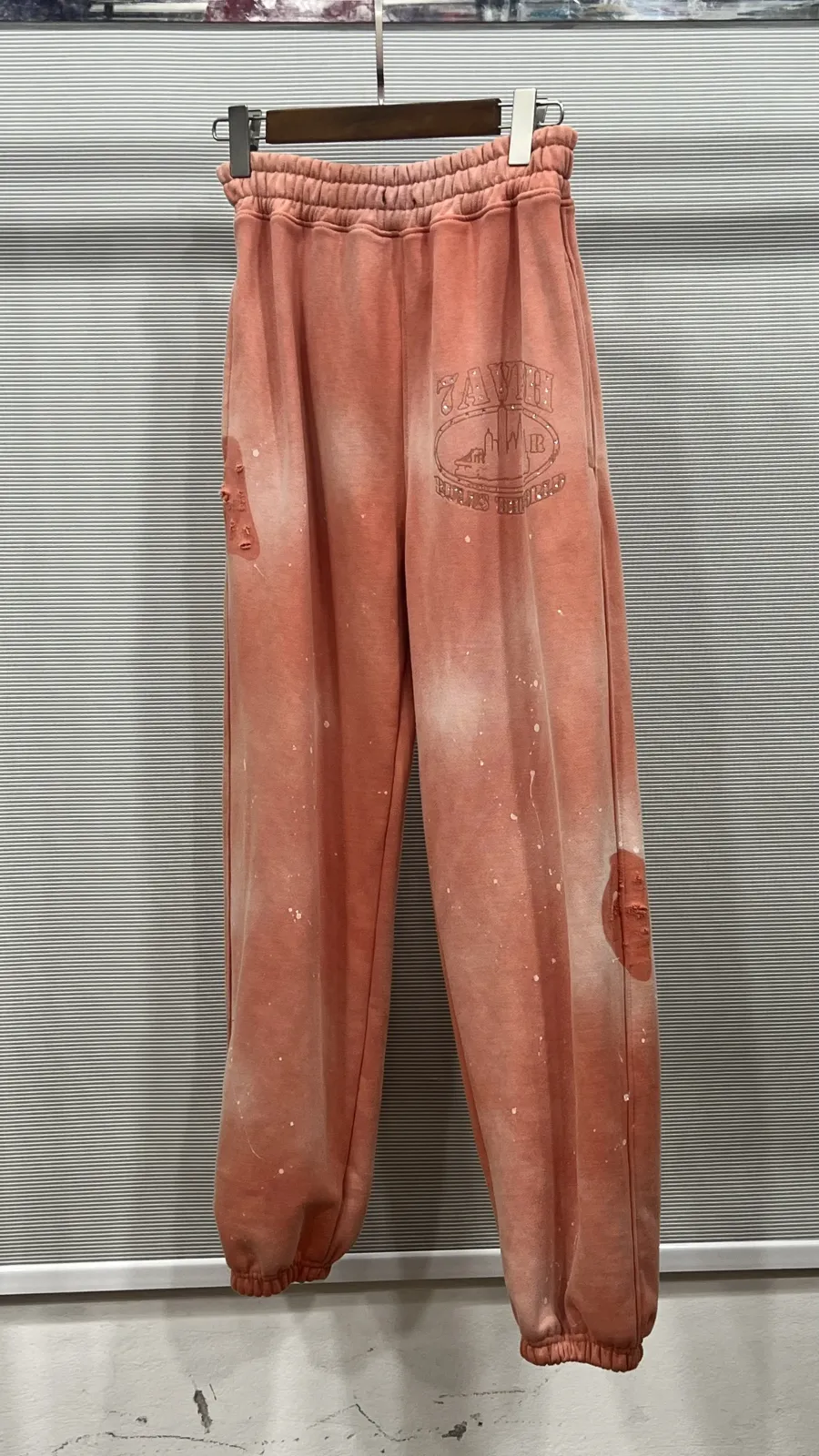
The pieces below are our own production samples, shot on the factory floor — not stock photos. Every order we run is fully custom to your spec, sizes, and branding.
01 — Why DTG Stays Small on Sweatpants While Screen Printing Goes Big
What a DTG Printing Sweat Pants Manufacturer Can Realistically Cover
Our printer’s platen tops out around 40x50cm per pass — a real ceiling we’ve mentioned on our other DTG pages, but it matters more here than almost anywhere else in our lineup. A full sweatpant leg easily runs longer than that single-pass reach, which means DTG on pants is realistically a technique for smaller, localized placements — a hip logo, a thigh mark — rather than full-leg coverage.
That’s worth being direct about, especially if you’ve just read our screen printing sweatpants page and are comparing the two. Screen printing handles a large thigh graphic or full-leg design efficiently because its cost scales with color count and coverage, not a fixed print-bed size. DTG doesn’t have that flexibility here — it’s genuinely the better technique for small, detailed, full-color work, and genuinely the wrong one if you’re picturing a big leg graphic. Knowing which category your design falls into before you spec it out saves a conversation partway through the process.
Some shops attempt to work around the platen limit by printing a large design in multiple passes and stitching the sections together visually. We don’t recommend this route on sweatpants — alignment between passes is difficult to keep invisible on a curved, moving leg surface, and the seam between sections tends to show under close inspection or after a few washes even when it looked acceptable fresh off the printer. If a design genuinely needs to be large, it’s a better outcome to build it for screen printing from the start than to force DTG past what it’s suited for.
02 — Fabric and Construction: Cotton Content and Pretreatment on a Curved Area
Fabric and Construction: Cotton Content and Pretreatment on a Curved Area
| Fabric | Cotton Content | DTG Result on Sweatpants |
|---|---|---|
| Cotton-rich fleece | High | Vivid, well-bonded print |
| Cotton/poly performance blend | Medium-low | Weaker, less vibrant — common in athletic joggers |
| Heavy poly-blend fleece | Low | Not recommended |
The same cotton-content principle applies here as on any DTG job — the ink needs cotton fiber to bond into. Sweatpants split into two real markets worth knowing about: fashion-forward fleece sweats, usually cotton-rich, print well; performance or athletic joggers sometimes use a poly-blend fleece specifically for moisture management, which compromises DTG results the same way any poly-heavy fabric does. If your sweatpants lean toward the athletic-performance side, confirm the actual fabric composition before committing to DTG.
Pretreatment application also needs extra care here, similar to a concern we’ve flagged on the screen printing sweatpants page for mesh and ink deposit — spraying pretreatment evenly across a curved hip or thigh area takes more attention than a flat panel does, since uneven saturation on a curve shows up as inconsistent color once the print goes down. Heavier sweatpants fleece can also need slightly more pretreatment volume to fully saturate through to the surface fibers, compared to a lighter tee jersey.
If you’re not certain which category your fabric falls into, send us a swatch or the fabric’s spec sheet before finalizing your order. A quick composition check on our end is a much smaller ask than discovering a fabric mismatch after a sample has already been pretreated and printed.
03 — Placement, Platen Limits, and File Requirements
Placement, Platen Limits, and File Requirements
Because DTG placements on pants stay realistically small, we can use a standard flat platen for most sweatpant jobs — genuinely simpler equipment than the dedicated leg-shaped platen screen printing needs for its larger leg coverage. The garment gets positioned flat under the printer head for the specific hip or thigh zone you’re printing, which works fine at this scale even though it wouldn’t work for a full-leg design.
The classic use case here is a small, detailed, full-color mark — a photographic logo, a gradient design, fine detail that would need multiple screens to reproduce in spot-color printing. Since DTG has no per-color setup cost, that detail costs the same as a simple design at the same size, which is exactly where this technique earns its place on sweatpants. Send us high-resolution artwork at 300dpi minimum at actual print size, and confirm your placement relative to the waistband and side seam the same way you would for any sweatpant decoration.
04 — What Separates a Sharp DTG Placement From a Faded, Stiff One
What Separates a Sharp DTG Placement From a Faded, Stiff One
Color vibrancy is the first check, the same as on any DTG job — a properly pretreated, well-cured print looks saturated and true to the file. If a sample looks washed-out, that usually traces back to cotton content or uneven pretreatment on the curved area rather than the printer itself.
Feel the print — it should stay soft and flexible, not stiff, even against a heavier sweatpants fleece than a tee would use. And run a wash test, since sweatpants tend to see more frequent, less delicate washing in real use than some other garments — a properly cured print should hold its color and edge sharpness through repeated cycles, not just look good fresh off the press.
Check the edges of the design closely too, especially if it’s positioned on or near the curved hip transition — a print that looks crisp when viewed straight-on can show slight softening at the edges once you look at it from the angle the fabric actually curves at. That’s a small thing, but it’s exactly the kind of detail that’s easier to catch on a sample than after fifty pieces have already shipped.
05 — MOQ and Sampling: What to Expect
MOQ and Sampling With Your DTG Printing Sweat Pants Manufacturer
MOQ is 50 pieces per style, split across whatever size run you need. Sampling takes 6–10 days, and the full cost is credited against your bulk order once you move forward. That same credit policy applies here as it does across every technique and category we offer.
Confirm your fabric composition before sampling if there’s any chance your sweatpants use a performance poly-blend — it’s the single most common reason a DTG sample disappoints on this garment, and it’s much cheaper to catch before a sample than after. If your placement sits on a curved area, check the sample specifically for even color across that curve rather than just glancing at the overall impression.
It’s also worth handling the sample yourself if hand-feel matters to your product — this is especially true for athletic-leaning sweatpants where a stiff patch of fabric would actually interfere with how the garment is meant to perform. A photo can’t tell you how a printed area feels compared to the surrounding fabric, and that’s a genuinely important check on a garment built for movement.
06 — What Actually Moves Your Price
What Actually Moves Your Price
Because large coverage isn’t practical here, pricing centers on placement detail and complexity rather than coverage area the way it might for screen printing. A highly detailed, multi-color gradient design costs about the same as a simple one-color mark at the same size, since DTG has no per-color setup cost — the real driver is placement size and fabric prep, plus your total order volume.
That’s a genuinely different pricing conversation than the one you’d have for a large-coverage screen-printed design. If you’re weighing the two techniques for the same pair of sweatpants, it usually comes down to design size rather than budget alone — a small, photographic hip logo tends to make more economic sense in DTG, while a large thigh graphic almost always makes more sense in screen printing, regardless of how detailed either design is.
We don’t publish flat pricing because those variables interact too much to be useful as a single number. Run your spec through our Instant Quote tool instead — it gives you a price estimate in 5 seconds, a downloadable PDF quote, and a direct line to WhatsApp with your quote pre-filled. Final pricing is confirmed by our team within 24 hours.
07 — Shipping to the UK and EU Duty-Free
Shipping to the UK and EU Duty-Free
Manufacturing in Pakistan carries a trade advantage worth factoring into your landed cost. Apparel made here enters the UK at 0% duty under the Developing Countries Trading Scheme, and the EU at 0% duty under GSP+, versus roughly 12% on equivalent goods sourced from China.
Details on eligibility and the current tariff schedule are on the UK government’s own guidance page: Developing Countries Trading Scheme (DCTS) — GOV.UK. It’s worth checking directly if landed cost is a factor in your sourcing decision.
08 — When DTG Isn't the Right Call
When DTG Isn’t the Right Call
DTG isn’t the right call for large leg coverage or a full-leg graphic — our platen simply can’t reach that in one pass, and stitching a design together from multiple passes rarely looks clean. It’s also not the most economical choice for a high-volume order of a simple design, where screen printing’s fixed screen cost amortizes down at real scale. For large coverage or high-volume simple designs, our Screen Printing Sweat Pants page is the better starting point.
Table of Contents
Simple Process
From Spec to Shipped, in Four Steps
01
Quote & Spec
Run your fabric composition, placement size, and design complexity through the Instant Quote tool; get a price estimate and a downloadable PDF in 5 seconds.
02
Sample
We pretreat and print your physical sample in 6–10 days; you can join a live video call from the floor before it ships.
03
Approve & Bulk
Approve the sample (its cost is credited to your order) and we run your full size and quantity — production takes 12–15 days.
04
Ship
Finished sweatpants go out via DHL/FedEx air (3–7 days) or sea freight for larger volumes, landing duty-free in the UK and EU.
Our Advantage
Why Brands Choose Malinor
Floor Video Call Before You Pay Anything
See your actual print run in production, not a stock photo, before you commit to bulk.
Sample Cost Credited in Full
Nothing at all you spend on sampling is wasted once you move to bulk.
In-House Pretreatment and Printing
No subcontracting any decoration step to a third shop, so your timeline doesn’t depend on someone else’s queue.
Fast, Direct Replies
Most quote and spec questions get answered within 2 hours during business hours.
Common Questions
Frequently Asked Questions
Can DTG print a full-leg design on sweatpants?+
Not in one pass, no. Our printer’s platen tops out around 40x50cm, and a full sweatpant leg runs longer than that. DTG works well for smaller, localized placements — a hip logo or thigh mark — but for full-leg coverage, screen printing is the more practical and economical technique on this garment.
Why might DTG not work well on athletic joggers?+
Athletic and performance joggers sometimes use a poly-blend fleece specifically for moisture management, and DTG ink needs cotton fiber to bond into properly. If your sweatpants lean toward performance fabric rather than a cotton-rich fashion fleece, confirm the actual composition before committing to DTG, since a poly-heavy blend gives a weaker, less vibrant result.
Does DTG need special equipment to print on sweatpants?+
Less than you might expect, actually. Because DTG placements on pants stay realistically small, a standard flat platen works fine — the garment gets positioned under the printer head for that specific hip or thigh zone. That’s simpler equipment than the dedicated leg-shaped platen screen printing needs for its larger leg coverage.
Is DTG the same cost whether the design is simple or detailed?+
Largely yes, at the same placement size — DTG has no per-color setup cost, so a highly detailed, multi-color gradient design costs about the same as a simple one-color mark of equal size. The real cost driver here is placement size and fabric preparation, not how complex the artwork is.
What’s the minimum order quantity?+
50 pieces per style, with sizes split however your size run needs — you’re not locked into 50 of one size. A DTG-printed sweatpant and a screen-printed sweatpant in the same order each need their own 50-piece minimum, since they’re different styles.
How long does shipping take?+
DHL or FedEx air freight takes 3–7 days worldwide once your order is finished. For larger volumes, sea freight is available at a lower cost per unit but a longer transit time — we’ll walk you through both options once your bulk order is confirmed and ready to move.
Run Your Spec Through the Instant Quote Tool
Get a price estimate in 5 seconds, a downloadable PDF, and a straight line to WhatsApp with your quote pre-filled. Before you pay anything, we’ll get you on a live video call from the production floor.