Screen Printing Hoodie Manufacturer
Screen Printing Hoodie Manufacturer With In-House Ink Mixing and Curing
As a screen printing hoodie manufacturer based in Sialkot, Pakistan, we burn your screens, mix ink to match your Pantones, and cure every print to hold up wash after wash — not just look good on day one. MOQ starts at 50 pieces per style with sizes split however you need, your sample takes 6–10 days and its full cost is credited against the bulk order, and production runs 12–15 days once you approve it.
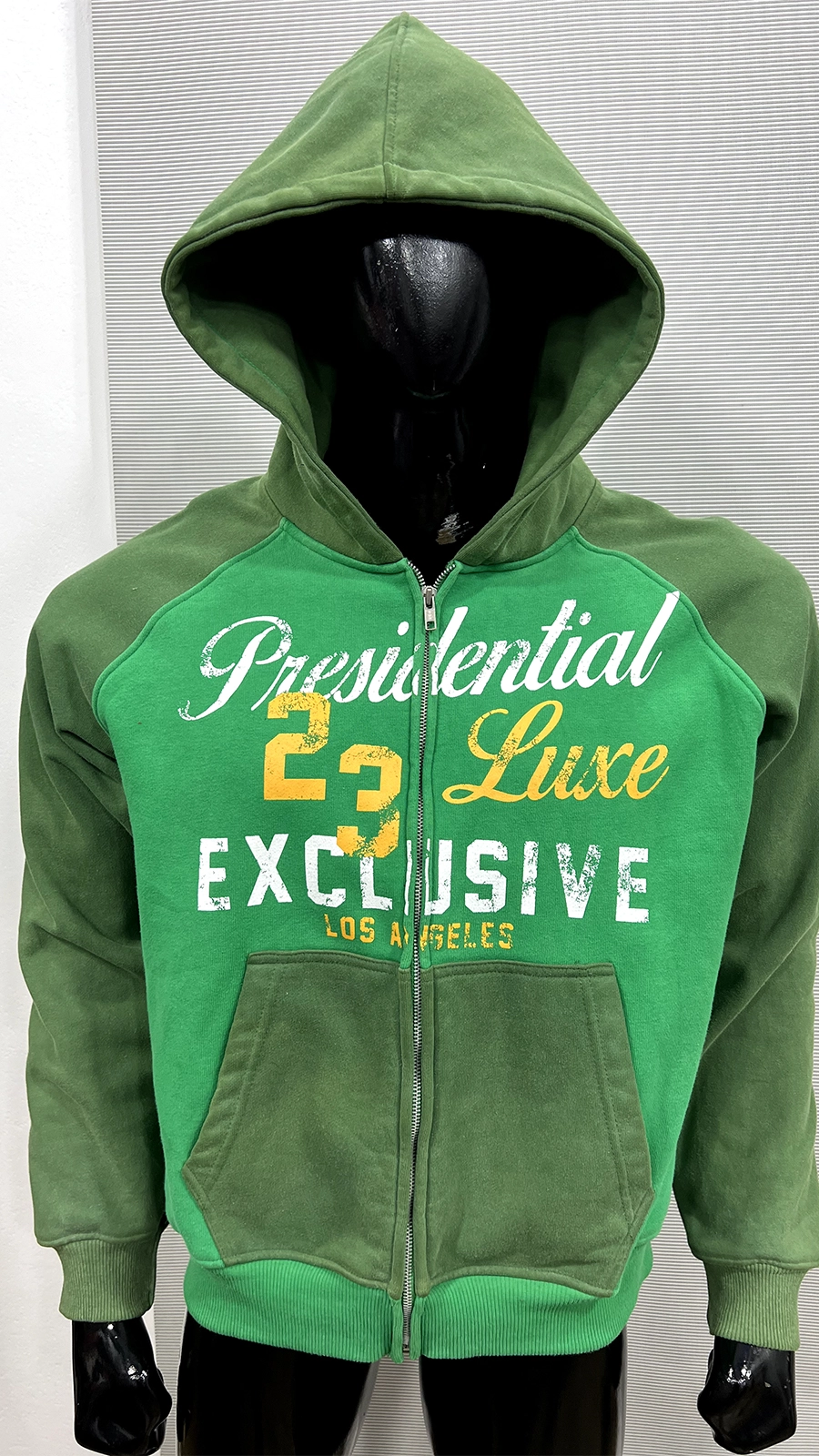
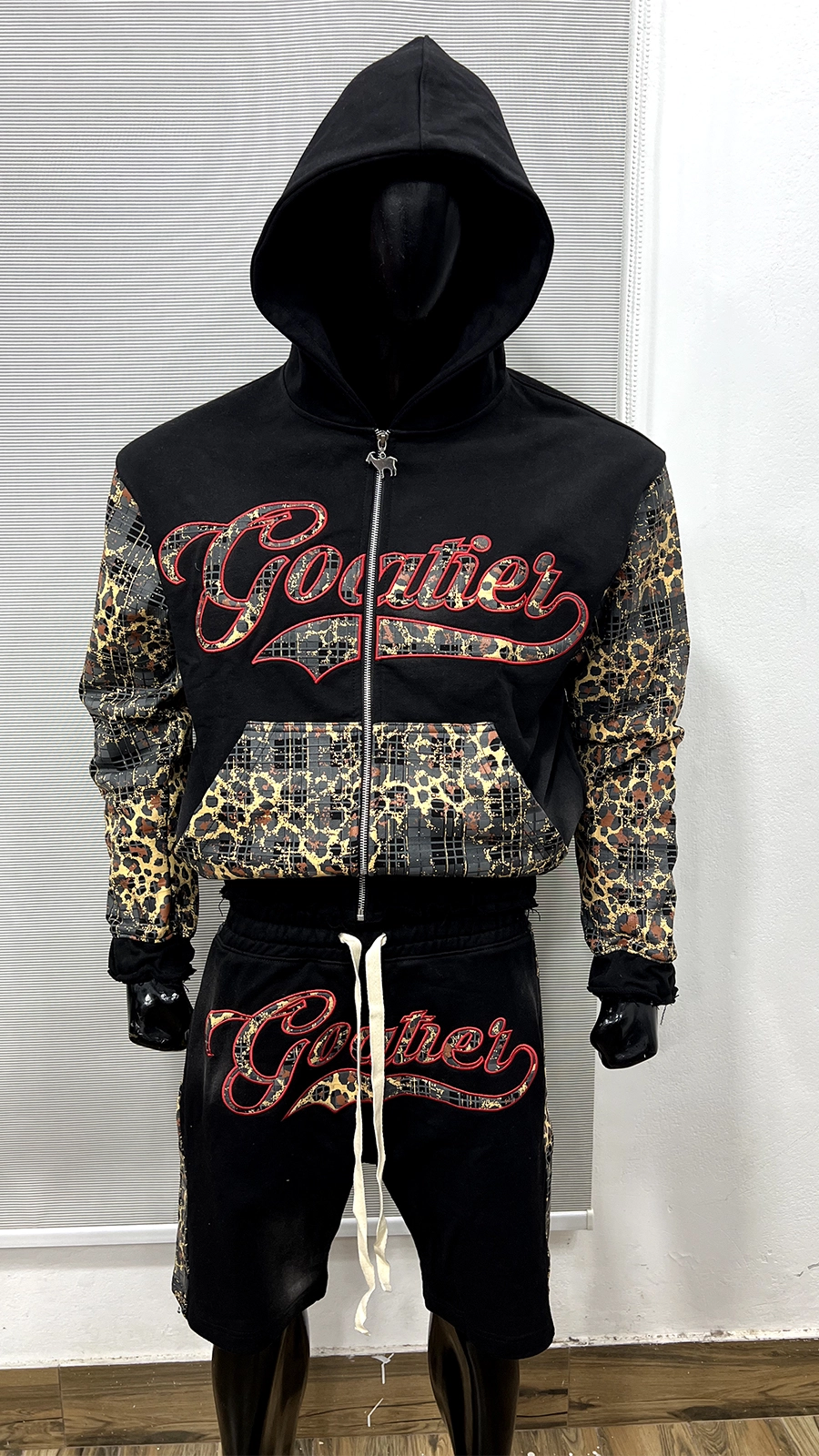
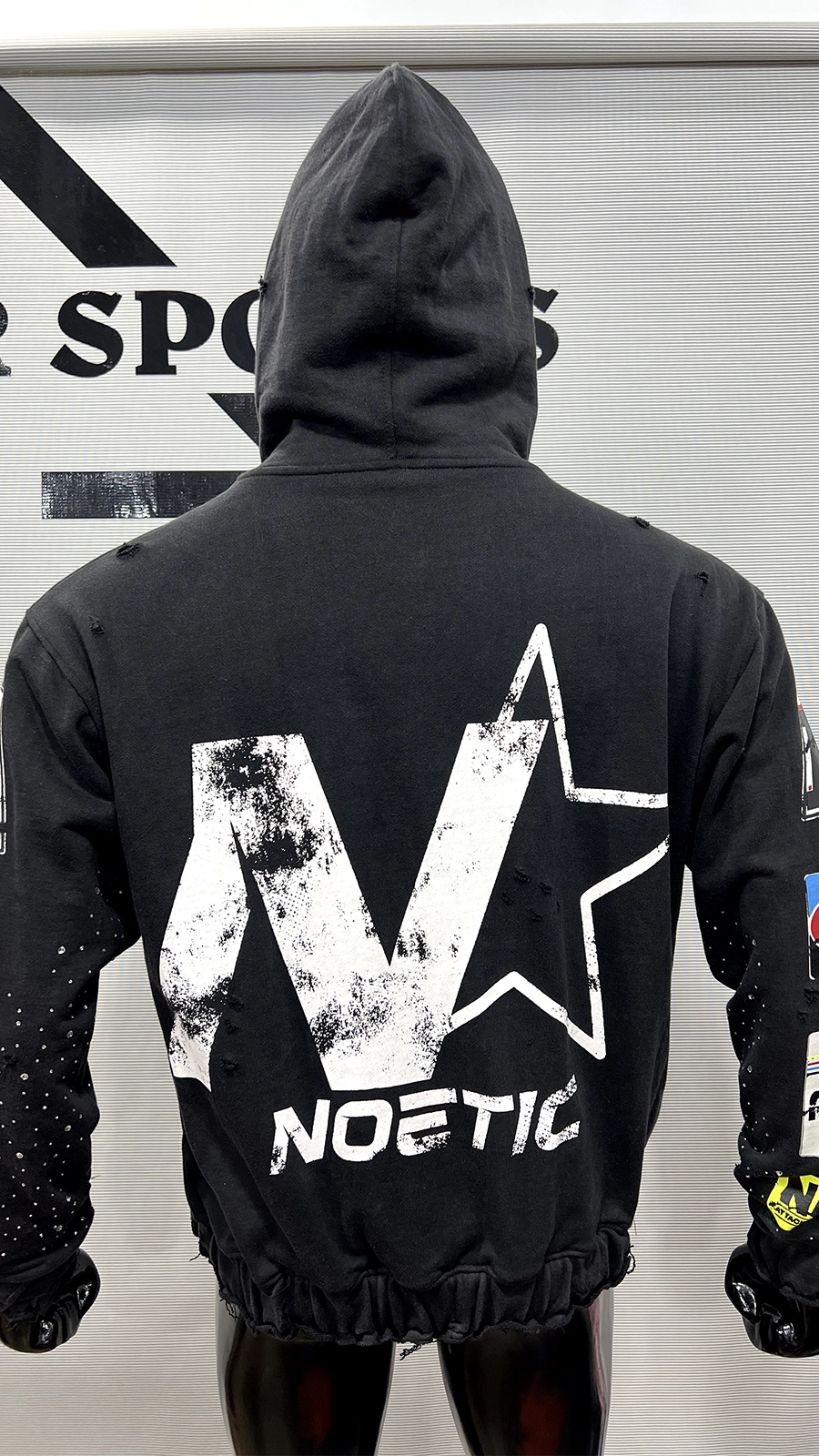
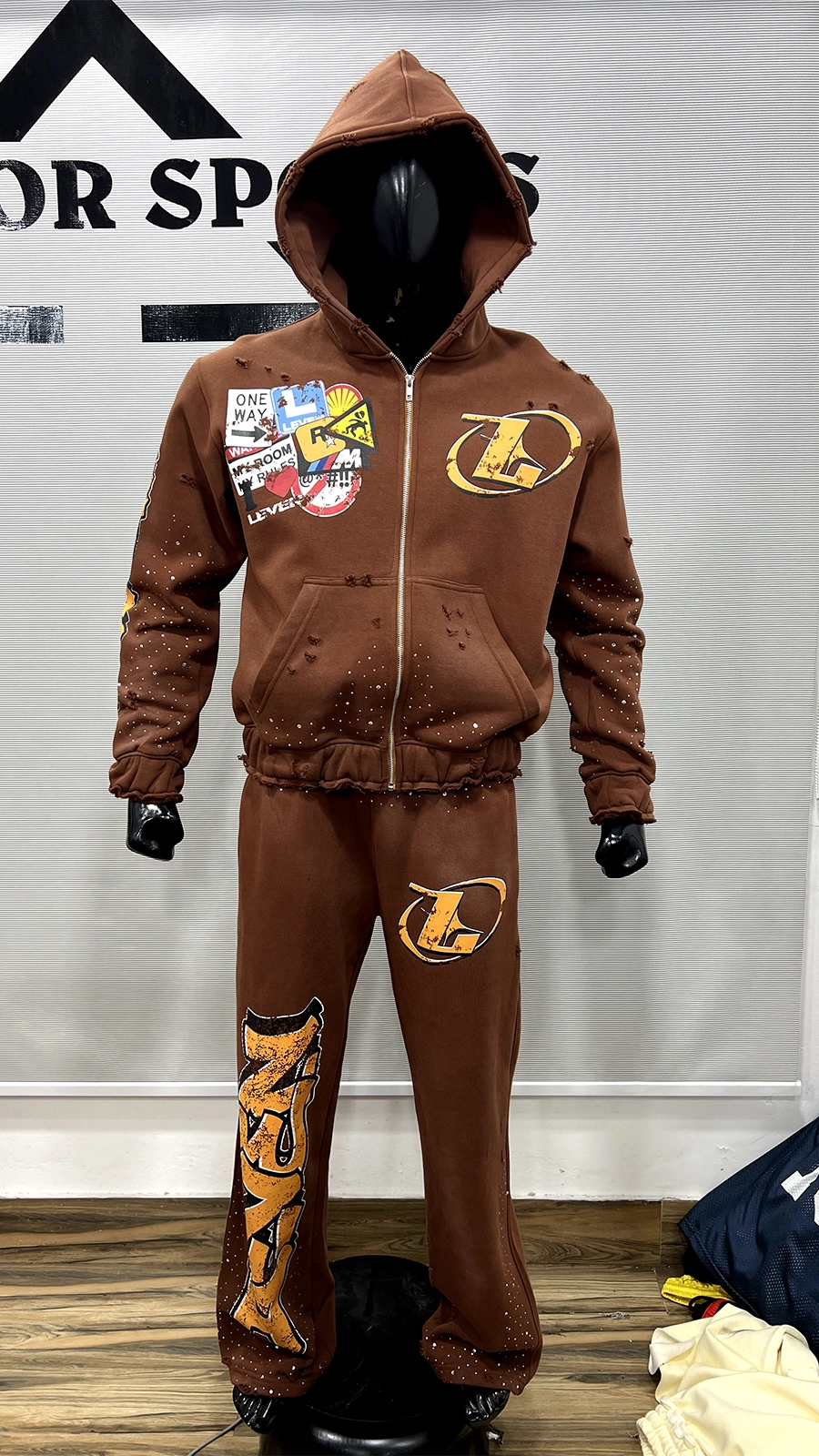
The pieces below are our own production samples, shot on the factory floor — not stock photos. Every order we run is fully custom to your spec, sizes, and branding.
01 — What Screen Printing Actually Involves on the Press
What a Screen Printing Hoodie Manufacturer Actually Does on the Press
Screen printing pushes ink through a mesh screen with a stencil burned into it — one screen per color, each one requiring its own pass under the squeegee. A three-color design means three screens, three passes, and three chances for something to line up wrong if registration isn’t dialed in.
Between colors, the print gets flash-dried just enough to set that layer without smearing the next one on top of it. Once every color is down, the whole print goes through a final cure — usually a conveyor dryer running at a controlled temperature — that’s what actually bonds the ink permanently to the fabric rather than just leaving it sitting loose on the surface.
Loading a hoodie onto the press pallet takes more care than a flat tee does. The kangaroo pocket and hood bunch up fabric that a t-shirt doesn’t have, and if the garment isn’t smoothed and pinned flat before the squeegee pass, that extra bulk can shift the fabric mid-print and throw off registration on the very next color. We use registration jigs sized specifically for hoodie bodies rather than reusing a t-shirt pallet setup, which is a small detail that avoids a real problem at scale.
02 — Fabric and Construction: Mesh Count and Ink Choice for Fleece
Fabric and Construction: Mesh Count and Ink Choice for Fleece
| Ink Type | Best For | Hand-Feel |
|---|---|---|
| Plastisol | Most designs, opaque on any garment color | Sits on top of the fabric, firmer hand |
| Water-based | Lighter, "vintage" look on lower-GSM fleece | Soaks into the fibers, softer hand |
| Discharge | Dark garments needing a soft, no-topcoat look | Removes the fabric’s dye, very soft |
Fleece’s looped, textured surface behaves differently under the screen than a smooth jersey tee does — we run a coarser mesh count on hoodies to push enough ink down into that texture, where a fine mesh built for detail work on flat cotton would leave gaps. Most hoodie printing runs on 300–450 GSM fleece; go lighter than that and heavier inks like plastisol can start to feel disproportionately stiff against the thinner fabric underneath.
03 — Design Placement, Color Separation, and File Requirements
Design Placement, Color Separation, and File Requirements
Left-chest placement runs 8–10cm, same convention as any other decoration technique. Where screen printing really earns its place is large-format coverage — full back prints and oversized front graphics are one of the most cost-effective ways to cover a big area, since a single screen can print any size within its frame just as easily as a small one.
Multi-color designs get separated into individual spot-color layers before we burn screens — we typically cap this around 6–8 colors, past which the setup cost and registration complexity start to make more sense as a DTG print instead. Send us vector artwork with your Pantone references; we’ll return a color separation for approval before any screen gets burned, so you’re confirming the breakdown before it’s locked into production.
04 — What Separates a Clean Print From One That Cracks and Peels
What Separates a Clean Print From One That Cracks and Peels
Cure is the first thing to check, and it’s invisible until it isn’t — stretch the printed area gently between your fingers. A properly cured plastisol print will stretch with the fabric without the ink cracking; an undercured one shows hairline cracks almost immediately and will peel within a handful of washes.
Registration is the second check — look at any multi-color edge where two ink colors meet. A clean registration shows a crisp line; a misaligned one shows a thin halo or fringe of the wrong color peeking out from under the top layer. On dark garments, check ink opacity too: light colors printed without a proper underbase will look muddy or gray instead of true to the Pantone you approved.
Ink deposit thickness matters more than most buyers realize. Too little ink and you get patchy, scratchy coverage that doesn’t fully hide the fabric texture underneath; too much and the print turns stiff, cracks faster, and adds unnecessary weight to a garment that’s already substantial in a heavier GSM. The right deposit sits right in between — enough to look solid and opaque without feeling like a rubber patch stuck to the fabric.
05 — MOQ and Sampling: What to Expect
MOQ and Sampling With Your Screen Printing Hoodie Manufacturer
MOQ is 50 pieces per style, split across whatever size run you need. Sampling takes 6–10 days, and the full cost is credited against your bulk order once you move forward.
Because screens are burned specifically for your design and colors, the sample stage is where you confirm color match, registration, and placement before we commit those same screens to a 50-piece run. If you’re printing a multi-color design, ask to see a registration test print alongside the finished sample — it’s the clearest way to catch alignment issues before bulk.
06 — What Actually Moves Your Price
What Actually Moves Your Price
Price on a screen-printed hoodie moves on the number of colors in your design (each color is a separate screen and setup cost), placement size and coverage, fabric GSM, and your total order volume. Screen printing has a real advantage at higher quantities specifically because the screen setup cost is fixed — once it’s burned, printing the 500th piece costs about the same per unit as printing the 50th.
We don’t publish flat pricing because those variables interact too much to be useful as a single number. Run your spec through our Instant Quote tool instead — it gives you a price estimate in 5 seconds, a downloadable PDF quote, and a direct line to WhatsApp with your quote pre-filled. Final pricing is confirmed by our team within 24 hours.
07 — Shipping to the UK and EU Duty-Free
Shipping to the UK and EU Duty-Free
Manufacturing in Pakistan carries a trade advantage worth factoring into your landed cost. Apparel made here enters the UK at 0% duty under the Developing Countries Trading Scheme, and the EU at 0% duty under GSP+, versus roughly 12% on equivalent goods sourced from China.
Details on eligibility and the current tariff schedule are on the UK government’s own guidance page: Developing Countries Trading Scheme (DCTS) — GOV.UK.
08 — When Screen Printing Isn't the Right Call
When Screen Printing Isn’t the Right Call
Screen printing isn’t the right call for photorealistic images or color gradients — reproducing a photo through spot-color screens means simulating process color with a dozen or more screens, which gets expensive and rarely matches a true photographic print anyway. It’s also not economical for very small runs or one-off samples outside your bulk order, since you’re paying for screen setup regardless of quantity. For photographic detail or small-batch flexibility, our DTG Printing Hoodie page is a better starting point.
Table of Contents
Simple Process
From Spec to Shipped, in Four Steps
01
Quote & Spec
Run your GSM, color count, and placement through the Instant Quote tool; get a price estimate and a downloadable PDF in 5 seconds.
02
Sample
We burn your screens, mix ink to your Pantones, and print a physical sample in 6–10 days; you can join a live video call from the floor before it ships.
03
Approve & Bulk
Approve the sample (its cost is credited to your order) and we run your full size and quantity — production takes 12–15 days.
04
Ship
Finished hoodies go out via DHL/FedEx air (3–7 days) or sea freight for larger volumes, landing duty-free in the UK and EU.
Our Advantage
Why Brands Choose Malinor
Floor Video Call Before You Pay Anything
See your actual print run in production, not a stock photo, before you commit to bulk.
Sample Cost Credited in Full
Nothing you spend on sampling is wasted once you move to bulk.
In-House Ink Mixing and Curing
No subcontracting a decoration step to a third shop, so your timeline doesn’t depend on someone else’s queue.
Fast, Direct Replies
Most quote and spec questions get answered within 2 hours during business hours.
Common Questions
Frequently Asked Questions
How many colors can you screen print on a hoodie before it gets expensive?+
Most shops, us included, start seeing diminishing returns past 6–8 colors — each color needs its own screen, setup, and registration pass, so cost climbs with every added color. Past that point, DTG printing often becomes the more economical option, especially for smaller order volumes where screen setup can’t be spread across as many units.
What’s the difference between plastisol and water-based ink?+
Plastisol sits on top of the fabric, stays opaque on any garment color, and is the most durable, common choice. Water-based ink soaks into the fibers for a softer, more "vintage" hand-feel, but it works best on lighter-GSM fabric and needs more precise curing. We can print either — tell us the hand-feel you’re after and we’ll recommend which fits your fabric weight.
Why do you print a white underbase on dark hoodies?+
Without it, light-colored ink printed directly on a dark garment picks up that dark color underneath and looks muddy instead of true to your Pantone. The underbase is an extra screen and an extra pass, which adds a bit of cost and a slightly firmer hand-feel, but it’s what makes a bright design actually read bright on a black or navy hoodie.
Will screen printing crack or peel over time?+
Not if it’s cured correctly. A properly cured print bonds the ink into the fabric and stretches with it; an undercured print sits on the surface and cracks with wash and wear. We run every print through a controlled conveyor cure, not just a quick heat press, and check for crack resistance on every sample before approving it for bulk.
What’s the minimum order quantity?+
50 pieces per style, with sizes split however your size run needs — you’re not locked into 50 of one size. A screen-printed hoodie and an embroidered hoodie in the same order each need their own 50-piece minimum, since they’re different styles.
How long does shipping take?+
DHL or FedEx air freight takes 3–7 days worldwide once your order is finished. For larger volumes, sea freight is available at a lower cost per unit but a longer transit time — we’ll walk you through both options once your bulk order is confirmed.
Run Your Spec Through the Instant Quote Tool
Get a price estimate in 5 seconds, a downloadable PDF, and a straight line to WhatsApp with your quote pre-filled. Before you pay anything, we’ll get you on a live video call from the production floor.